






The history of the Ukrainian Catholic University and the life journey of one of its management team leaders are proof that principles and values are not abstract concepts but a driving force capable of changing reality. This article presents the main lessons for building institutions and personal resilience from a human rights defender.
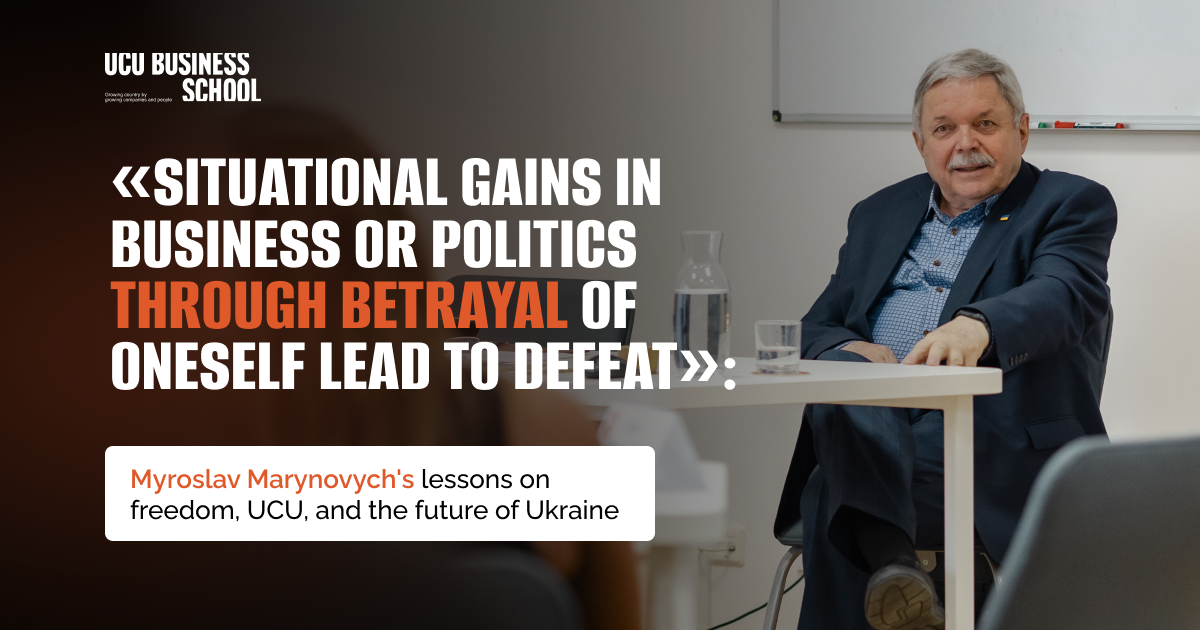
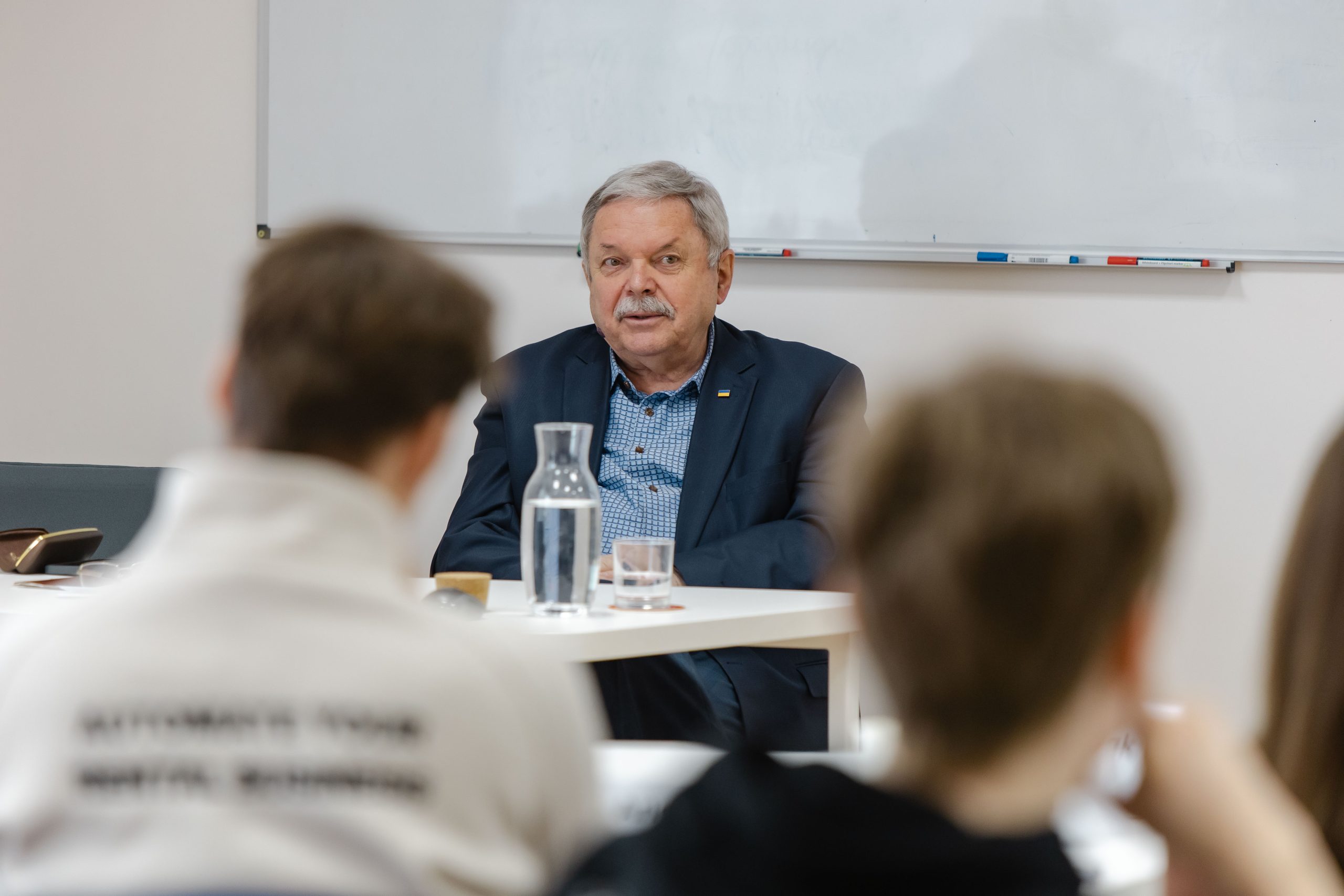
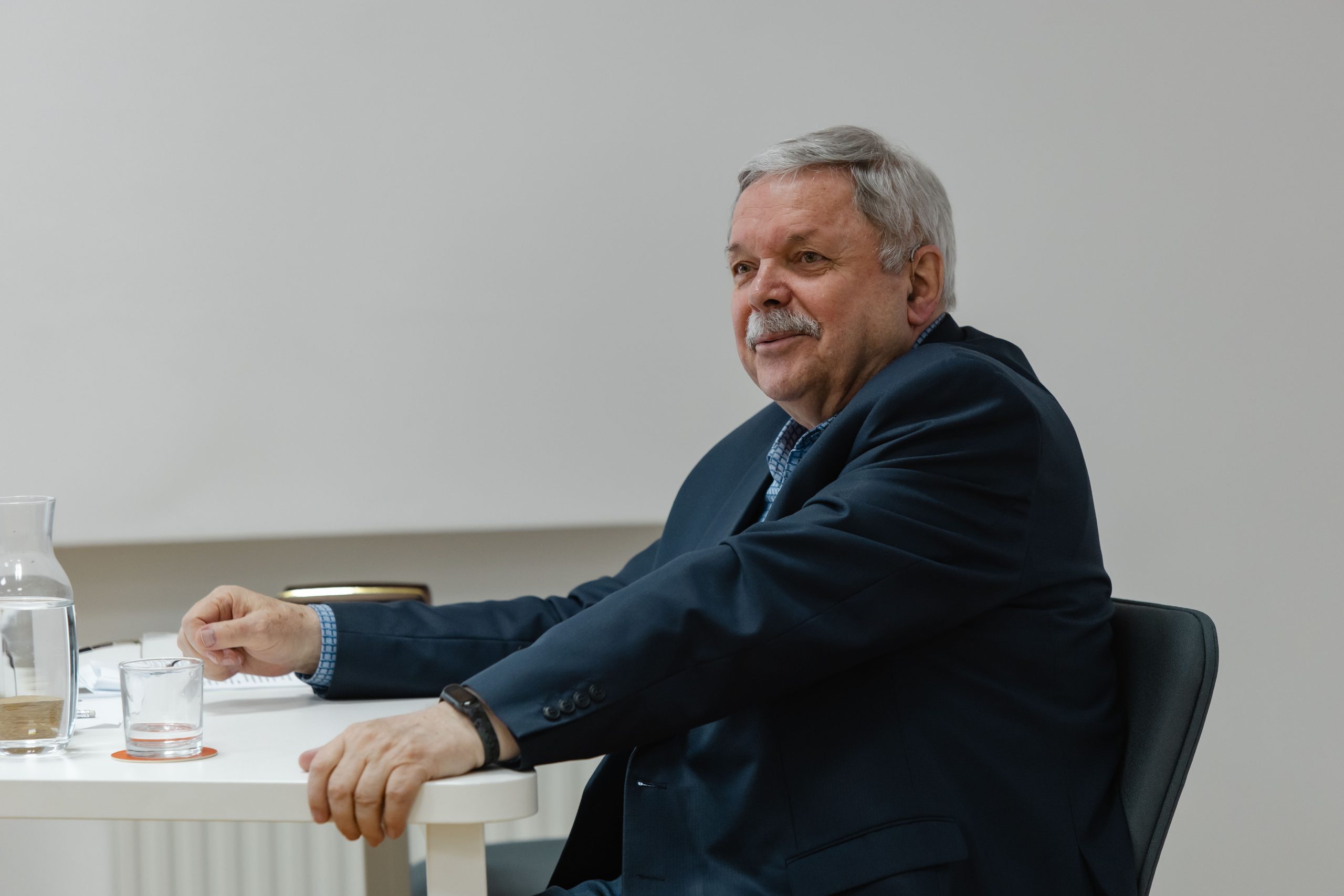
Students in the MSc in Innovations and Entrepreneurship program had a wonderful opportunity to speak with Myroslav Marynovych at a business breakfast.
UCU: from declarations to a living presence
The formation of UCU began with a courageous test of integrity during the Revolution of Dignity. When security forces moved in on the Maidan, the university’s leadership decided to declare civil disobedience against the state. It was a moment of truth because, according to Myroslav Marynovych, “values sound very scholastic if you don’t move on to concrete actions.”
Transforming the academy into a university required resources that were not available. However, Rector Borys Gudziak’s faith was unshakable. According to the public figure, the rector’s blessing turned out to be quite practical:
“You live according to certain principles. You don’t steal money, people see that, trust appears, and money comes in – that’s how simple God’s blessing is.”
The community is based on the 3C formula: witness, serve, communicate. At the same time, “witnessing is the key word for freedom” – it is not imposing, but showing one’s own principles, says Myroslav Marynovych.
At the same time, the rector’s advisor warns against excessive pursuit of prestige, quoting Ulyana Golovach:
“The university began with great and rich souls working and studying in cramped, poor premises. Now our premises have become rich… what will happen to our souls?”
Freedom and the price of compromise
Myroslav Marynovych calls his 10 years of imprisonment the “formula for his success,” because it was then that he did not compromise his conscience. His path to dissidence began with his refusal to become an informant for the KGB. Realizing that he was a free man brought him a sense of complete inner freedom:
“The fact is not in the imprisonment itself, but in the fact that I did not compromise at that moment when I had to choose,” the dissident reflects.
One of the students asked whether it was possible to feel happiness in such difficult times as war, and whether Marynovych was happy in prison. The rector’s advisor shared that even in Soviet camps, it was possible to feel happiness and peace in one’s soul. He recalled the camp as “the freest place in the Soviet Union,” where the intellectual elite gathered by the KGB could speak openly.
Entrepreneurs also asked the professor how to recognize the line where strategic flexibility becomes a compromise that betrays oneself. Myroslav Marynovych drew students’ attention to the fact that compromises on basic values are unacceptable, because situational gains in business or politics through self-betrayal will eventually lead to defeat. At the same time, he warns against radicalism in sensitive issues, such as language.
Contemporary challenges: political correctness, AI, and the economy
When asked how to live in a time of decline of the familiar world order and democracy, the rector’s advisor emphasized the crisis of values in the modern world, where the ideology of “political correctness” often prevails over principles. This prevents us from calling evil by its name. However, according to Marynovych, humanity will overcome this crisis and, thanks to it, will return to an awareness of the importance of the value system.
Myroslav Marynovych outlined the importance of the ideas of Metropolitan Andrey Sheptytsky and economist David Landes for Ukrainian businesspeople: culture is crucial for economic success. Culture shapes the ideas and values that drive human action.
And although modern challenges, such as artificial intelligence, threaten the depth of human knowledge, true education and institutional stability must be grounded in “rich souls” rather than in prestigious premises alone.
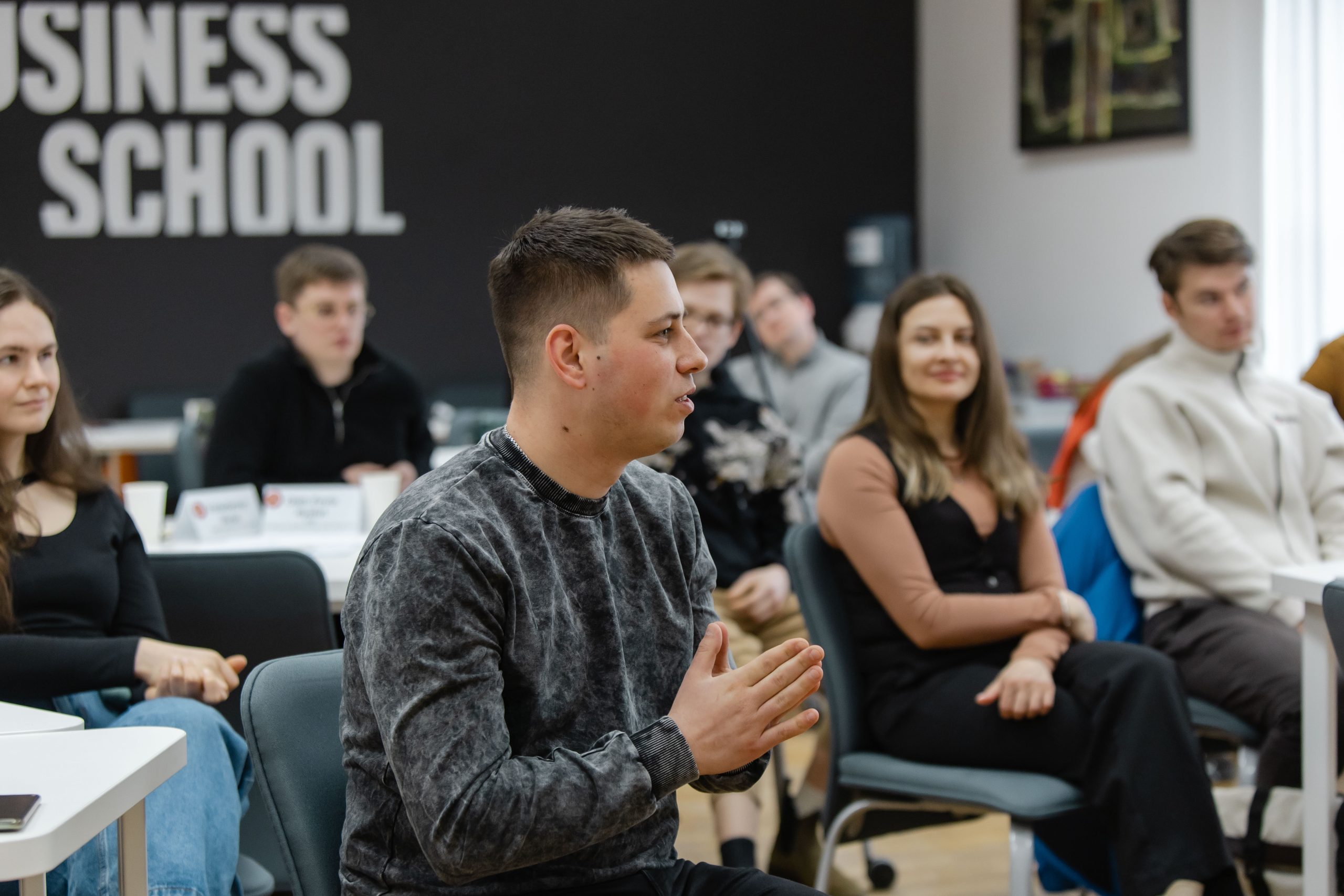
When asked how to stay motivated when the future is uncertain and there are no deadlines, as in the camp, he replied:
“It is important to have a clear value platform. If you have one, you remain calm even in the face of uncertainty. If you don’t, you are at the mercy of the wind, and you depend on every little external detail.”
The main thing, according to Myroslav Marynovych, is to preserve the “taste of honey from one apiary,” that is, the unified spirit of the community, regardless of external circumstances or locations.