






Andrii Bondar is the CEO and co-owner of R.Flo, and a 2022 graduate of the MSc in Innovations and Entrepreneurship program at UCU Business School. His company develops unique iron flow batteries that have the potential to reshape the renewable energy market — from a 50-year lifespan to full safety and environmental sustainability. Andrii’s team is working toward a global mission: reducing global carbon emissions by 50%, with a focus on balancing energy grids around cities and rural communities.
 In Ukraine, projects are typically considered attractive only if they pay off within three years. However, in European and US markets, strategic planning over a 20–25-year horizon prevails, enabling access to significantly cheaper financing backed by long-term technological reliability. This is precisely why R.Flo’s product aligns with Western standards of stability and energy independence.
How challenging is it to transition from a chemistry specialist to a leader of an international business — and why is iron the future of energy independence? Read more about this and Andrii Bondar’s personal story in the article.
How did your studies help you grow from a chemistry enthusiast into a manager?
In fact, I wanted to join UCU Business School a year before I actually did. I had heard many positive reviews about the MSc in Innovations and Entrepreneurship program, but at the time I simply didn’t have the time. I was deeply immersed in lab work and development, and I couldn’t imagine combining that with three- to four-day monthly study modules. However, within a year, my role changed. I started as an R&D engineer in a newly formed team and later became the head of a group of chemists.
I found myself spending more time outside the lab and facing more business-related challenges. We had a fairly open culture—investors encouraged individuals to fully own their areas of responsibility. That’s when I felt a strong need to develop soft skills and business competencies. So I decided to enroll in the program—and I truly enjoyed it. The transition was gradual: I consciously began stepping away from science, which I love, toward management processes. In 2021–2022, I essentially had to “forget” chemistry to focus on what I call “proto-business”: fundraising, market discovery, customer search, and team building. It’s a daily decision—to give someone else the authority to do what you once loved most, and not interfere, not constantly think that they might make a mistake.
What played the key role in your professional growth?
The simplest and most important answer is the network. It’s the environment of people doing ambitious, even extraordinary things. On the one hand, you see their large-scale projects on social media. On the other, at the Business School, you meet them as ordinary people. That helps you form a realistic perspective: they’re just like you—they succeed in some things and fail in others. So why not try yourself?
This environment pushed me to expect more from myself and to constantly experiment. It’s hard to single out one specific skill—like communication or team-building. It was a cumulative, holistic impact—each element adding something of its own. Each study module in Lviv felt like a full reset. I would come to class, and by Monday back at work, I often thought: “We’ve been doing everything wrong.” We were planning wrong, strategizing wrong—we had to change everything immediately. Some of these changes took hold, others didn’t—but each step transformed both my own experience and that of the entire team.
The Business School is an excellent place to gain tools for idea validation. And validation gives you far more than any new technical feature in your product.
 How does the UCU Business School alumni community support you today?
At the Business School, I’m known as someone who’s always ready to talk about shortcomings—and that’s part of our open culture. Since I’m not from Halychyna and our company is based in Vinnytsia, I don’t always benefit directly from the fact that the community’s strongest hub is in Lviv. I can see from the outside how actively alumni in Lviv leverage these connections—and it’s impressive.
There are far fewer alumni in Vinnytsia. Perhaps it requires more proactivity. Right now, I’m focused on international development, but maybe after completing my studies at Stanford, I’ll consider building a Vinnytsia alumni hub and creating something meaningful here. The community is a huge resource—even if you don’t use it daily, just knowing it exists matters.
Andrii Bondar became a participant in the third cohort of the Stanford Ignite Ukraine program—an academic program by Stanford Graduate School of Business for Ukrainian small and medium-sized business leaders. The program lasts 8 weeks in a hybrid format and includes three stages: one week on the UCU campus in Lviv, four weeks online, and a final three weeks at Stanford GSB in California. Participants with over three years of experience and teams of 8–249 employees learn through a “Learning by Doing” approach, gain access to leading faculty—including Nobel laureates—and present their projects to Silicon Valley investors.
Read also: A 75-Year Horizon: How Ukrainian Leaders Can See Beyond the War
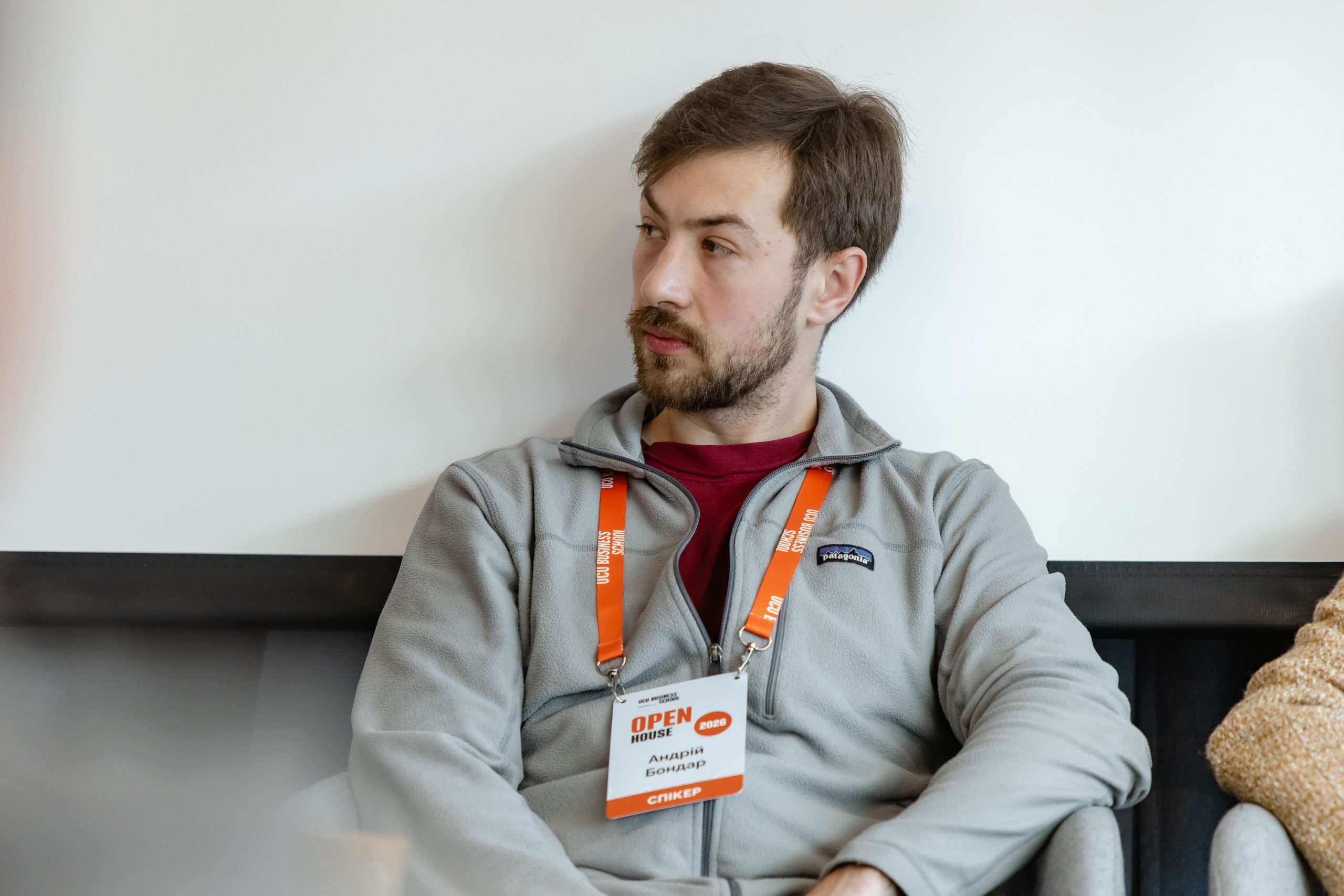 Your company R.Flo develops iron flow batteries. What is their key advantage for business?
For business, the most important factors are cost and reliability. Our systems offer several key advantages:
- Cost: 5 times lower than lithium-ion alternatives, as we use water, salt, and iron—materials abundantly available in Ukraine.
- Durability: 50 years of operation or 25,000 charge cycles, with only 1% degradation over 25 years.
- Safety: non-flammable, non-explosive, and non-toxic.
- Flexibility: we can separate power and capacity, enabling systems with 10, 12, or even 20 hours of energy storage.
This allows industrial clients to reduce electricity costs by up to 25%, and investors to increase project IRR by 30%.
How difficult is it to convince investors to fund such long-term technology, especially during wartime?
So far, we haven’t sold anything except our vision and development results. We’re not mass-producing batteries yet. But it’s important to understand how large markets in Europe and the US work. Projects there are planned over 20–25 years to secure cheaper financing. Typically, 60–80% of funding comes from loans. Banks need to see long-term reliability to approve such financing. In Ukraine, the expectation is that a project should pay off within three years—otherwise it’s not attractive. Western markets operate differently: they value stability and long-term planning.
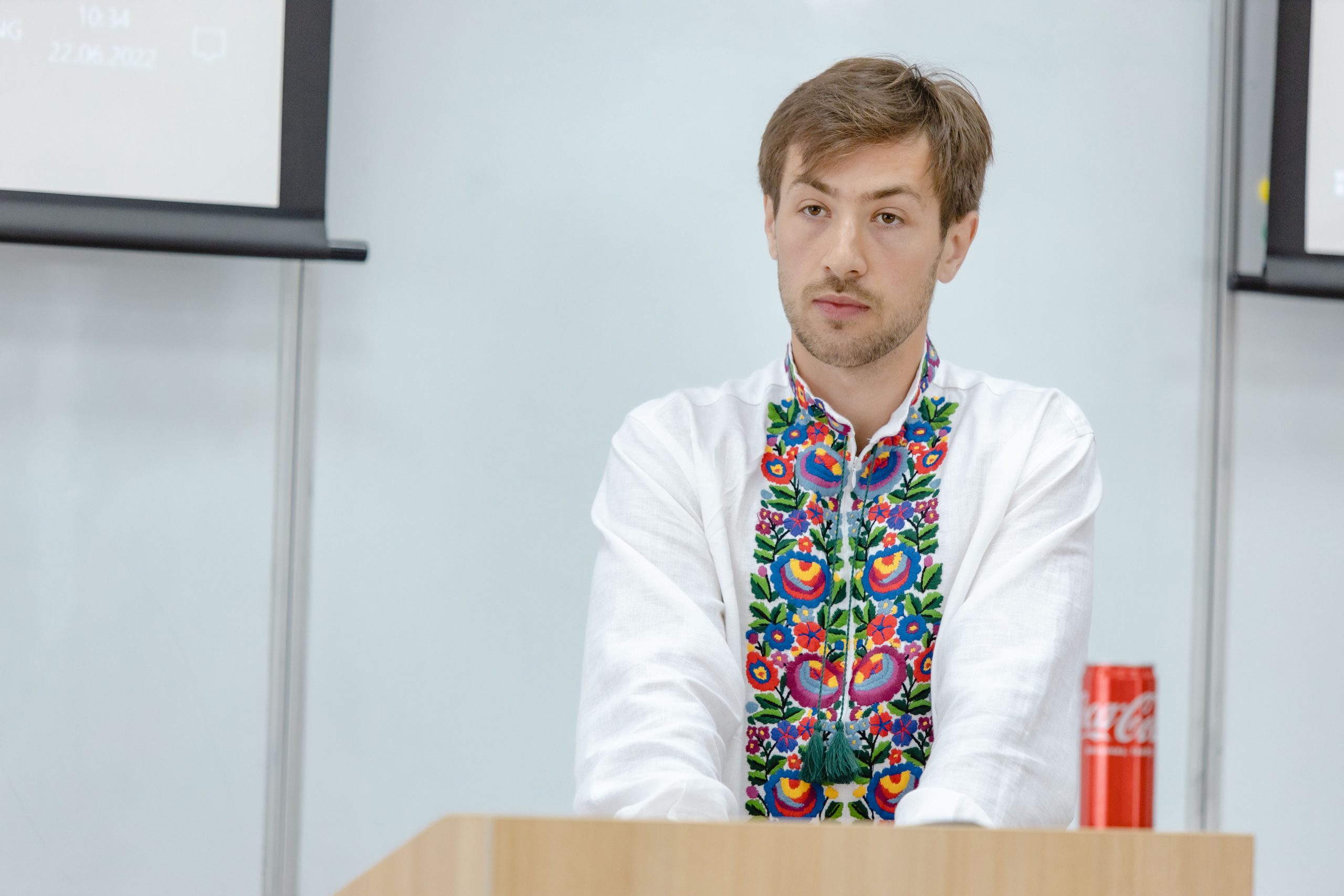 During the 2022 energy crisis, you chose to stay in the industrial segment. Why not enter the booming home battery market?
There was a strong temptation to import and resell consumer solutions like EcoFlow—we understand that market well. But we deliberately rejected that idea. Our cost advantage becomes significant only at scale. So we stayed true to our mission: building industrial-scale systems located near cities and villages to balance local energy grids. We are creating solutions similar to pumped-storage power plants—but without altering the landscape.
How does a startup from Vinnytsia compete in such a complex global market?
We’ve assembled a strong, highly specialized team. Everyone is passionate about electrochemistry and driven to create something new rather than replicate the past. Even though there’s routine work, we have a clear goal. Our investors and partners share our mission of 100% renewable energy. Together, we are achieving what others have failed to accomplish. When compared to academic studies in the same field, our results significantly outperform them. That’s the outcome of intense work. Our team’s combined experience in R&D, finance, and product development exceeds 57 years.
What role can your batteries play in decentralizing Ukraine’s energy system?
In Ukraine, this need is especially acute because our grid architecture has historically been centralized around large nuclear power plants. I believe every major community or city should be relatively energy independent, with its own solar or wind generation and local storage systems.
Our battery functions like a micro pumped-storage plant—but without flooding land or building dams. Instead, we place containers on flat ground and connect them to the grid. In Europe, the average discharge duration of pumped-storage systems is 17 hours. We can build batteries with similar capacity that are cheaper than lithium-ion solutions and easier to deploy. This enables fast, environmentally friendly balancing of entire regions.
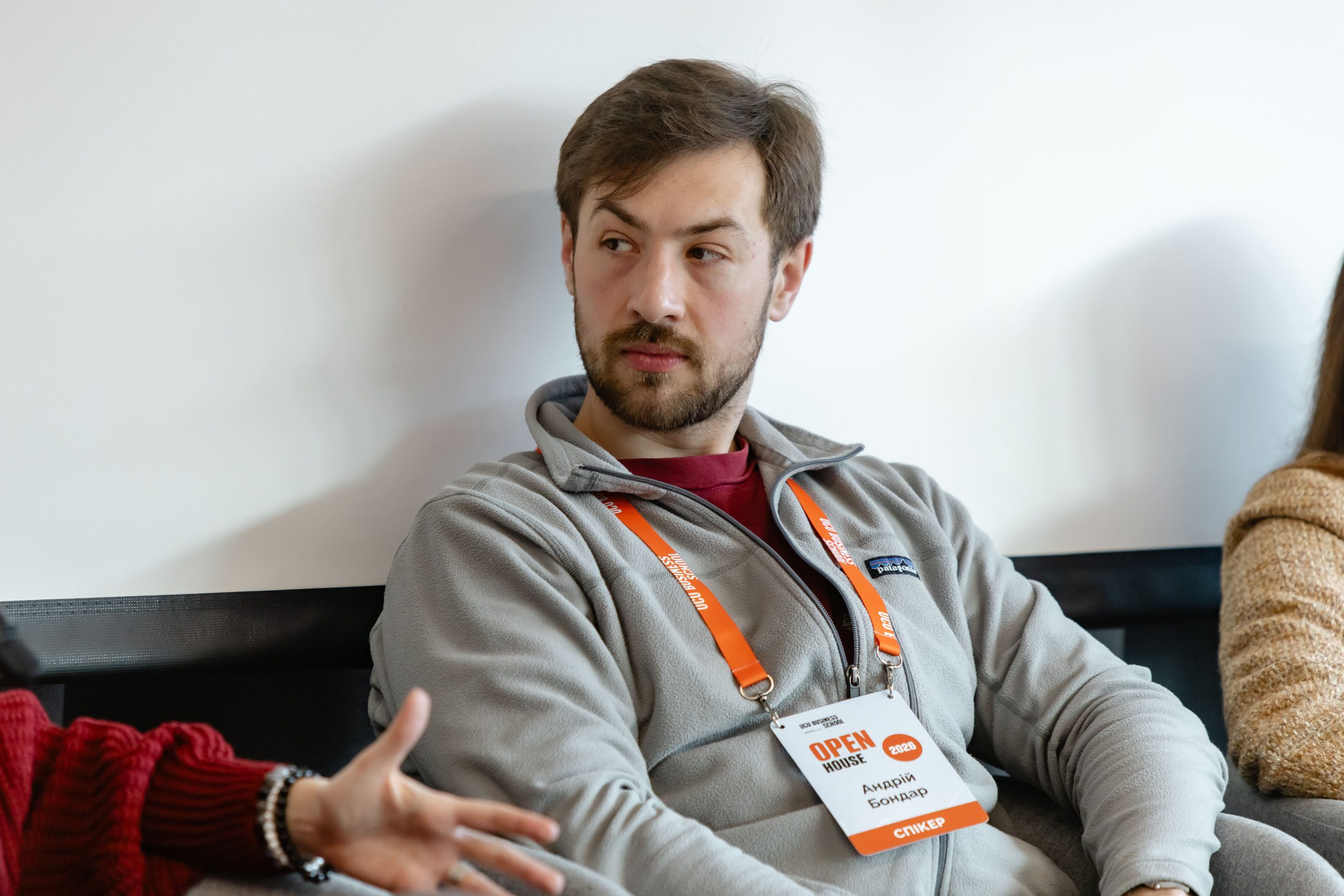 Do you plan to manufacture in Ukraine?
Yes, we tell all our partners that we will build production in Ukraine. At our current stage, we already have a small-scale facility. For large-scale mass production, we are targeting late 2027 or 2028.
You’ve gone from a developer to a manager. What advice would you give to engineers considering business education, especially now?
I’ve completed a master’s program, a certification program, and Stanford Ignite Ukraine. The benefits of being in such an environment clearly outweigh the cost. You spend your time differently, and that creates a powerful shift. Advice should be personalized—some people need to step outside their bubble, others don’t.
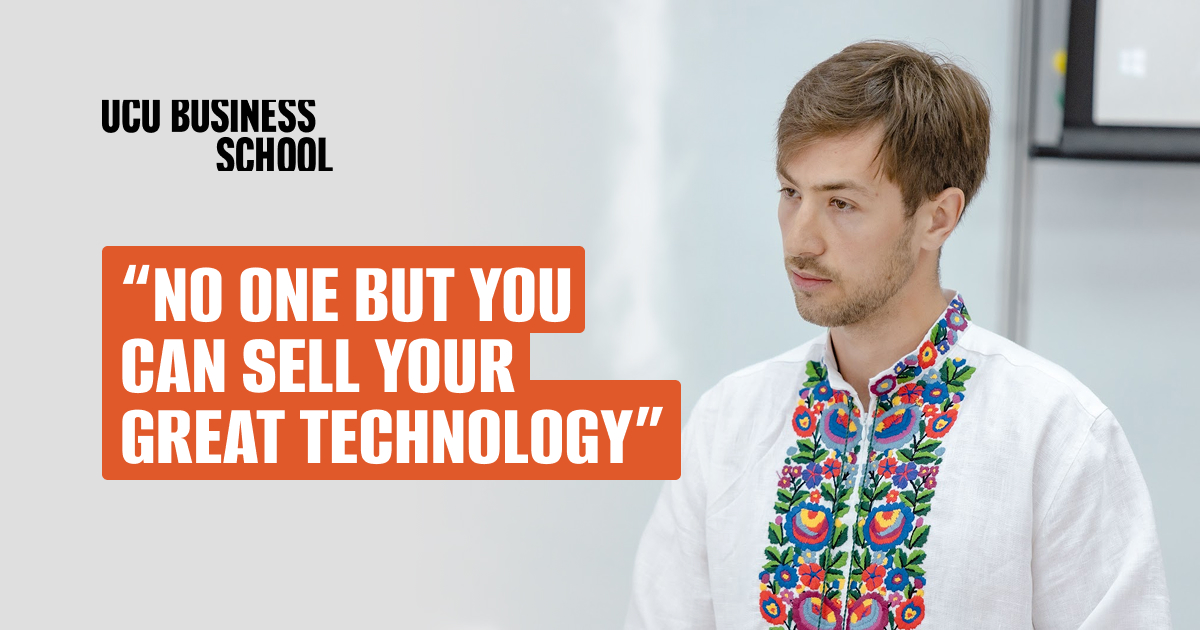
But I’ll say this: No one else will sell your great technology or turn it into a successful business—you have to do it yourself. If you’re an engineer who wants to grow a business, go where people with a business mindset are. UCU Business School is the best place for that. It gives you tools to validate your idea and shorten the feedback loop between the market and the developer. That matters more than any new product feature. Idea validation is what saves projects from failure.
At the UCU Business School Open Days, participants explored what makes a ‘right’ decision—whether it gives you inner grounding. What decision in the past year gave you such a sense of strength?
That’s a difficult question. I don’t categorize decisions as easy or hard—I just make them. But if we’re talking about inner strength, the most important decision was simply to keep going. I experienced the loss of a close person, and there was a moment when I didn’t feel like continuing. But I decided to keep pushing this project forward. That decision gave me the strength to move on—despite everything.
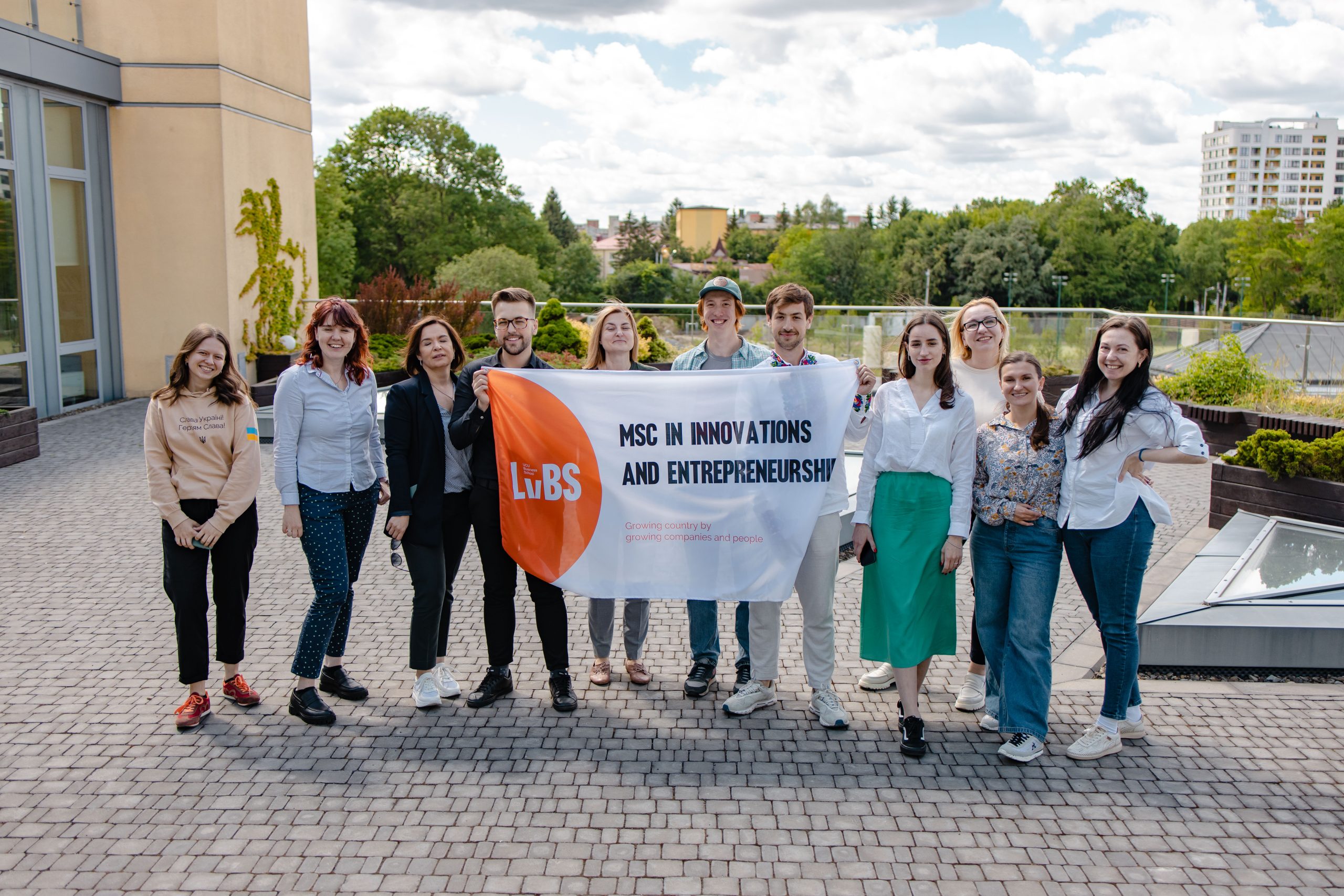 Learn more about MSc in Innovations and Entrepreneurship program, which helps transform technological ideas into successful businesses.