






In today’s world, where challenges evolve daily, the synergy between educational institutions and philanthropic foundations is becoming a cornerstone of systemic societal change. The collaboration between UCU Business School and the philanthropic projects of Viktor and Olena Pinchuk began in early 2024 as a response to a critical need for professional management of socially significant initiatives. For the Business School, this initiative became a natural extension of its mission, as supporting military personnel and veterans through education is a strategic priority fully aligned with its values.The School underscores its strong sense of social responsibility—sharing its expertise in leadership and systems thinking not only with businesses, but also with healthcare leaders.
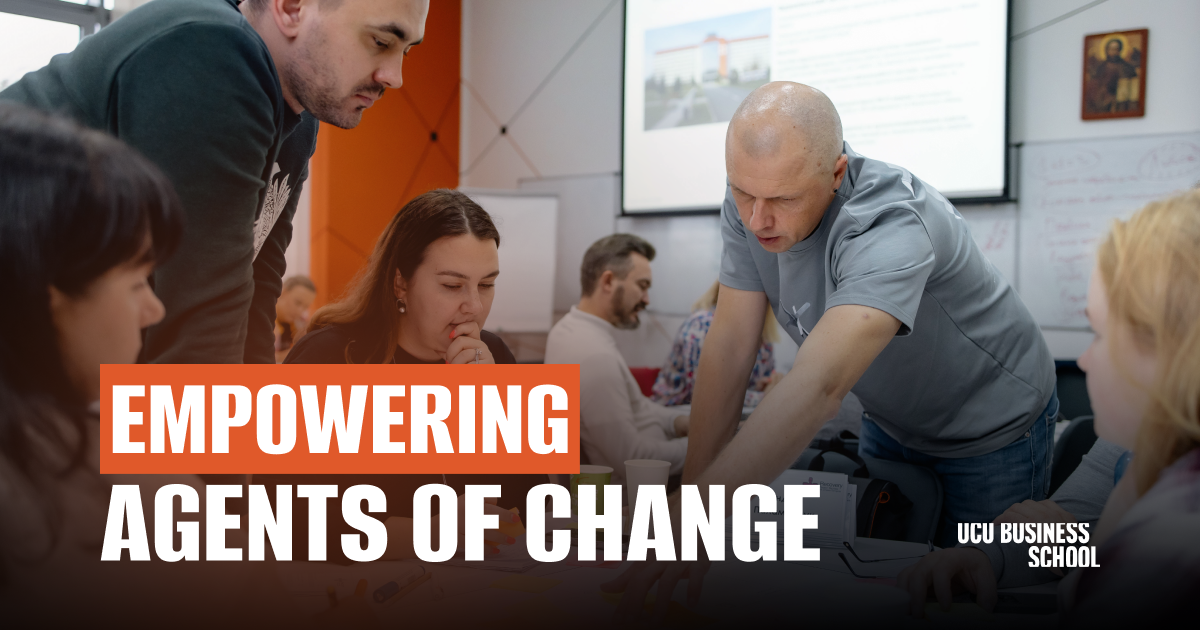 At the heart of this partnership is the RECOVERY project—a network of innovative rehabilitation centers for wounded soldiers, founded by Viktor and Olena Pinchuk to support defenders and to rethink Ukraine’s rehabilitation system. Today, the network includes 19 centers across the country, where more than 43,000 wounded individuals have already undergone recovery.
Anna Tkachenko, Head of Educational Programs at RECOVERY, notes that the directors of these centers are true change agents in their communities. This is why the goal emerged to strengthen them as managers: ensuring they are not only highly skilled medical professionals, but also capable of effectively developing the network, managing teams, and attracting top specialists.
The real impact of this approach is best illustrated by participants’ experiences. Taras Ikalo, Head of the RECOVERY center in Lutsk, admits that in the context of war, he urgently needed the skills to organize operations quickly and effectively. For him, this training is, above all, a way to save time—an increasingly scarce resource. Instead of relying on trial and error, he gained access to evidence-based tools. According to Taras, after implementing new knowledge, his team became more productive:
“We have become more efficient, and patients feel it—that’s what matters most.”
The successful RECOVERY model was later scaled to a new direction. In 2025, Viktor and Olena Pinchuk launched the project RETURN —a nationwide network of mental health centers for military personnel, veterans, and their families. Through UCU Business School programs, the managers of these centers strengthened their leadership, management capabilities, and strategic vision, building on the proven experience of the previous year.
 At the same time, the collaboration expanded to include the Zavtra.UA scholarship program of the Victor Pinchuk Foundation, where talented youth learned needs analysis, project management, and project presentation skills, developing their own socially oriented initiatives directly during the program modules.
“While developing social projects, we clearly understand that their greatest value lies in people. That is why investment in education is key for us. We constantly invest both in young professionals and in the upskilling of those who have long been working in the fields of mental health and physical rehabilitation,” says Svitlana Hrytsenko, Member of the Board of the Victor Pinchuk Foundation.
Participants moved from initial skepticism—questioning whether business tools could work in public healthcare—to concrete action and genuine cohesion. In their second year, they evolved into an open community, where each member became part of a unified and fully integrated whole.
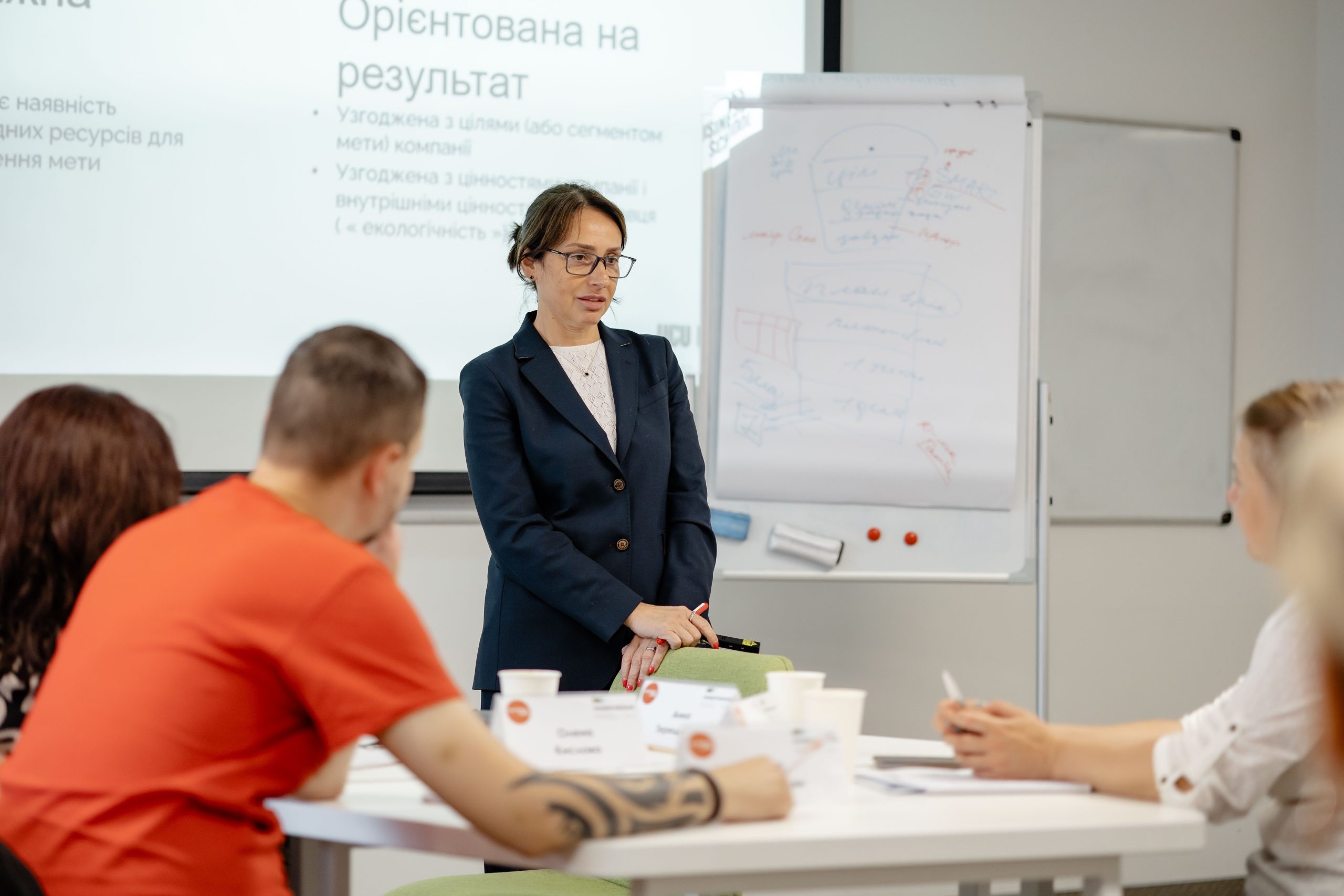 The unique value of this partnership lies in building a foundation for an entirely new sector of physical and mental rehabilitation in Ukraine. As Ukrainian professionals are now gaining globally unique experience in treating complex injuries, the combination of medical expertise with high-quality business education is becoming a key driver in creating a resilient and contemporary system. This reflects a lifelong learning approach, where the continuous development of managers drives systemic change in society.
“The field of physical and mental rehabilitation in Ukraine is entirely new. No one in the world has this kind of expertise. Being first is always a challenge—but also an advantage, as it allows you to lay the right, strong foundation,” explains Yevheniia Kralenkova, Head of Corporate Programs.
Similarly, UCU once faced both the challenge and the opportunity of being the first private Catholic university in Ukraine—an opportunity to set a new benchmark in higher education.
Ultimately, collaboration with the philanthropic projects of Viktor and Olena Pinchuk has enabled the UCU Business School team to deepen its experience in advancing socially impactful initiatives. The shared goal of both institutions—to develop human potential through ethical leadership and the transformation of the social sector—has not only strengthened individual managers, but also fostered a cohesive community of like-minded leaders ready to take responsibility for the country’s future.
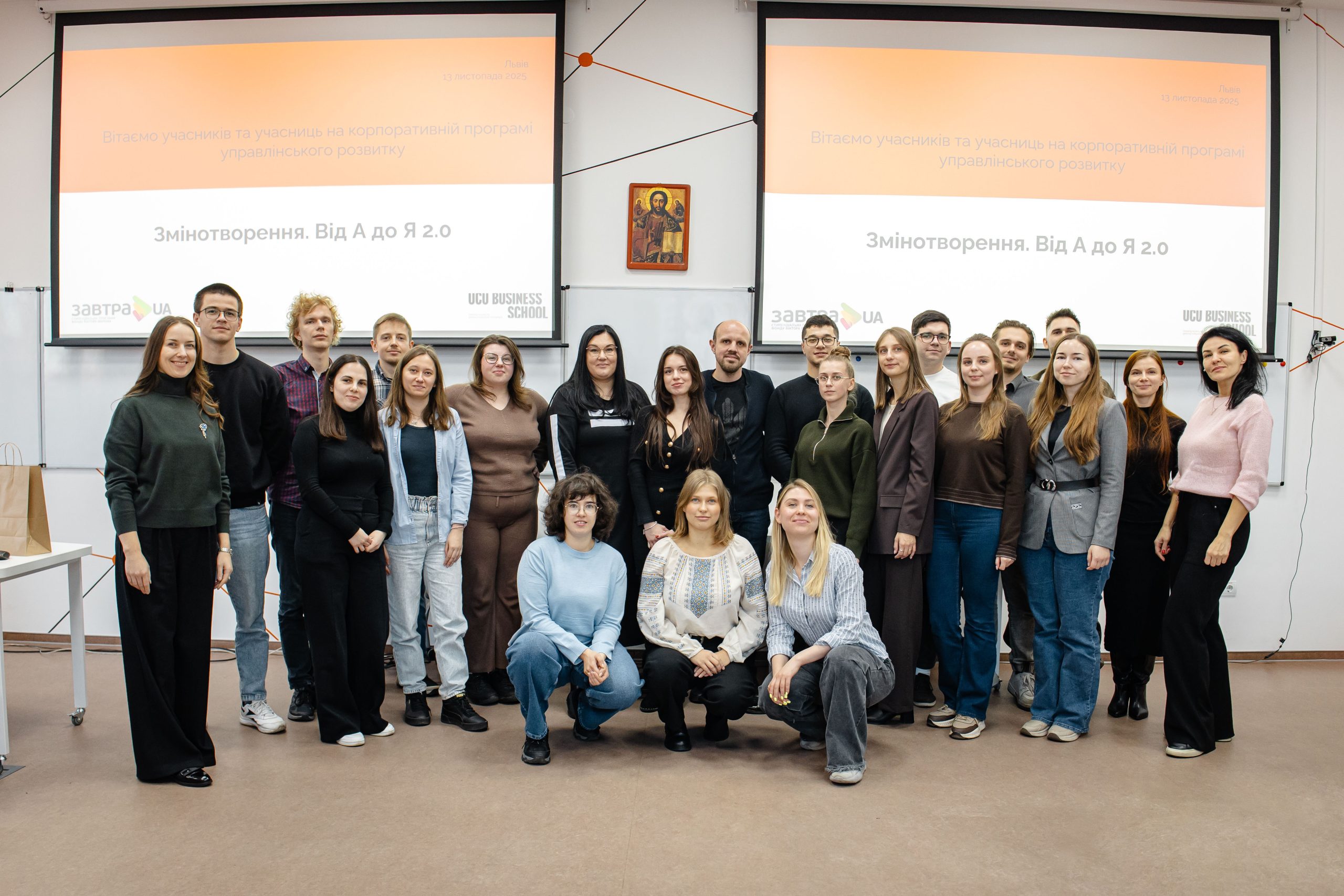 This partnership demonstrates that new societal outcomes become possible only when leaders dare to act differently and continuously refine their approaches.