






Today, Ukraine is shaping new global standards of leadership under conditions of extreme risk. When the planning horizon shrinks to mere hours and the cost of error becomes human life, traditional business models give way to leadership grounded in character.
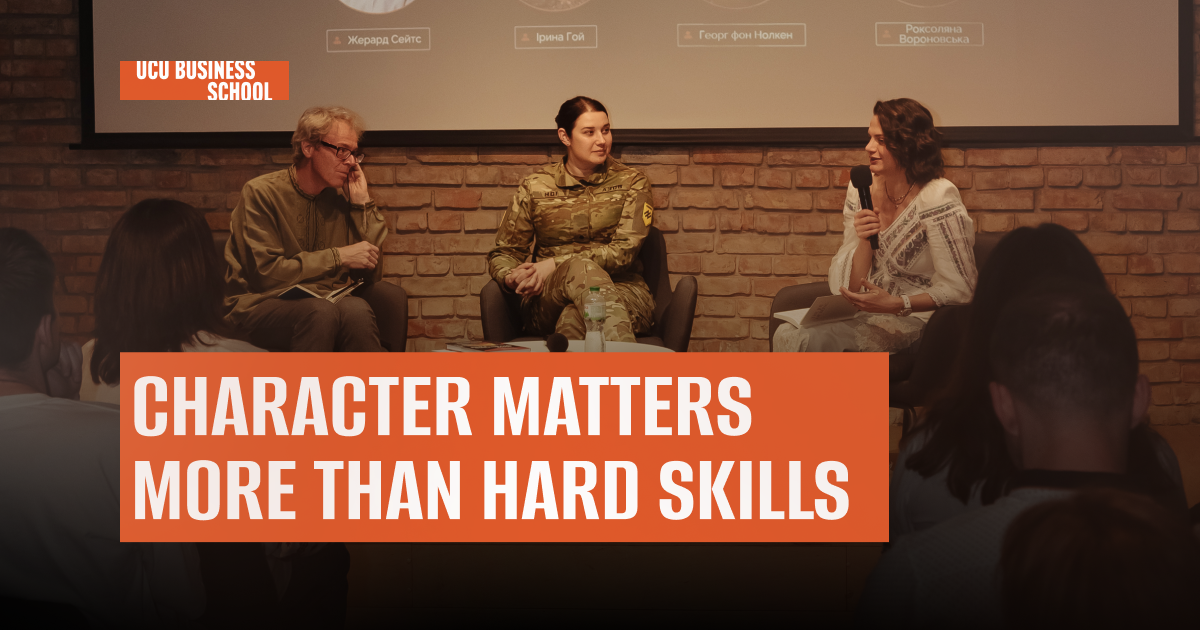
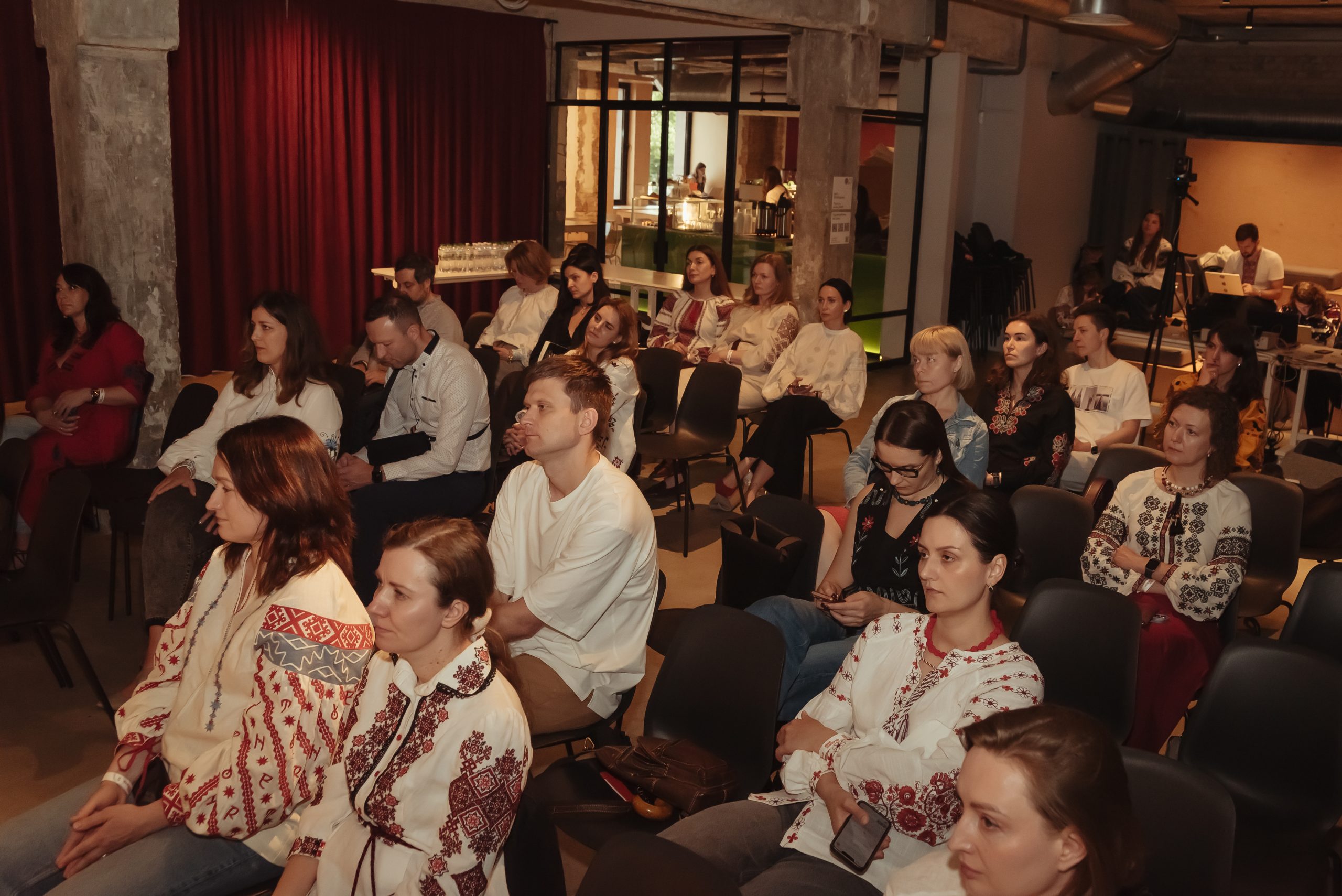
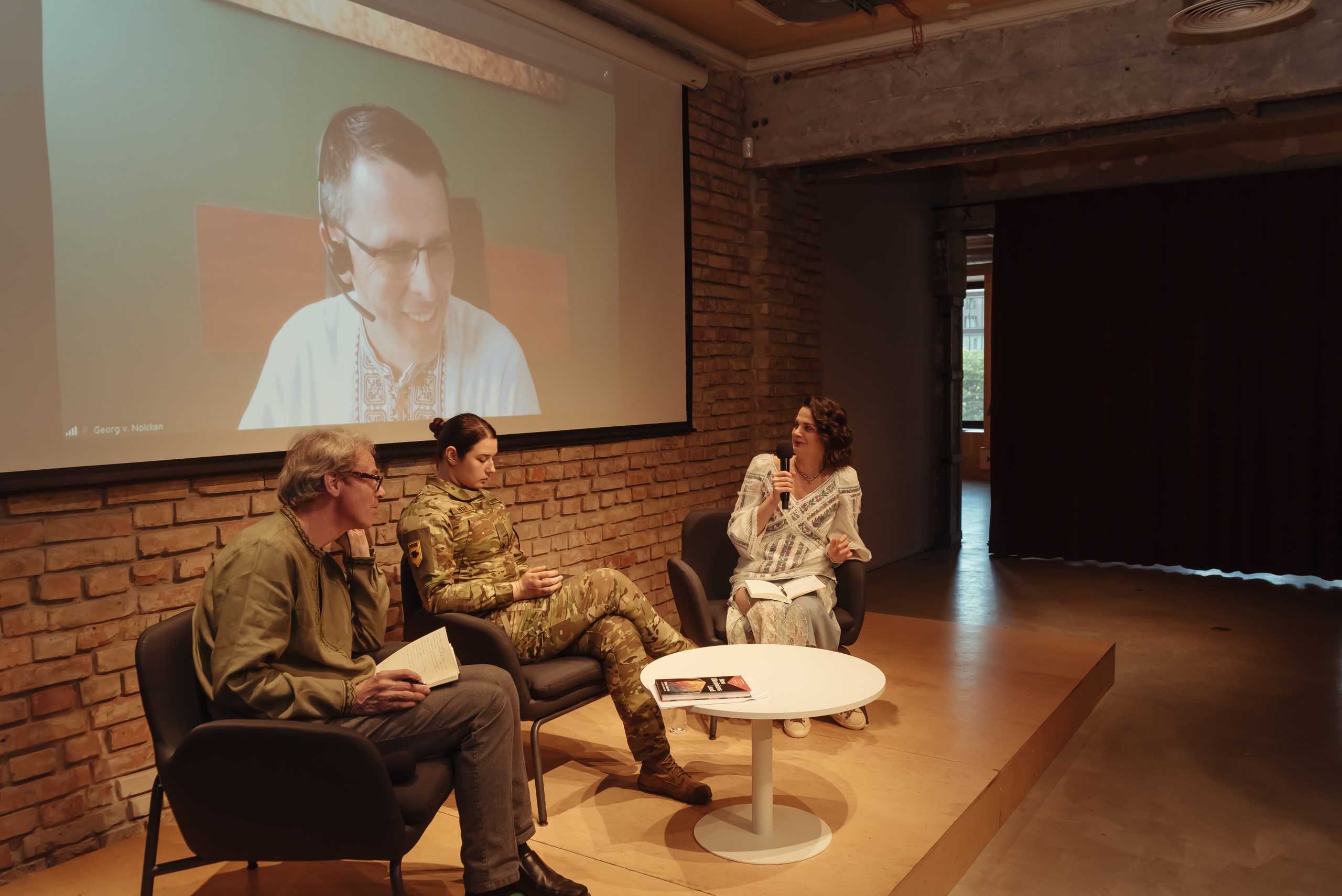
During a discussion hosted by UCU Business School at the Sens bookstore on Khreshchatyk in Kyiv, Ivey Business School professor Gerard Seijts, Continental Farmers Group CEO Georg von Nolcken, and Azov.Support leader Iryna Hoi explored a global leadership perspective through the lens of both the real economy and military leadership experience. The discussion was moderated by Roksoliana Voronovska, Head of the UCU Online Platform and the UCU School of Holistic Development.
 In Times of Crisis, a Leader Must Be a “Steward,” Not a “Hero”
A central topic of the discussion was the concept of Character-based Leadership. Gerard Seijts, professor at Ivey Business School, emphasized that after the global financial crisis of 2008, the world realized that competencies alone are not enough. In his view, a leader’s character consists of 11 virtues, including humility, courage, humanity, and justice.
“We hire people based on competencies, but we fire them because of a deficit of character. I believe we can help transform behavior by turning bad habits into good ones, but this requires constant reflection and inner work. Character-based leadership is not about what a leader is capable of doing, but about how they show up in difficult situations,” Seijts noted.
He stressed that in times of crisis, a leader should not act as a “hero” making unilateral decisions, but rather as a “steward” who creates the conditions for professional discussion and knows how to listen.
“I don’t need you to be right at the beginning of the conversation. I need you to be right at the end,” he added, describing the leader’s role as that of a facilitator.
 The Cost of Mistakes
Iryna Hoi, Head of the Medical Division of the 12th Azov Brigade’s support service, shared insights from both the real sector and military leadership. She reflected on how her civilian business experience transformed during military service.
“In civilian life, I knew that every situation had a solution, and that human capital could be replaced or rebuilt. In military service, the cost of a mistake is human life, and you cannot simply dismiss someone because teamwork did not work out. We are learning to make not ideal decisions, but the most viable ones — decisions that, under uncertainty, lead to the fewest losses of people and resources,” said Hoi.
Her leadership approach is built on three principles: preserving life, maintaining the effectiveness of personnel, and assessing the long-term consequences of every decision.
Scaling Under Fire and the Planning Horizon
Georg von Nolcken, CEO of Continental Farmers Group, spoke about managing an agricultural holding of 195,000 hectares during wartime. He noted that at the beginning of the full-scale invasion, the planning horizon had narrowed to just a few hours, though the company has now returned to two-year strategic investment planning.
According to von Nolcken, a modern leader must provide the team with “comfort,” which he defines not as the absence of demands, but as the presence of trust, support, and a clear growth perspective.
“For us, comfort does not mean the absence of expectations. On the contrary, we expect a great deal, but we create the conditions through trust and support. It is important to give every employee a sense of perspective: where they will be in two years and what growth opportunities they have within the company. If a person has the wrong values, it becomes very difficult, which is why we focus on values even more than on competencies,” he emphasized.
 Humanness as a Strategic Asset
The discussion challenged the stereotype that empathy and humility are weaknesses in leadership. Gerard Seijts pointed out that even military academies in Canada now speak about love and compassion as the foundation of brotherhood in combat.
Iryna Hoi reinforced this perspective through the work of Azov.Support, which provides care for wounded soldiers and those released from captivity. For her, care is not a “soft” skill, but a systemic effort aimed at preserving human capital.
“Leadership today is about absolute responsibility and building systems,” she concluded.
What Future Leaders Must Understand
Moderator Roksoliana Voronovska highlighted several key ideas that emerged as common ground throughout the discussion:
- True leaders are humble leaders.
- Leadership in wartime means total responsibility.
- Systems and communication reduce anxiety within teams.
- Character can and should be developed through reflection and practice.
Today, the Ukrainian experience of leadership is unique for the entire world. As Gerard Seijts remarked:
“The world still has much to learn from what is happening here.”
 Become the Leader Who Sees Beyond the Horizon
UCU Business School invites leaders ready to strengthen their character and develop strategic thinking in times of transformation. Choose your learning path and join a community shaping the future of Ukraine.
Learn more about the UCU Business School master’s programs.