






A two-day business program at BestsellerFest 2026 titled “The Architecture of Ukrainian Resilience: From Culture to Defense — How the State’s Agency Is Established,” organized for the first time by the UCU Business School and publisher Mariana Savka in Lviv. Leading entrepreneurs, military officials, scholars, and government officials participated in the festival.
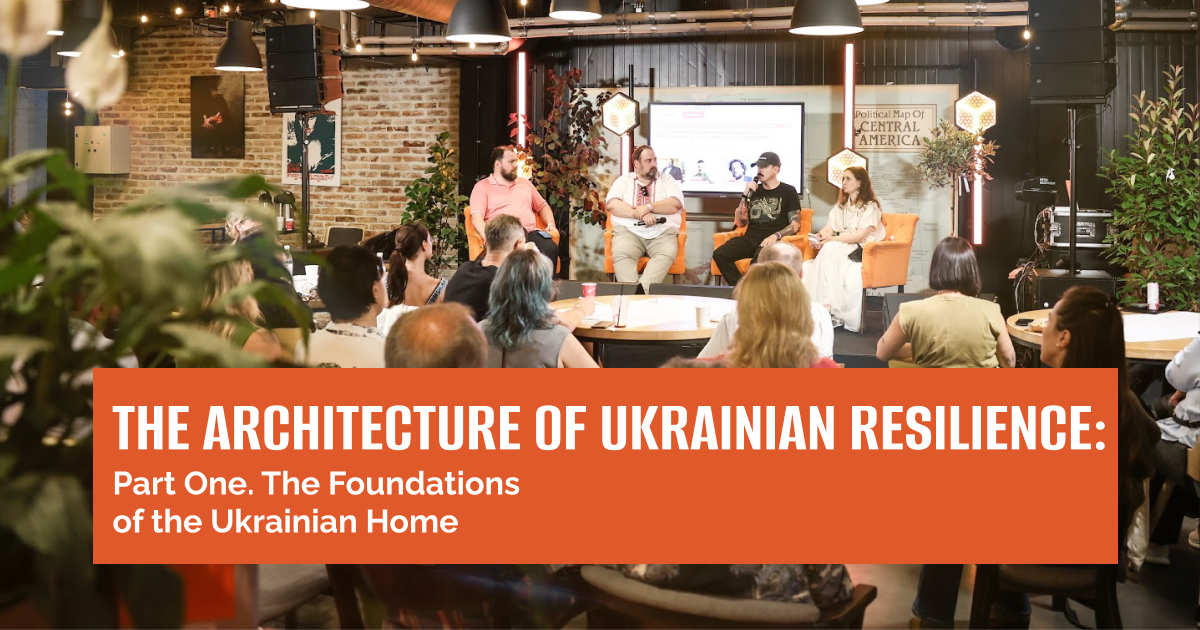 Participants in the discussions sought answers to existential challenges, ranging from strengthening national and cognitive security and rethinking the historical experience of philanthropy to building sustainable business institutions, developing defense technologies, and examining the role of books in shaping corporate culture.
The collaboration between the UCU Business School and Mariana Savka — founder of BestsellerFest and a graduate of the Master’s program Key Executive MBA — was born from a philosophical metaphor she brought back from a trip to Italy.
“When you stand at the top of Milan Cathedral, you realize: the people who built this magnificent structure over many centuries certainly did not know what it would ultimately look like. But they built it anyway. Today, we Ukrainians are building our own cathedral of resilience. Our culture and identity must serve as its unshakable foundation — otherwise, the entire structure will simply crumble, lacking strength.”

The Foundations of the Ukrainian Home
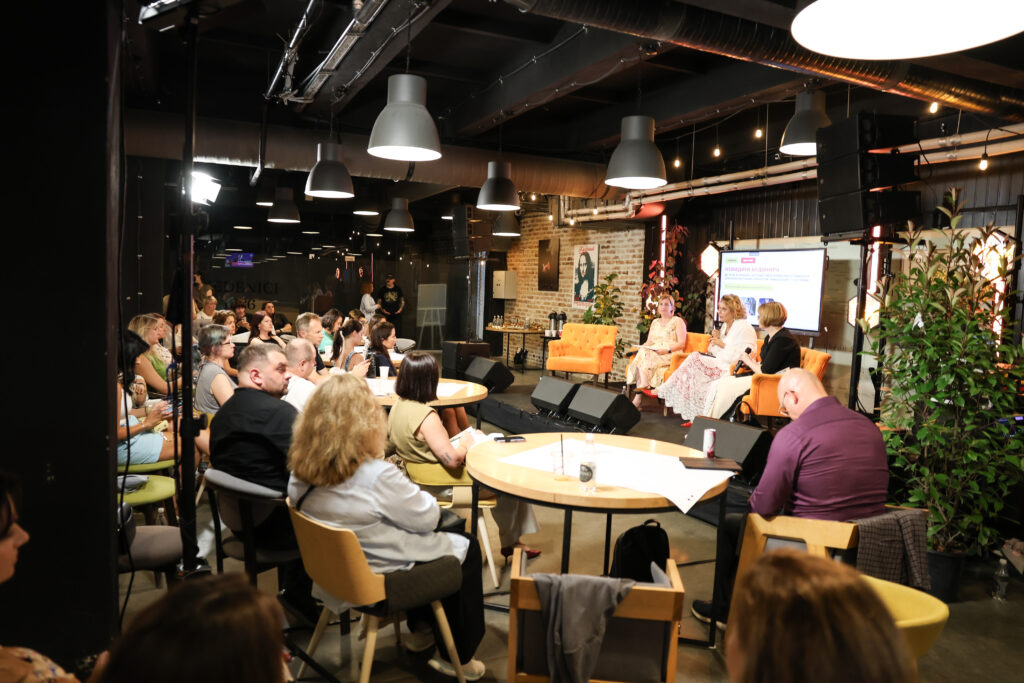
At one of the festival’s venues, the UCU Business School community, alumni, and patrons came together around a common goal — to rethink the role of the humanities sector as critical infrastructure for national security.
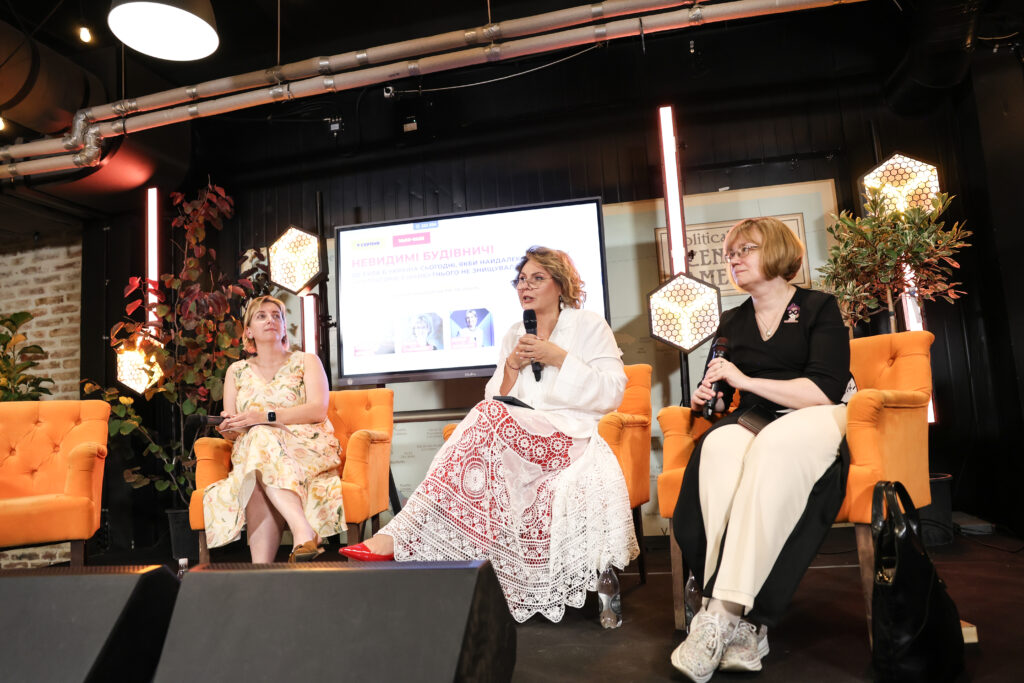
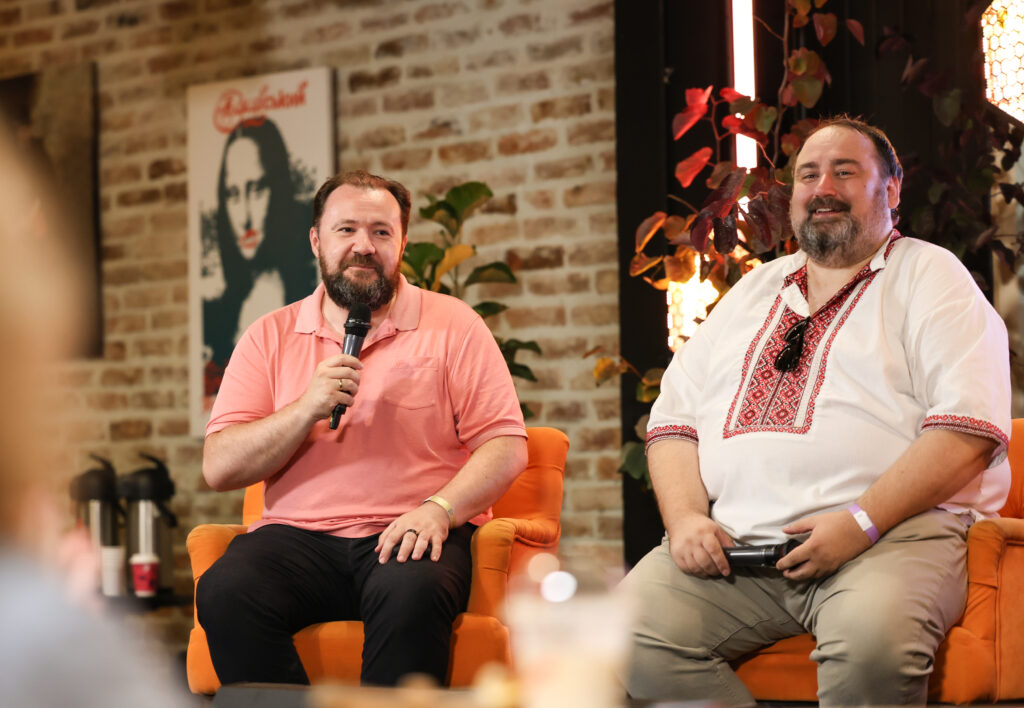
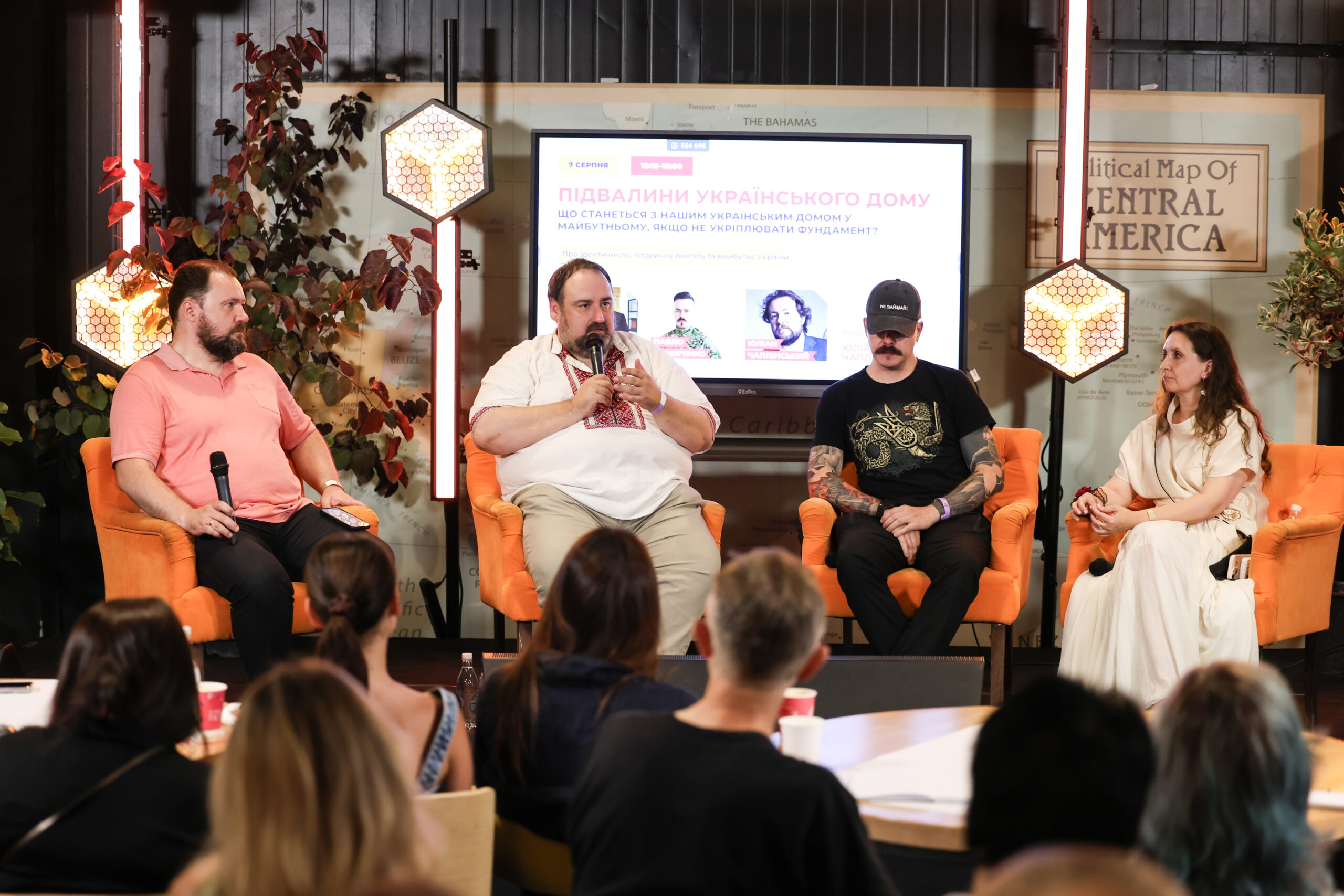
The first discussion, featuring Yevhen Hlibovytskyy, Executive Director of the Frontier Institute, and Pavlo Derevianko, a writer and fighter with the Azov Regiment, and moderated by Julian Chaplinskyy, focused on the foundational elements of nation-building. Participants in the first panel sought to assess the unique characteristics of Ukrainian society that enable it to withstand adversity and to identify potential threats.
Architect, urban planner, and graduate of the Master’s program Key Executive MBA, Julian Chaplinskyy, urged participants to reflect on the hidden threats that erode the very foundations of our identity, comparing them to underground waters:
“As an architect, I know that no matter how we begin a project, we always start with the initial data. And when we talk about the cathedral of our resilience, the key question is: how do we prevent those waters from eroding its foundation? How can we all work together to develop a shared model of safeguards that will stop the currents eroding the foundations of our identity?”
 These trends, according to the speakers themselves, are, first and foremost, a crisis of consciousness and a prolonged stay in other cognitive spaces. Yevhen Hlibovytskyy, analyzing the 20th century and the starting conditions of modern Ukraine, emphasized that despite all the infrastructural and historical traumas, we have a surprisingly capable society:
“We have unique starting points—in fact, a very North American country on the European continent, with a set of ideas about private initiative and personal participation that is uncharacteristic of continental Europe. We emerged from the catastrophic 20th century, so everything that is happening now, compared to the past, is easier for us to accept. We are best characterized by one simple definition: Ukrainians are ordinary people who do extraordinary things,” reflects Yevhen Hlibovytskyy.
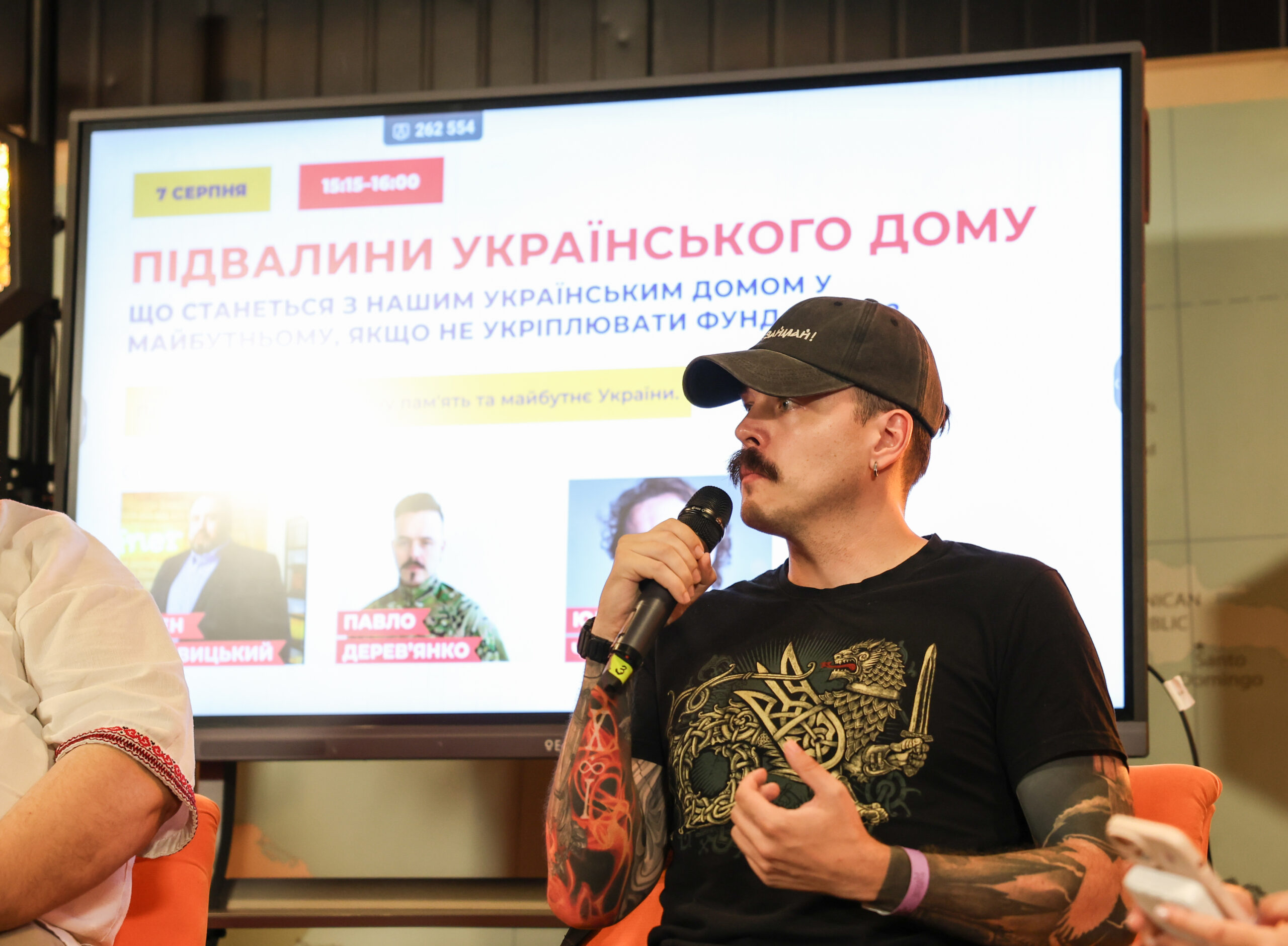
 However, for ordinary people to continue doing extraordinary things, a profound shift in worldview is needed. Writer and military officer Pavlo Derevianko emphasized that citizens’ training cannot be limited to military drills alone, because true resilience begins with a sense of purpose. This inner awareness directly influences how we relate to our own state and its institutions.
With this understanding, Ukrainian society is developing new mechanisms for effective solidarity, where business serves as a reliable support system for the military.
“I’m very impressed by the new corporate culture in Ukraine, where business cannot exist in isolation from the war. This is becoming the new norm: you don’t just organize an event—you make it a fundraiser; you don’t just sell a product — your product benefits the Defense Forces. For example, for every copy of my trilogy sold, “The Old Lion Publishing House” donates 20 hryvnias to the Azov Fund, and in 2025, this initiative raised nearly one million hryvnias,” the writer shares.
 Builders of the Visible and the Invisible
This new norm of solidarity between business and culture actually has historical roots. In a moderated discussion on Ukrainian patronage in the 19th and 20th centuries, Sofiya Opatska — Founding Dean of UCU Business School and Vice-Rector for Strategic Development at Ukrainian Catholic University — along with Professor Natalia Kryvda and literary scholar Iryna Starovoit, sought to identify the historical foundations upon which modern business can build.
In particular, Iryna Starovoit proposed rethinking the role of patrons who invested in infrastructure that outlasted empires and wars:
“The people we remember today — the Semirenko, Khanenko, and Chykalenko families — should be called the builders of the visible and the invisible. They were not invisible, and the fruits of their labor still serve us today. We have been less fortunate than other nations, because our capital has been constantly destroyed. But we are phoenixes, birds of fire — we rise from the ashes where no one expects us to.”
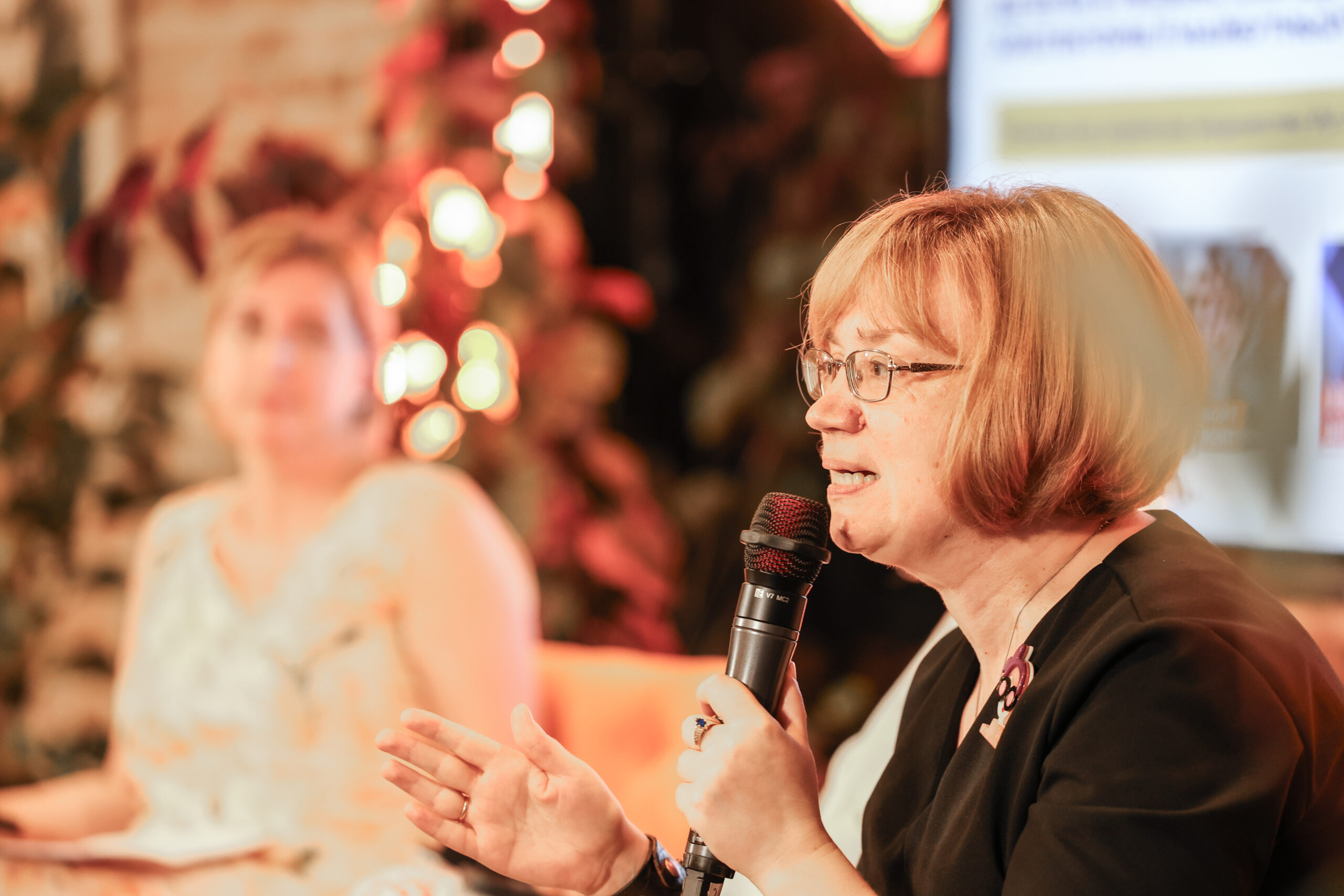 The ongoing nature of this process requires us to view identity not as a given, but as a constant internal effort. Natalia Kryvda, Chair of the UCF Supervisory Board, emphasized that culture and education are the primary cross-cutting tools for shaping identity.
“Identity is a choice. It is a daily referendum. Education — spanning the entire spectrum, from kindergarten to postgraduate studies — is the key player in shaping national identity.”
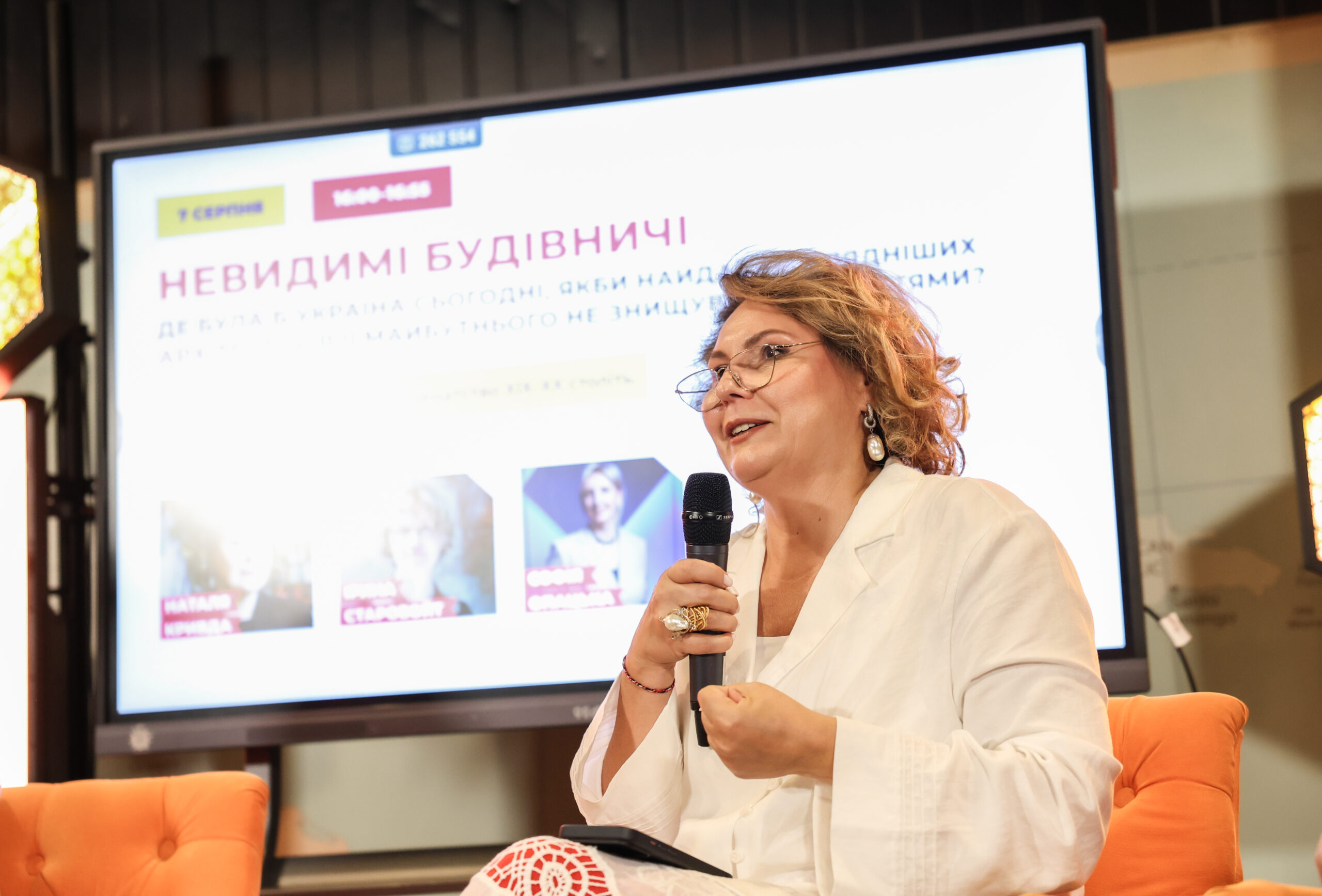 However, government or philanthropic support should not foster paternalism and a culture of entitlement, according to Sofiya Opatska. She emphasized that philanthropy must be based on the principles of reciprocity and effectiveness.
“How can we structure our interactions so as not to foster paternalism in society? On the one hand, we must avoid placing excessive expectations and demands on those engaged in philanthropy, as if they were ‘obligated’ to do something for someone. On the other hand, people should not be under the illusion that they themselves don’t need to do anything at all, because someone will come and solve everything. Philanthropy and charity are always about mutual responsibility.”
The BestsellerFest festival took place for the second time. It featured over 120 events, including new book presentations, discussions of bestsellers, literary debates, public interviews, and readings.
The business program had an important charitable component. In addition to the call to join the large-scale “Eastern Barrier” fundraiser — aimed at raising 250 million hryvnias for the 12th Special Forces Brigade “Azov” of the National Guard of Ukraine — every guest automatically became a patron.
We urge the UCU Business School community to also join BestsellerFest’s major charitable cause — raising funds to purchase and donate books to libraries in de-occupied and affected communities across Ukraine.