






On October 7–10, 2026, the new academic year began at the UCU Business School — “The Great Initiative” — in Lviv. Seventy-six participants (students and non-degree students) enrolled in five master’s programs, and the highlight of the first day was a discussion by university leadership on faith, action, and strategic resilience during wartime.
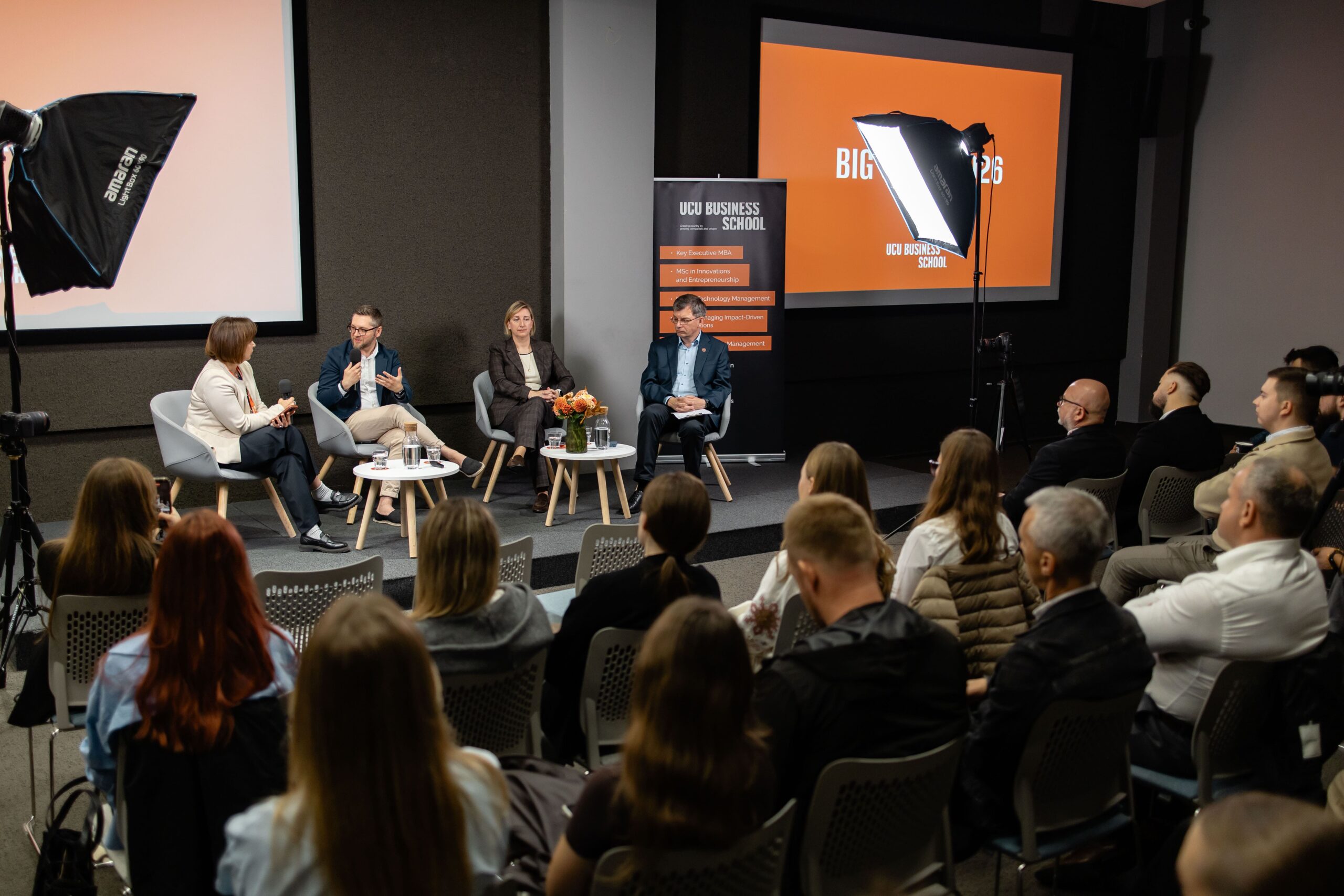
The theme of this year’s orientation is “Leadership in Change. Unity in Action. Resilience Through Development.” Over the course of the four-day orientation and integration module, students familiarize themselves with the university’s ecosystem and academic staff, and work on a management case study based at the UNBROKEN rehabilitation center.
Why did the UCU case study become the main guiding principle for the new cohort of students?
This grand initiative began with a quiet prayer. Opening the morning panel discussion, Yaryna Boychuk, director of the UCU Business School, addressed the new cohort of managers, calling on them to turn uncertainty into future growth.
“What you have dared to do — to study, grow, and never stop — deserves great respect even at this stage. I propose we begin our day with a case study that will accompany you for at least two years of study — the UCU case study. We ourselves continue to learn from this case study. UCU exists to make an impact — we all work to make an impact, so it’s important not only to believe but also to take active steps!”
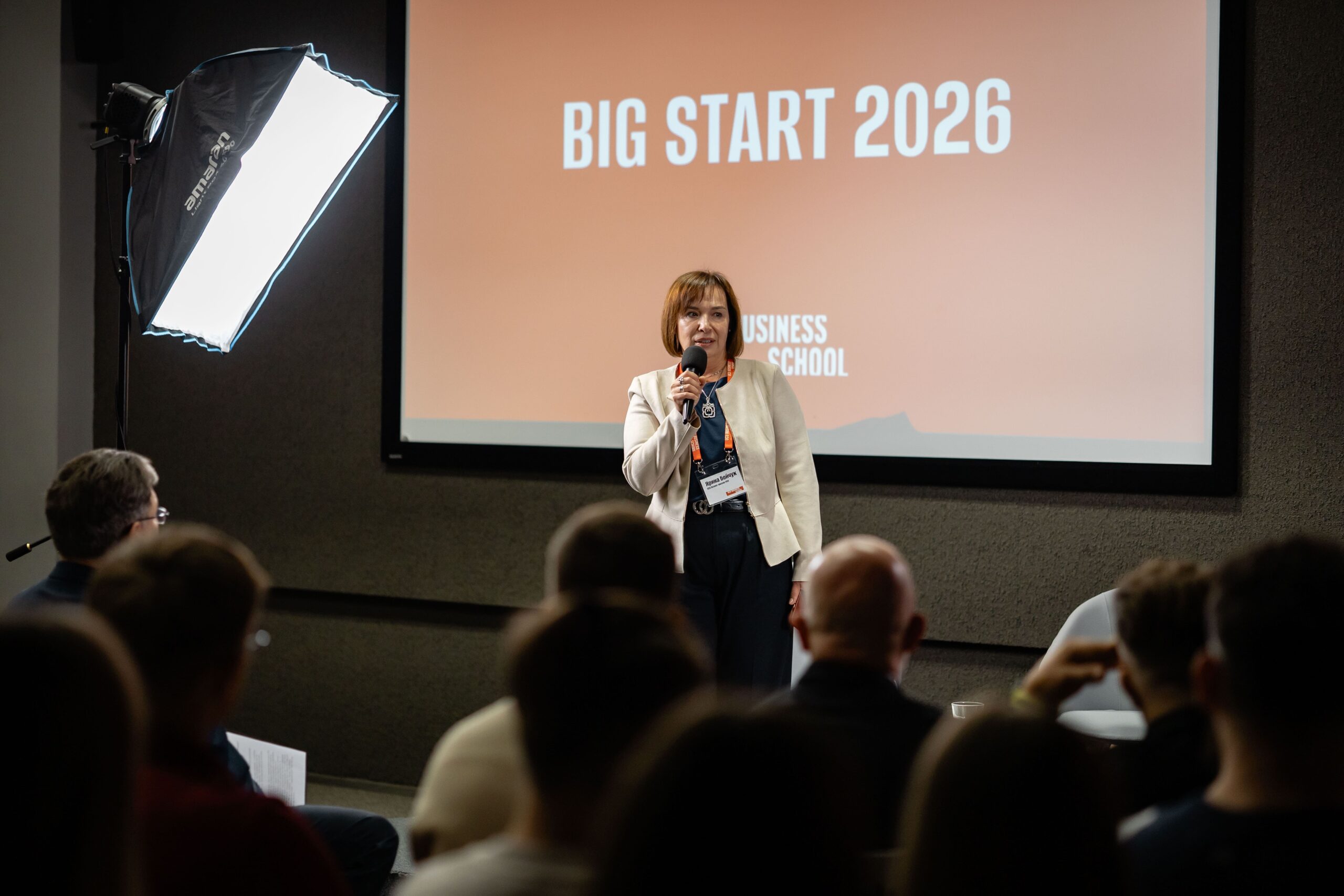
According to the university president, taking a step toward adult education during the war is the best proof of faith that Ukraine has a future — and that it belongs to those who take action, emphasizes Yaryna Boychuk.
How do university leaders explain leadership and unity in times of uncertainty?
During the morning discussion, Rector Taras Dobko, Vice Rector for Strategic Development at UCU and Founding Dean of the UCU Business School, Sofiya Opatska, and Vice Rector for External Relations and Community Service, Dmytro Sherengovskyy, shared their experiences with making difficult decisions and managing in turbulent times.
UCU Rector Taras Dobko, responding to a question about the balance between faith and inaction, emphasized that true faith is a source of freedom and a driving force for decision-making.
“Inaction and passivity are not good. Ukrainians have preserved themselves through historical upheavals thanks to their faith, which provided support and helped them overcome fear. Faith makes it possible to overcome fear and act freely,” the rector noted.
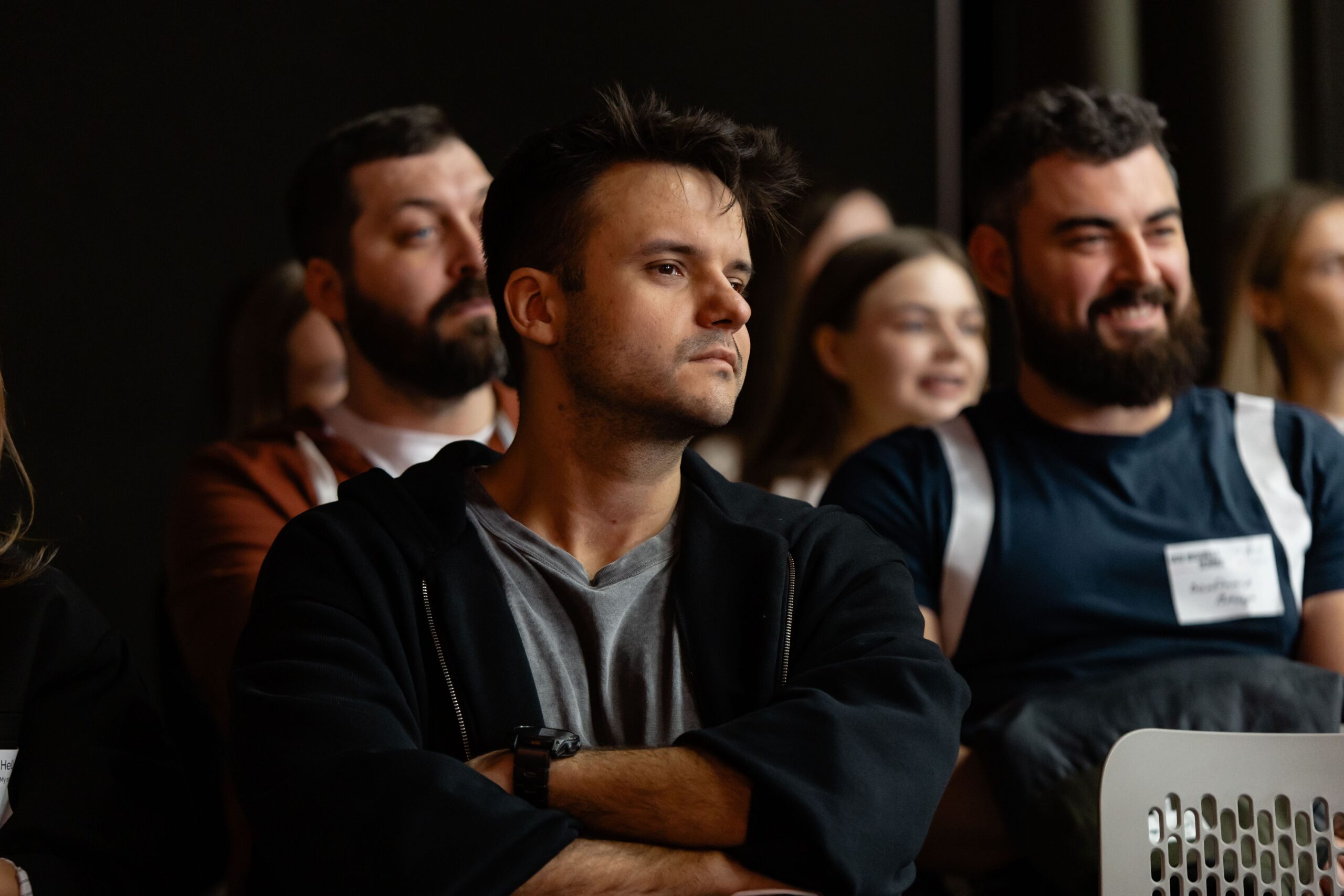
Taras Dobko also emphasized that unity within the community is built on solidarity around a vital and grand idea that extends far beyond the university itself.
Sofiya Opatska recalled the launch of the UCU Business School during the 2008 financial crisis and emphasized that a leader must possess flexible thinking.
“I’ve learned that you always need to keep even an unrealistic, worst-case scenario in mind and be prepared for it. The main task for students over these two years is not only to become even better professionals but also to become slightly better people and to seek innovation at the intersection of different fields,” concluded Sofiya Opatska.
Vice Rector Dmytro Sherengovskyy drew attention to the changing global perception of Ukraine. The world is seeking new, innovative approaches, and Ukrainian businesses’ responsiveness has become their key advantage. He urged students to build networks, learn to talk about their own products in terms of their partners’ interests and shared values, and offer solutions to the world that foster long-term sustainability.
On the first day, program participants were introduced to the financial model and the campus. Andriy Hubar, Deputy Head of the Development Department, presented UCU’s unique financial model to the students. Following the presentation, the students took a tour of the campus on Kozelnytska Street.
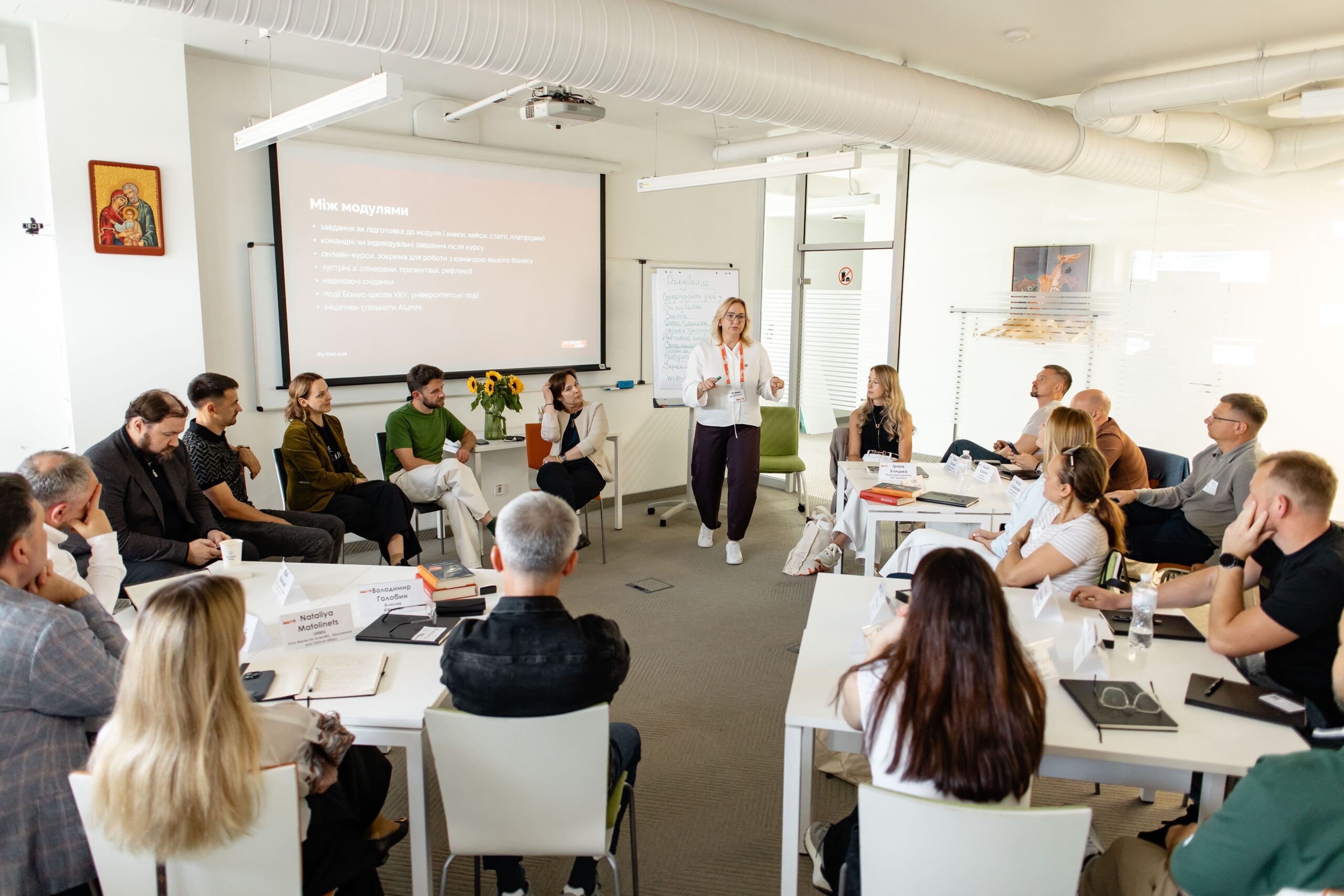
As part of the module, participants were divided into five groups to get to know the directors and coordinators of their programs in detail, followed by a practical session on setting goals for the next two years.
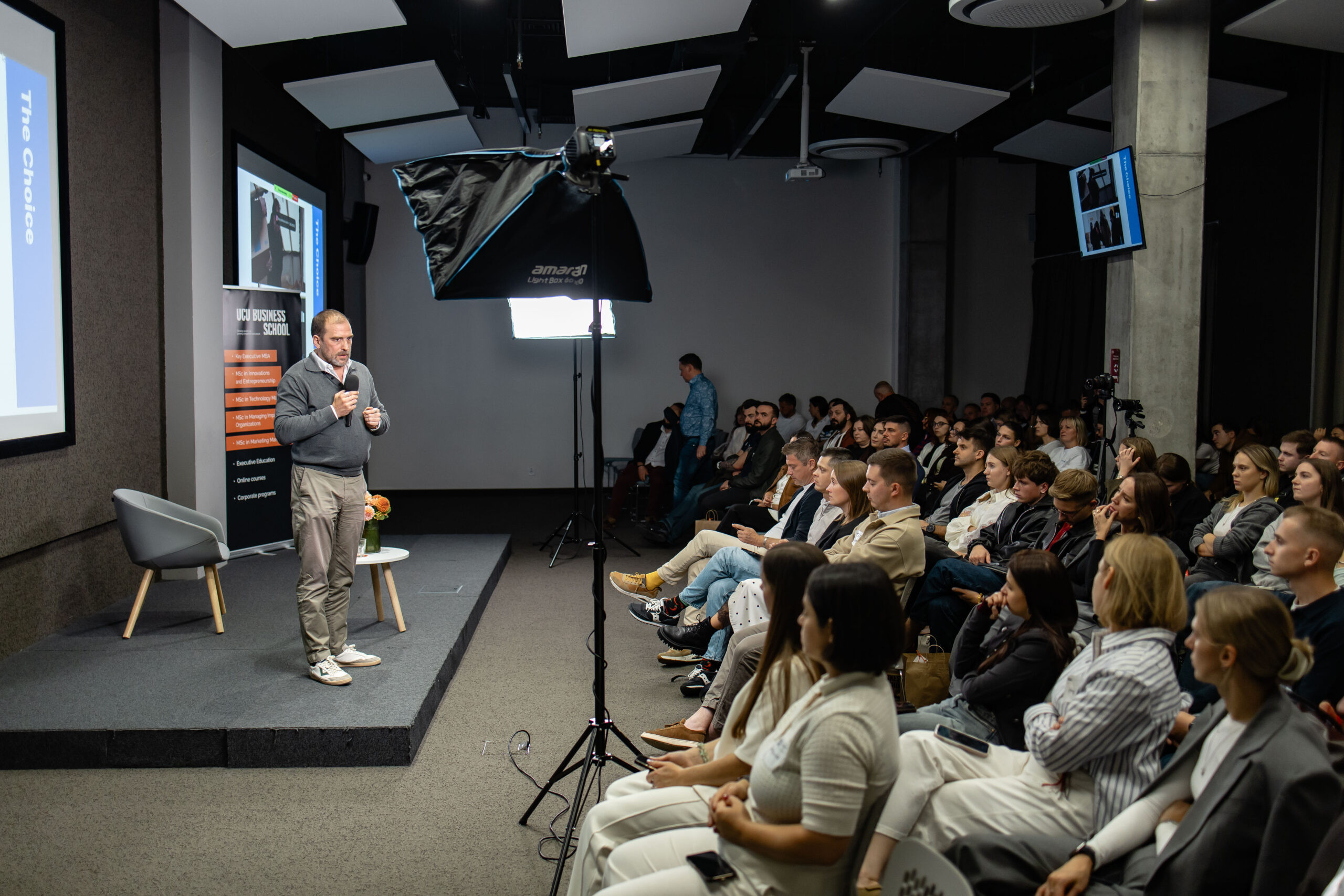
The evening session was opened by Jean-Christophe Bonis, a French tech entrepreneur and founder of the Team4UA humanitarian foundation. He shared his experience transitioning from a financial analyst to a volunteer in Ukraine, emphasizing the importance of making quick decisions in a crisis.
Which master’s programs began this year?
This year, students in five programs are beginning their studies at the UCU Business School. Each program addresses specific challenges in the fields of business and management:
- Key Executive MBA – for business owners and top managers. Here, students learn to develop strategies for 10 years or more into the future and to make decisions during difficult times where the potential reward far outweighs the risk.
- Master in Marketing Management — for mid-level marketing professionals who want to build strong brands, develop strategies using digital tools, and build effective teams.
- Master in Innovations and Entrepreneurship — for aspiring entrepreneurs and startup founders who are developing cutting-edge products and business models.
- Master in Managing Impact-Driven Organizations — for managers seeking to build resilient and socially responsible organizations.
- Master in Technology Management — for professionals who use technology to optimize business operations, implement new solutions more quickly, and help teams work more productively.
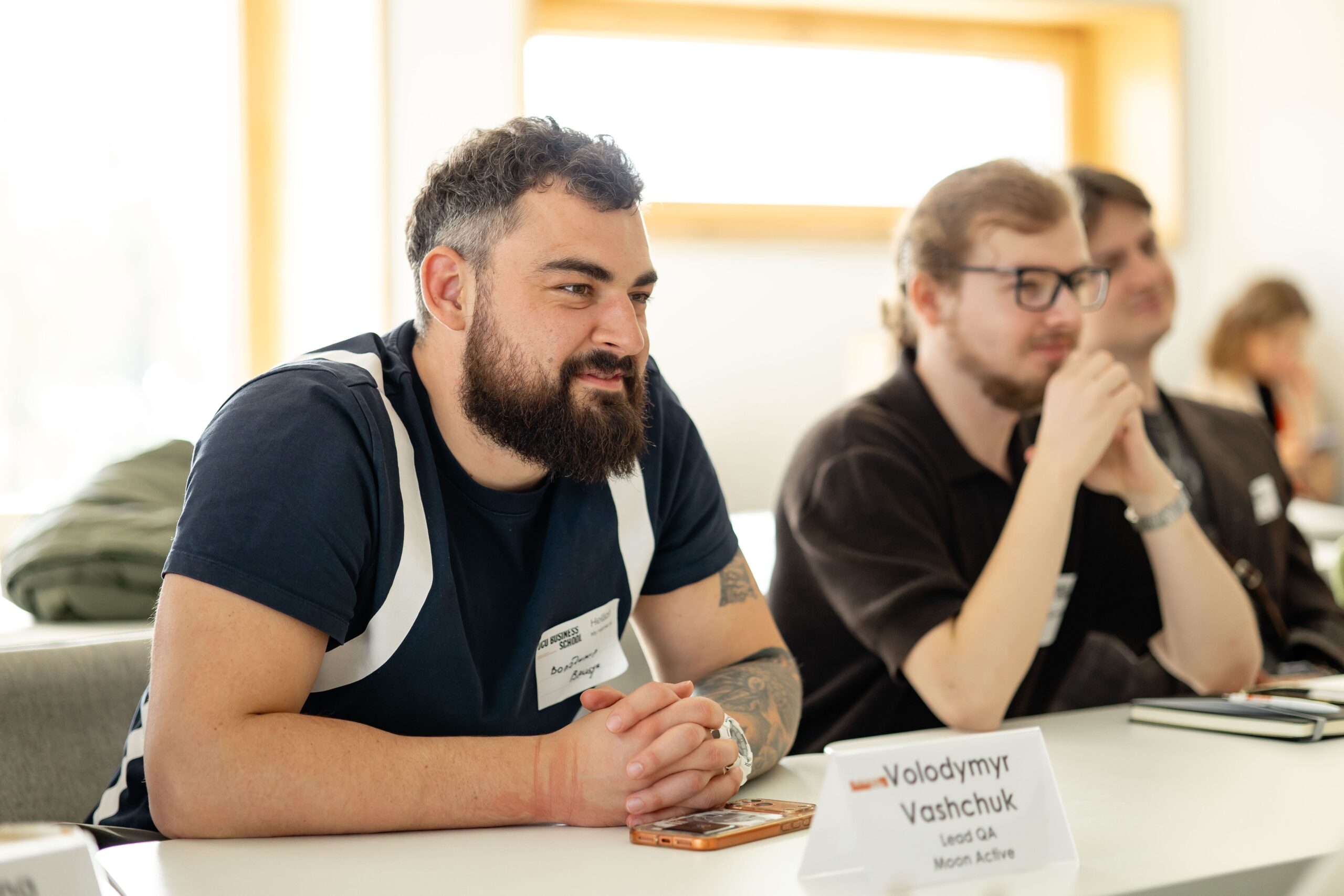
What can students expect in the next stages of the module?
After the orientation day on Kozelnytska Street, classes will continue on the UCU campus in Khutorivka. Over the next few days, students will take a course titled “Management in Times of Turbulence” taught by Professor Viva Bartkus of the University of Notre Dame (U.S.).
One of the days will be devoted to a case study based on the First Medical Territorial Association and the Unbroken Rehabilitation Center. Students will work within the real-world management context of the medical association: they will get to know the organization and its leaders, observe the work of the Unbroken Rehabilitation Center, and hear stories from people who have experienced trauma and recovery. Working in teams, students will tackle real management dilemmas faced by the medical association, develop their own vision, and present it to the organization’s leaders.
Would you like to join the community of leaders at the UCU Business School?
Learn more about admission requirements, course modules, and details of the master’s programs on the official websites:
Explore the master’s programs at the UCU Business School
Learn more about the admissions process
Read other news and analytical articles from the UCU Business School