







The UCU Business School has completed the second module of the “School of Resilience for Veteran-Owned Businesses” program. This UCU Business School program was created in partnership with the Ukraine-Moldova American Enterprise Fund (UMAEF). Its goal is to strengthen Ukraine’s economy by developing businesses founded by veterans and their family members.
The program offers participants academic knowledge and long-term support—ranging from individual mentoring to working with advisory boards—to help veteran-owned businesses become systematic and competitive.
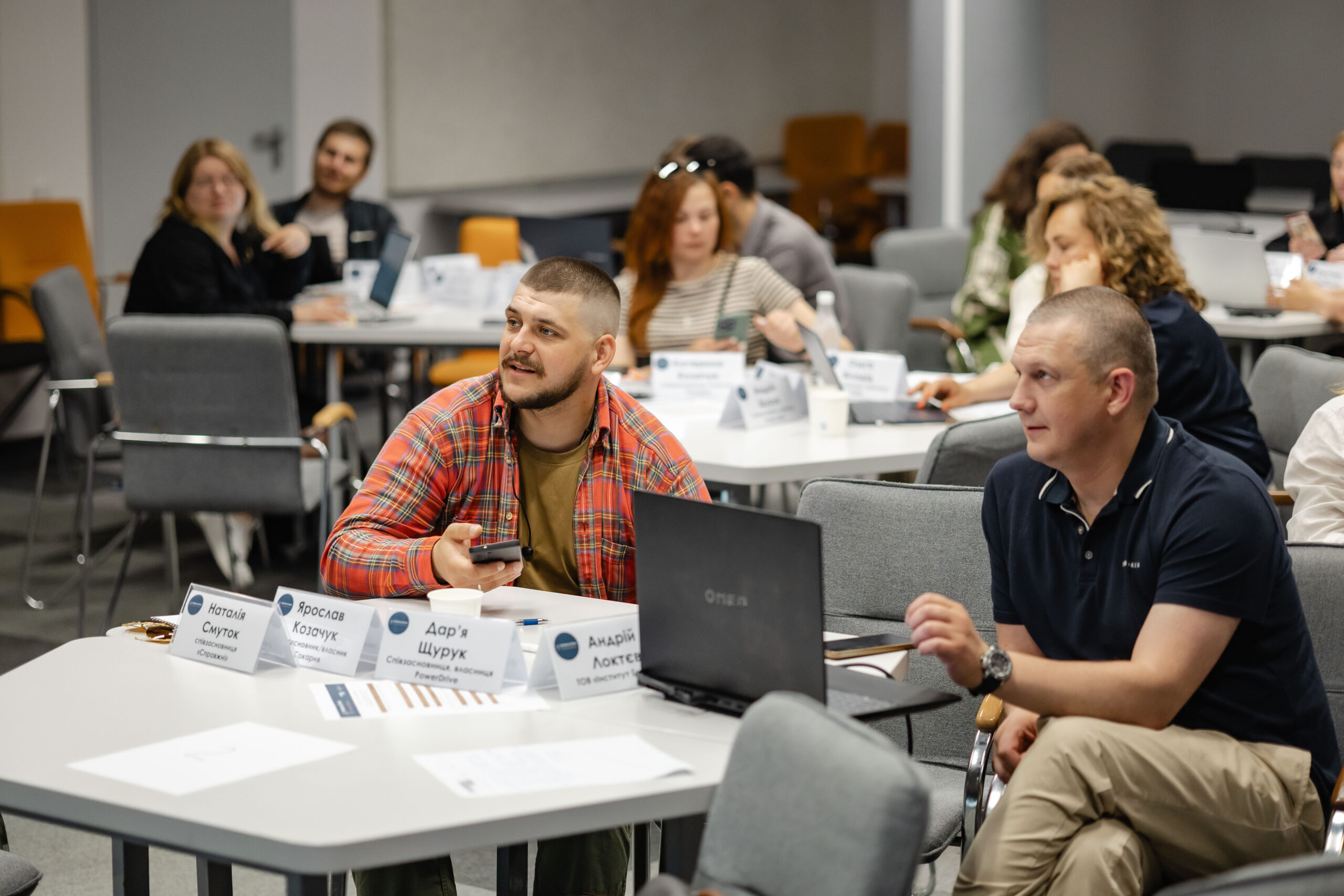
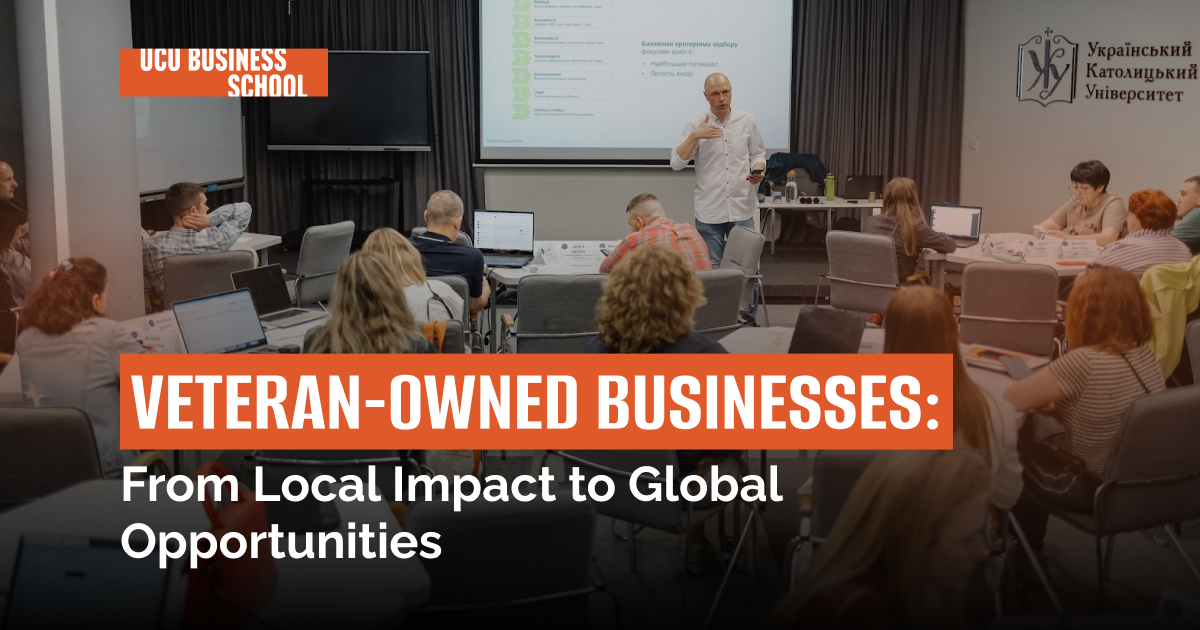 Recently, participants completed the second training module, dedicated to international expansion strategies. Over two days, the entrepreneurs, together with instructor Dmytro Shvets, director of the consulting firm Start Global, analyzed the product’s journey from a Ukrainian warehouse to the shelves of foreign retail chains.
Why Global Thinking Is a Matter of Survival
One of the main goals of the training was to change the perception of exporting as a purely technical process. The instructor emphasized that it is critically important for modern businesses to establish an international vision from the earliest stages of product development.
Commenting on the philosophy of entering new markets, he noted:
“I really dislike the word ‘export’ because it refers only to the tactical and technical aspects of moving goods across a border. Instead, I propose the concept of ‘Born Global’: when businesses, even in their infancy, view the entire world as their potential market.
If you don’t prepare for global competition today, then tomorrow European companies with their vast resources will enter your market and take your customers in Ukraine.”
 A System That Defies Intuition
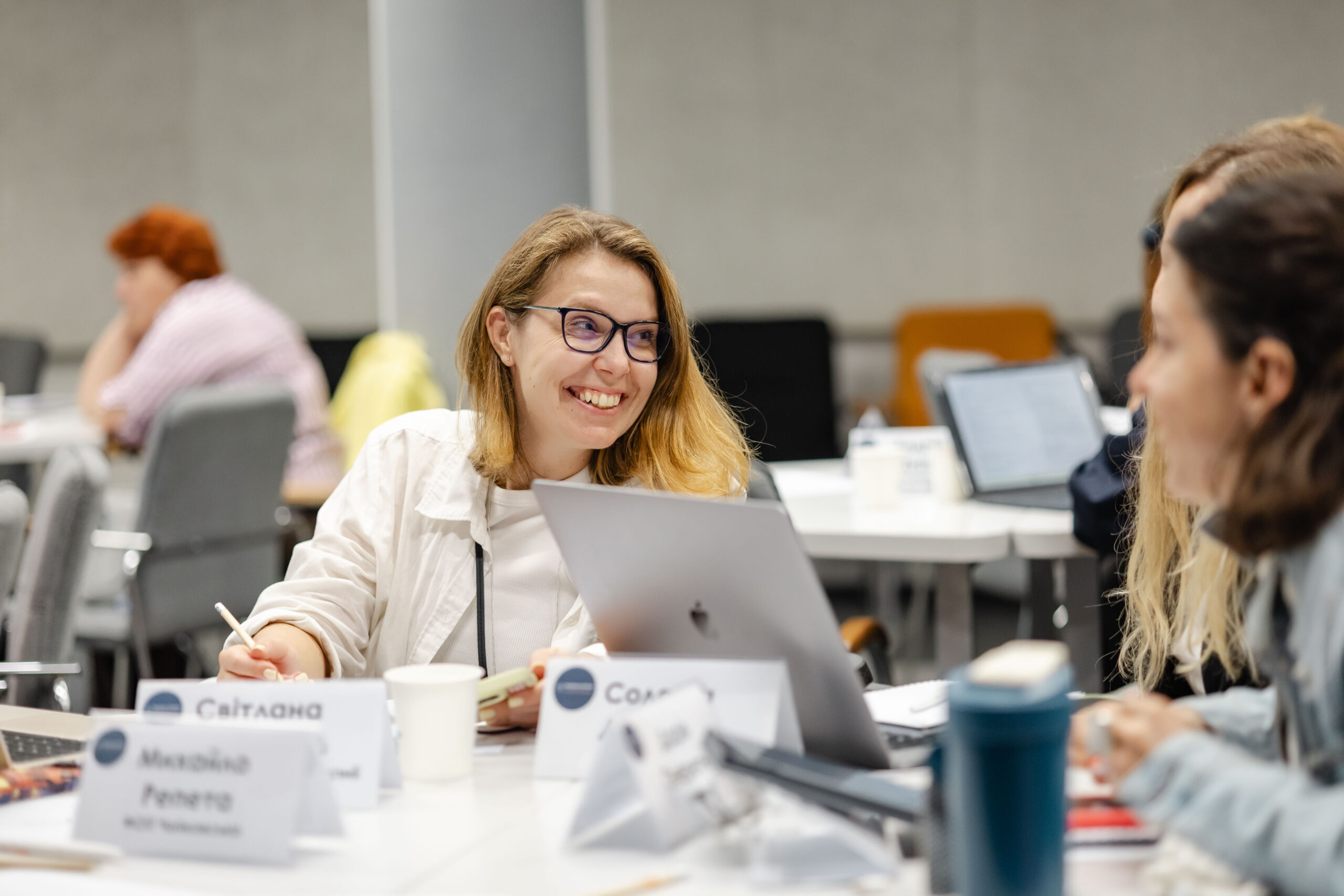
Participants discussed in detail why it’s dangerous to rely solely on intuition in international business. Although “gut feeling” helps entrepreneurs survive in Ukraine’s uncertain environment, it can lead them astray in new markets due to a lack of knowledge about other cultures and the rules of the game.
“Intuition is your accumulated body of knowledge, which often remains unconscious, but it works only in a familiar environment. When you enter a new market with a different mindset, your ‘gut feeling’ becomes unreliable because you lack the data needed to make decisions. That is why every step—from choosing a country to negotiations—must be based on systematic criteria and in-depth analysis.”
Instead of relying on intuition, participants mastered a 6-step systematic approach:
– Readiness assessment: Do you have enough capacity, financial resources, and—most importantly—is your team ready for the long haul?
– Selecting target markets: Don’t try to cover 200 countries at once. Use the PESTEL criteria (political, economic, social, technological, environmental, and legal factors) to narrow down your options.
– Entry strategy: Choose a model—distribution, marketplaces, franchising, or opening your own representative office.
– Preparation: Adapt your product, packaging, and communications to the needs of the selected market.
– Sales and negotiations: Transition from one-off deals to systematic shipments.
– Support and iteration: Exporting doesn’t end with the shipment of the first container. It involves ongoing collaboration with partners and analyzing mistakes.
 Hands-On Experience Through a Business Game
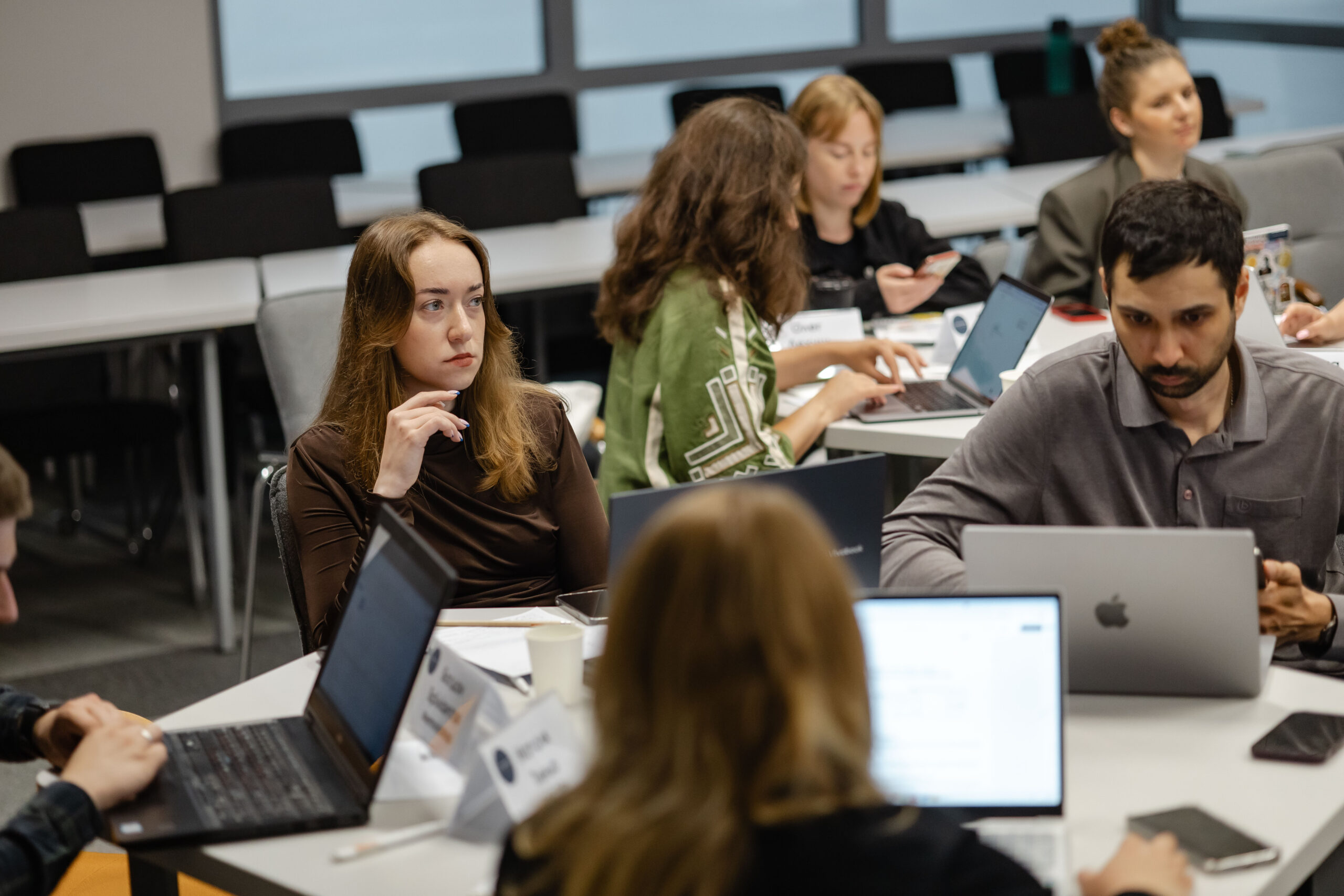
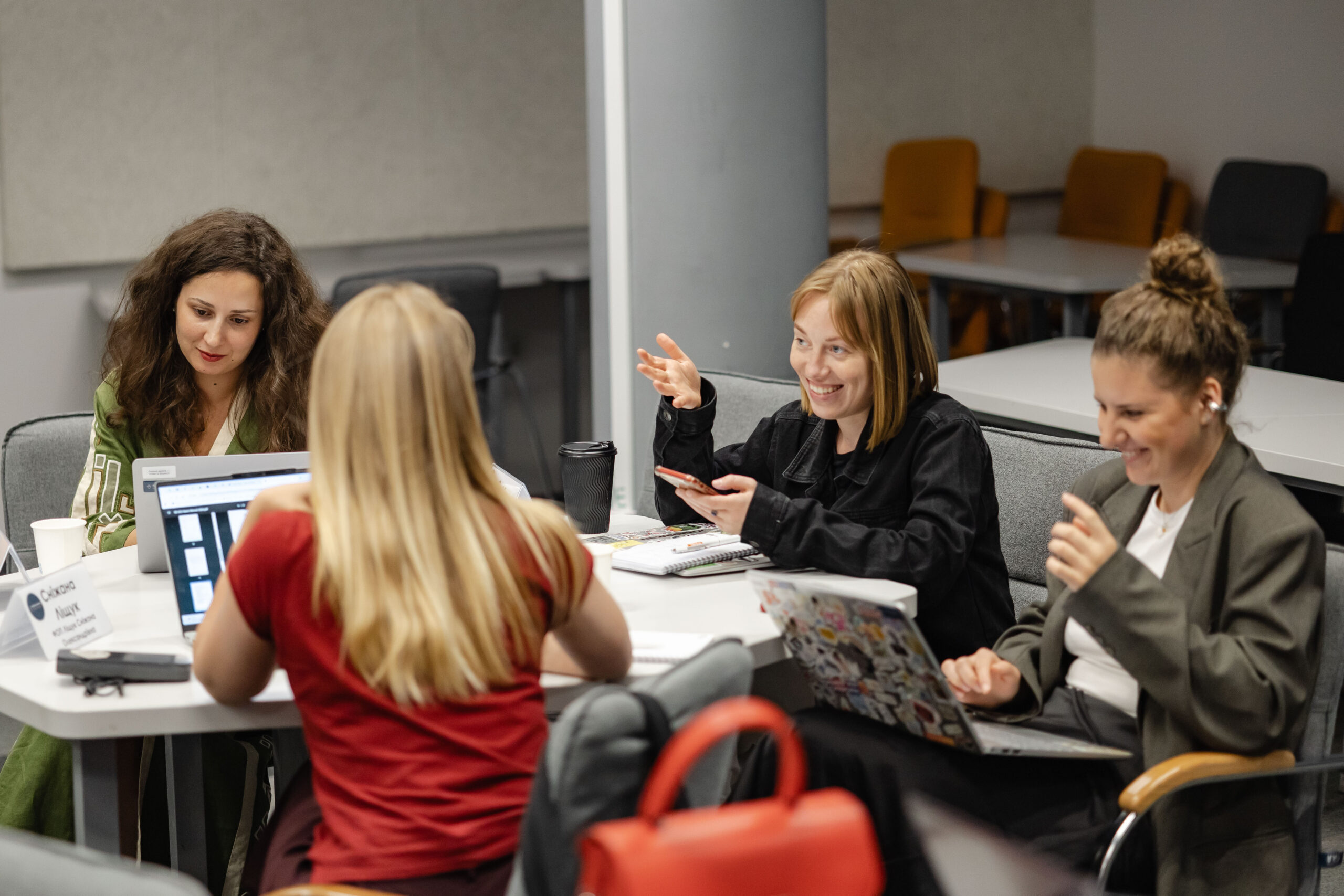
The training took place in the format of the “Global Expansion” strategy game, in which teams developed a strategy for a manufacturer of innovative, energy-efficient panels.
During the discussions, details emerged that beginners often overlook:
– Digital footprint: Your website is your storefront. Having a Russian-language version or displaying the flag of an aggressor country during a war can instantly ruin your reputation in Europe.
– Intellectual property: Check your brand name in every country beforehand. You may find that your name has belonged to another company for 100 years, and you’ll have to change everything—from signage to packaging.
– The power of partnership: One of the module’s key ideas is the realization that you don’t have to do everything on your own.
One participant shared her experience: instead of attempting a complex independent launch, she found partners among designers and furniture manufacturers who were already exporting their products and joined their projects. This is an ideal model for small businesses—scaling up through those who have already walked this path.
 The Future of Veteran Entrepreneurship
Today, Ukrainian entrepreneurship is becoming a global brand of resilience. Program participants not only gain knowledge but also form a community of leaders who set ambitious goals for themselves.
As one of the participants summed up:
“This program helps you understand your own weaknesses before you make a costly mistake in the real market. I used to think that expanding into Germany was just a good idea because there’s a lot of money there, but now I see it as a deliberate challenge for which my company needs to develop a clear strategy. We no longer set small goals for ourselves because we understand that the growth and development of our business is an investment in the future.”
In particular, Andriy Shchuruk, a veteran and owner of the “Power Drive” electric scooter rental business, shared his thoughts on the value of the “School of Resilience for Veteran-Owned Businesses” program:
“Thanks to the training, we’ve reimagined our business, restructured it, and identified areas for future growth; we’ve eliminated some of the chaos—now everything is more under control.”
 For the UCU Business School and the Ukrainian Catholic University, in particular, working with veterans and their families is a key priority. We strive to create an environment where service members feel supported and gain the vision and tools they need to realize their potential in civilian life by adapting their unique military experience into professional management skills. Learn more about educational opportunities and news for the veteran community on our website.