






Why did students of the Key Executive MBA at UCU Business School spend a week living in the small town of Rozdil? How is the Business on the Frontlines program, founded at the University of Notre Dame, being implemented in Ukraine? And can business truly influence the lives of communities? Read more about this in the article.
The Business on the Frontlines Program in Ukraine
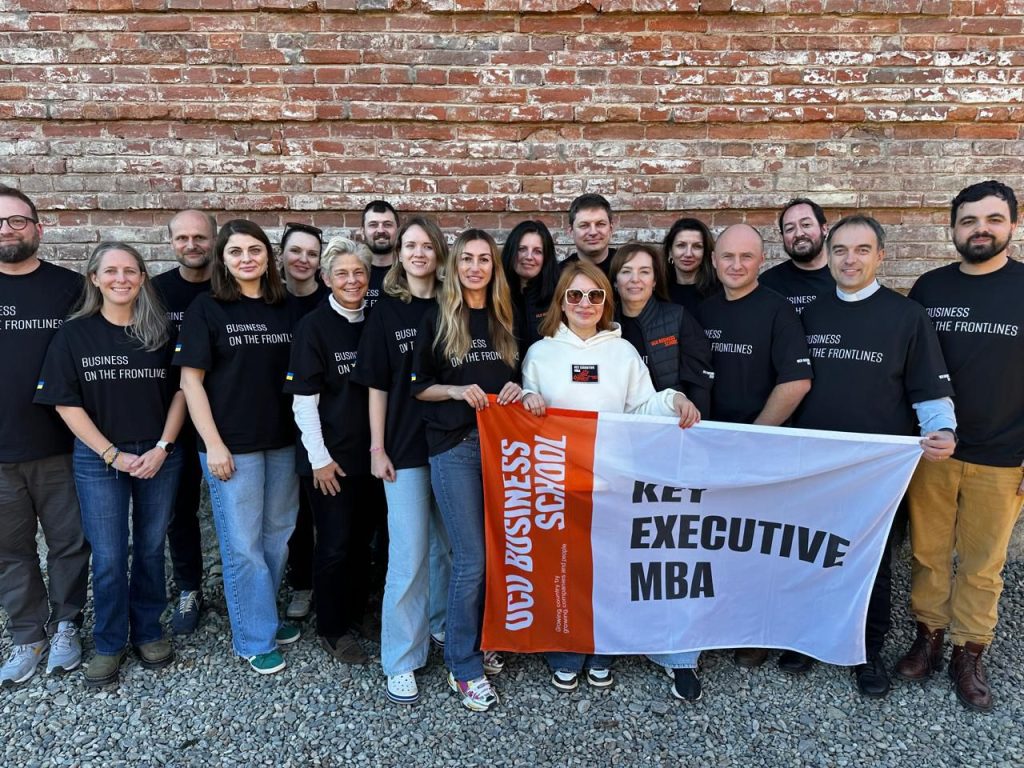
The Business on the Frontlines initiative was launched in 2008 at the Mendoza College of Business at the University of Notre Dame. The course was founded by Professors Viva O. Bartkus and Emily S. Block. The idea behind the initiative is rooted in the belief that all work has dignity and that every person has the potential to contribute to the development of society. Over the past 12 years, BOTFL teams have implemented more than 60 projects in over 25 countries.
The Business on the Frontlines program is often described as a “journey of discovery” for students. In addition to gaining practical experience, participants engage with people, places, and situations that often reshape their worldview.
On September 15, the course was launched in partnership with UCU Business School. As noted by Artem Kornetskyi, course leader of Business on the Frontlines and lecturer at UCU Business School, in today’s context it is critically important to find points of intersection between business and communities:
“If we are talking about business education, it is precisely the business school that can connect motivated people on the ground with students, and also involve others in order to find the best multidisciplinary solutions.”
You can learn more about the first phase of Business on the Frontlines in the previous article:
https://lvbs.com.ua/news/biznes-na-peredovij-praktychnyj-dosvid-cherez-realni-kejsy/
From the Amazon to Rozdil in the Lviv Region
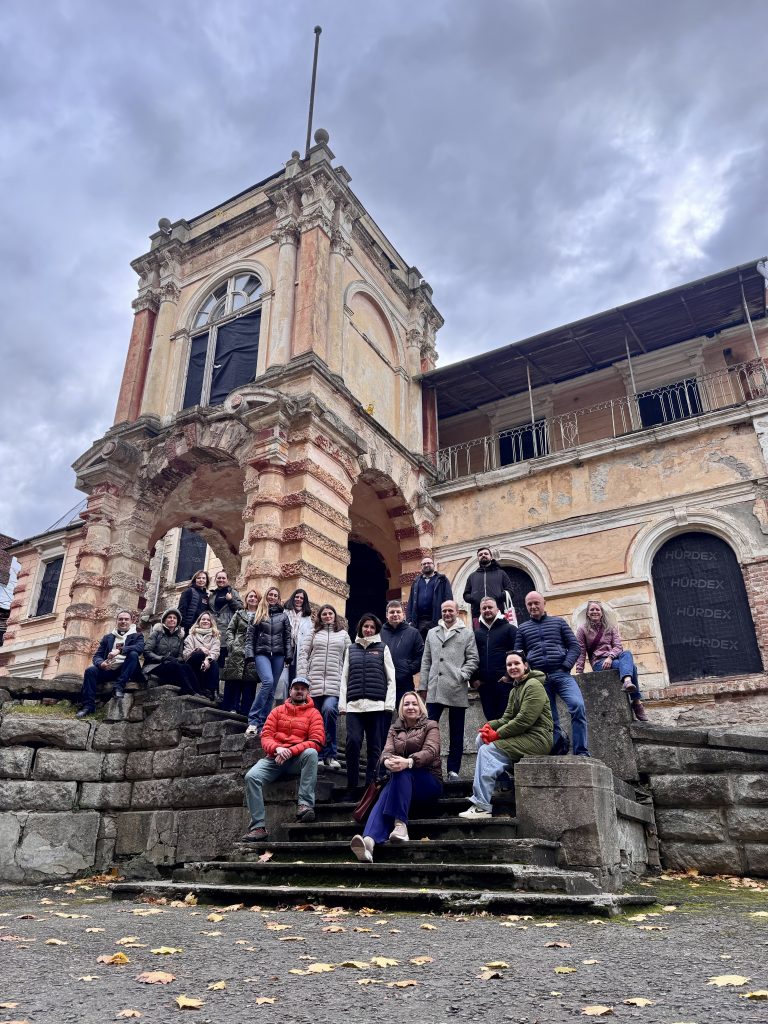
The second stage of the project began on October 27 in the small town of Rozdil, Lviv region. Students, mentors, lecturers, and the BOTFL team from the United States, together with Viva O. Bartkus, gathered there. They spent a week living in Rozdil, working in teams to jointly address challenges aimed at fostering the development of the Rozdil community.
On the first day, students were introduced to the local area and to the BOTFL team. Viva O. Bartkus shared that the project team has previously worked in the forests of the Amazon, in Colombia, and in African countries, and emphasized that it was an honor for them to now work with partners in Rozdil and colleagues from UCU.
“The mission of our course is to harness the power and dynamics of business to support communities recovering from war, isolation, or systemic shocks. There are few places in the world like Ukraine, where spirit, patriotism, and love of homeland run so deep. People here are capable of heroic acts in the name of rebuilding their country. We are deeply grateful and inspired to be part of this process,” shared Viva O. Bartkus.
The Rozdil Palace as a Case Study
A guided tour of Rozdil for the teams and guests was conducted by Hanna Havryliv, founder of the Heritage Charitable Foundation, whose mission is the preservation and restoration of cultural heritage in Ukraine. First, the participants visited the Rozdil residential care institution for boys with intellectual disabilities. The teams learned about the institution’s challenges and were shown the conditions in which its residents live.
Later, the teams visited a historic site—the Rzewuski–Lanckoroński Palace. There, Hanna Havryliv spoke about the central Rozdil project, which aims to become an example of impact investment in the field of cultural heritage. The project envisions the restoration of the palace and an industrial park, which together could transform the settlement into one of Halychyna’s leading cultural centers. Students had the opportunity to explore the palace and park, as well as visit other cultural landmarks, to better understand the project’s concept, local history, and regional challenges.
Following the tour, participants met with one of the project’s investors—Ihor Liskyi. Ihor Liskyi is Chairman of the Supervisory Board, entrepreneur, investor, founder of the Efficient Investments group of companies (EFI Group), and since 2016 a founder and co-founder of the Ukrainian Institute for the Future.
“The Rozdil project is about community development, added value, and reconnecting with our roots. When a place inspires, collaboration and cooperation naturally follow. I am confident that investment will come—international investment included. Our ultimate goal is that in four to five years we will gather here again and see a revitalized palace complex with hotels, restaurants, a tourist center, and a restored park. And that it will become a signature landmark not only of the Rozdil community or the Lviv region, but of all Ukraine,” Ihor Liskyi added.
Students had the opportunity to ask Ihor Liskyi questions and to share business experience and their own ideas.
Over the course of the week of learning and shared living in Rozdil, each team of Key Executive MBA participants worked on solving business challenges related to the palace, the brewery, and the industrial park. Yaryna Boichuk, CEO of UCU Business School, emphasized the importance of such cooperation for the country’s recovery:
“Business education must cultivate not only entrepreneurial vision and thinking, but also the ability to integrate them into the broader context of community life. Through such projects, we aim to demonstrate how essential it is to understand the environment in which an initiative is implemented. Equally important is the readiness of local communities to embrace change and become our partners. I am convinced that once these projects are realized, they will generate successful stories and case studies that we can share with others. I hope that other business schools will join this movement, because rebuilding the country begins with small communities—the places where a new Ukraine is born.”
The final stage of the Business on the Frontlines project will be the presentation of the teams’ results in December, along with practical pathways to implement them and thereby improve the life of the Rozdil community.