






Fr. Roman Hrom is a priest, a graduate of the MSc in Innovations and Entrepreneurship program 2023, an initiator of various initiatives, and a community activist. He shared how it is possible to develop social business and tourism in a «God-forgotten village» in the Sambir region — and how preserving traditions can effectively support the military and unite people around meaningful missions.
Father Roman, what might surprise people about you?
I don’t know, honestly. There was one case — we were essentially building our social enterprise from scratch. At a certain point, we needed to carry out excavation work. We were given a piece of machinery — an excavator — but there was no one to operate it. So I simply got in and worked on the excavator for two days. I knew how to do it — I had learned before entering the seminary. People would come and say, «That’s our priest over there, operating an excavator.» Perhaps I could still surprise someone back then.
What is the most valuable piece of advice you have ever received?
The best advice I have ever received was this: always work more than is expected of you and more than you are paid for. It was given to me by a priest. It’s not about self-sacrifice, but about an inner standard of responsibility — not measuring your efforts solely by compensation. This attitude always comes back to you in different ways — through trust, opportunities, and relationships. Essentially, it is a very biblical principle, and I often recall it and live by it.
What motivated you to enroll at UCU Business School?
When I arrived at the parish, there was a sense of decline: no roads, no activity, and people said both God and people had forgotten the village, and that soon no one would remain. That’s when I realized that it’s not enough to preach loudly about hope — you need to change this reality through your actions. That’s how I came to the idea of supporting small entrepreneurship and envisioned a project inspired by Andrey Sheptytsky. Because entrepreneurship is not just about business — it’s about meaning, work, community development, and human dignity.
Note: The village of Mshanets, Sambir district, is located near the Polish border. It has a population of 150 people, with an average age of 68, according to Fr. Roman.

What was your master’s project about?
During my studies, while working on my master’s thesis in the MSc in Innovations and Entrepreneurship program, we researched how small businesses affect national economies and found that where small businesses are strong, the state is strong as well. For me, any occupation a person lives by is already a form of entrepreneurship. If work brings value, sustains life, or creates jobs for others, there is always an entrepreneur behind it — and responsibility for decisions made.
How did the «Christmas Birds» initiative come about?
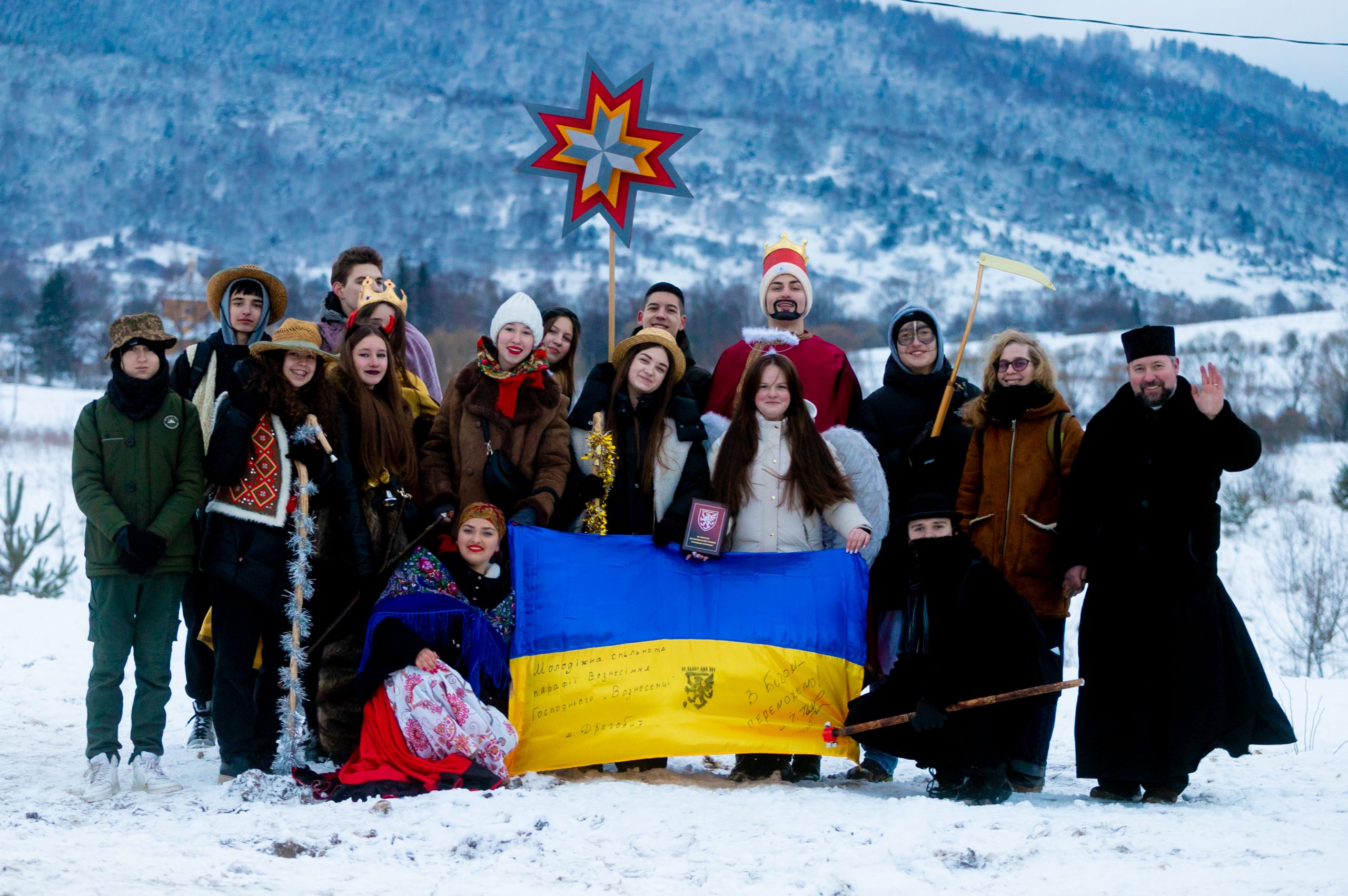
«Christmas Birds» is a nationwide charitable movement culminating in a nativity play gathering in our village of Mshanets. The idea was born from real experience. Earlier, several nativity groups united to help a specific soldier, and it became clear to me that caroling together can achieve far more than caroling separately. Any nativity group can join: they register, receive a nativity star in the colors of the 80th Brigade, and carol in their city or village. All donations are publicly displayed in an online table, ensuring transparency and trust. The final event is the gathering of nativity groups in Mshanets.
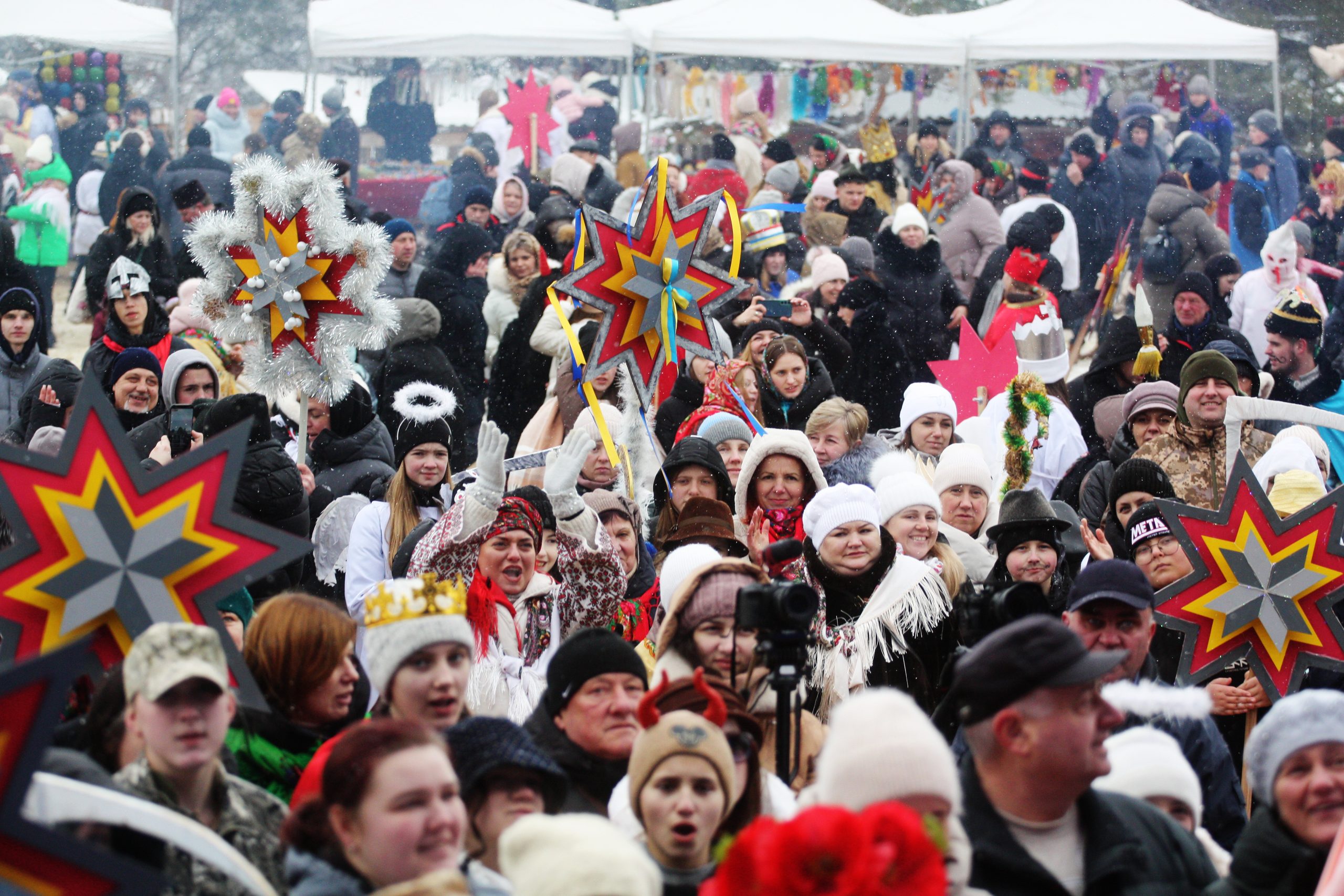
Note: Over two years, nearly UAH 10 million was raised (over UAH 5.5 million in the first year and nearly UAH 4 million in the second). All funds were used to purchase equipment requested by the military and to deliver it to the 80th Brigade personally. Hundreds of nativity groups participated (up to 260 registered participants), and over 100 groups attended the gathering in Mshanets, setting a Ukrainian national record. Updated data from the 2026 caroling season will be shared on our social media.
What is the «Vertepia» nativity festival?
For two years in a row, the nativity gatherings in Mshanets looked not just like collective caroling, but like a real performance. My wife and I realized that, in essence, it was already a carnival — it just hadn’t been named yet. That’s how the idea of creating Ukraine’s first nativity carnival emerged. We prepared a project, submitted it to the Ukrainian Cultural Foundation, and placed second in the national ranking, receiving funding. As part of the preparation, we sewed 35 carnival costumes, published a book about the nativity tradition and modern scripts, and created a series of promotional videos. This year, «Vertepia» will be the final event of «Christmas Birds»: on January 3, participants will gather in our Mshanets.
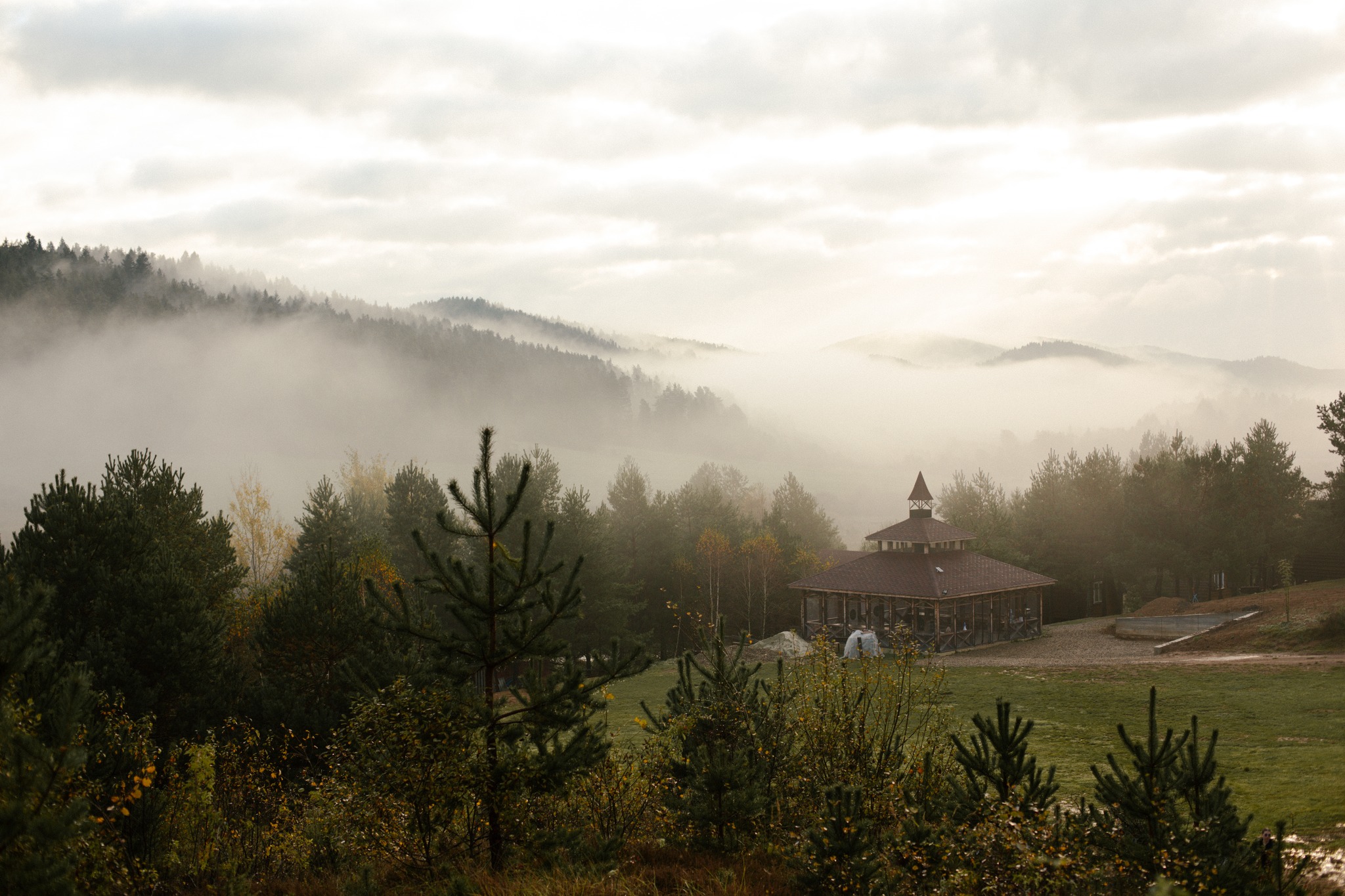
The social enterprise «Mshanetski Koliby,» which we began developing with the local community’s efforts and modest resources and grants, eventually grew into a summer tourism complex. Today, we can host up to 56 people at a time for recreation, education, and retreats. We continue to develop — building and improving — which attracts tourists. Even if the numbers are small, jobs are created for locals. Even if not many, jobs are created for locals. The internal economy is activated: tourists buy more honey, milk, and other local products, which brings the shop the highest revenue, especially when children and young people are present. For me, it is essential that «Mshanetski Koliby» belongs to the village’s religious community. It demonstrates that the Church stands alongside its people — uniting and supporting them.
How did tourism and social entrepreneurship begin in Mshanets, and what problem were you trying to solve first?
When we started, there was virtually no entrepreneurship in the village — just one small shop. But we saw natural tourism potential. There was little human capital, but plenty of nature. We decided to start with small steps — small initiatives that would gradually change the situation. We consciously chose a strategy of developing tourism through social enterprises, including the Church’s involvement. It was important to show both residents and potential investors that tourism here is possible and can grow. The main goal was to prove that people in the village can not only survive on tourism but also live decently and build their future here, rather than dreaming of leaving as soon as possible.
The situation with human capital was challenging: there were almost no young people. Sometimes, to stage even a Christmas nativity play, we had to bring children from three villages to gather ten or twelve participants. It wasn’t easy, but it further convinced us that without change, the town would not have a future.
Did studying at UCU Business School help you manage the processes you are involved in?
Yes, it allowed me to organize processes at «Mshanetski Koliby» in a completely different way. Many of these changes became possible thanks to studying at UCU Business School: processes became systematic, and I gained an understanding of how to work with investors. We not only attracted investors but also brought them to the village. Some of them are now independently developing tourism here. This is extremely valuable because it became possible precisely through learning: when your mindset changes, you start seeing things differently, and everything changes.
In addition, during my studies, I realized even more deeply that entrepreneurs — even large and successful ones — are often very decent people. Many of them are also deeply spiritual. I saw that Christian values are not just about personal morality or family upbringing. They are embedded in the very mechanics of their businesses — in leadership, trust, and fair distribution of responsibility and resources. These values are not accidental; they are woven into processes and often lie at the core of decisions. For me, as a priest, this was a significant discovery.

What is your secret to productivity?
My secret to productivity is prayer. Prayer brings inner peace and clarity, helps put everything in its place — what to let go of and what to focus on. It gives vision and direction. I see an obvious connection between prayer and productivity. Sometimes you can work nonstop and see no results, and sometimes a few simple, well-directed steps bring much more.
When prayer is sincere, many miracles happen — far more often than we imagine. Metropolitan Andrey Sheptytsky deeply inspires me. We usually speak about him in the context of entrepreneurship, but if you read his spiritual writings, it becomes clear that he prayed for several hours every day. And at the same time, we know how much he accomplished in his lifetime.
Another important factor of productivity is habit. Daily routine, early rising, planning — all of this helps a lot. It’s not always easy, but once it becomes a habit, it truly works.
What are you grateful for today?
I am grateful to God for my vocation.
Interview by Marta Shyiko