







Students of the Key Executive MBA program and the MSc in Managing Impact-Driven Organizations participated in a field-based learning experience at the Dzyga Art Association. The Dzyga Art Center is an example of a socially significant project that lies at the intersection of art and business and has become a live learning case for master’s students of UCU Business School. A learning case is a real-life business situation used for education and the development of practical decision-making skills.
What is the phenomenon of Dzyga? What role has this art center played—and continues to play — for the people of Lviv? How can such a project become successful from a business perspective? Students reflected on these and many other questions while working on the case. And ultimately — why Dzyga? Read more in our article.
The Dzyga Art Association was founded in Lviv in June 1993 by members of a student fraternity. Among its co-founders was Yaroslav Ruschyshyn, the founding initiator of UCU Business School. In his memory, Dzyga became the very first live learning case for students at the beginning of the new academic year.
Students listened to the story of Dzyga’s origins over morning coffee with one of its founders, Volodko Kaufman, a renowned Ukrainian artist and performance artist. He told participants how everything began: in the late 1990s, amid the cultural wave sparked by the Vyvykh festival, an independent art scene started to emerge in Lviv, with Dzyga becoming its unmistakable symbol.
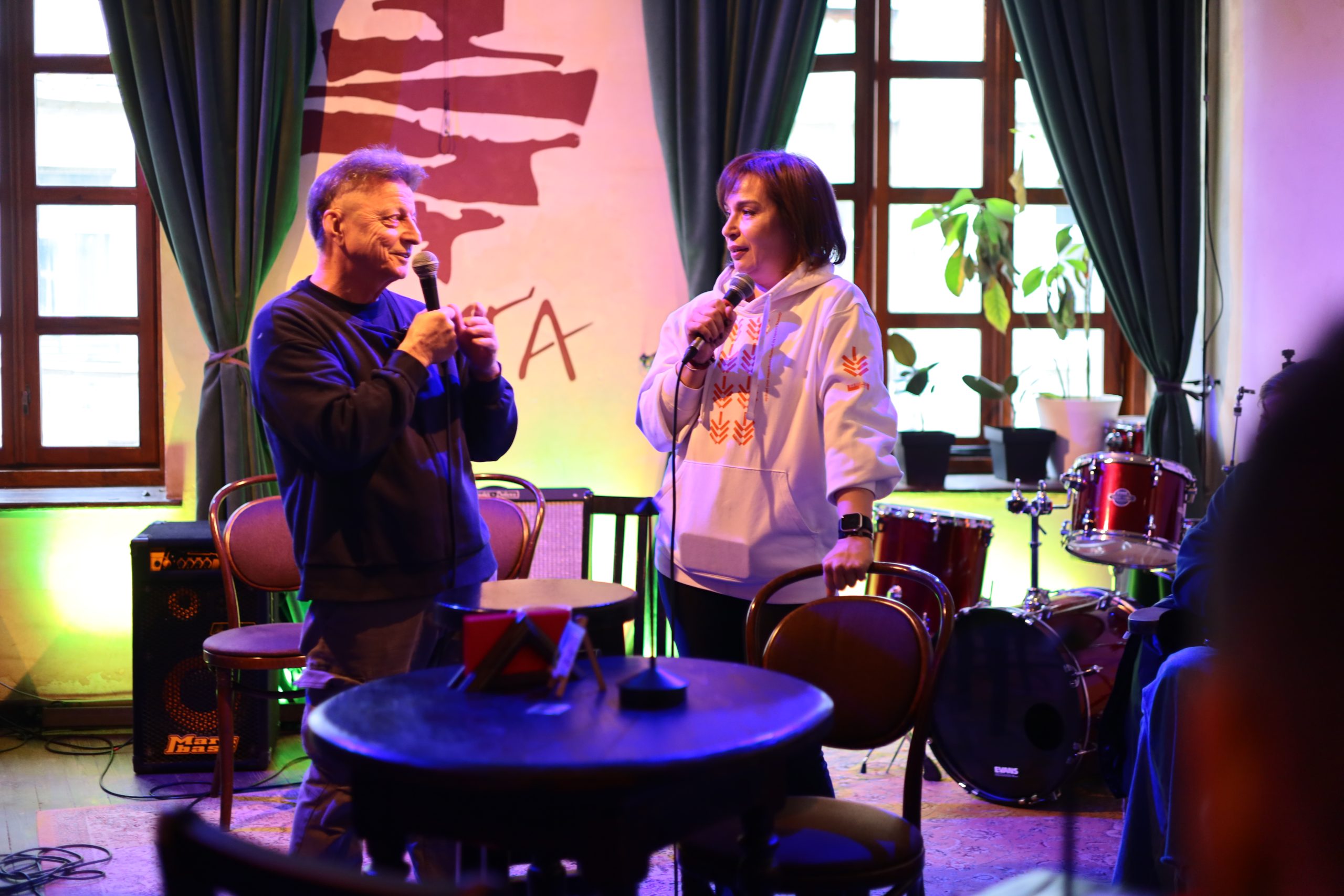
Volodko Kaufman shared how the idea of creating the space emerged and who was involved in its founding — Markiyan Ivashchyshyn, Andrii Rozhniatovskyi, Yaroslav Ruschyshyn, Andrian Klishch, Serhii Proskurnia, and Kaufman himself. He added, «The driving force behind Dzyga was enthusiasm. From the very beginning, everything was held together by enthusiasm.»
«Art is an incredibly diverse phenomenon. And an unprofitable one,» Kaufman noted.
«The founders of Dzyga took on an area that no one else wanted to deal with — it was uncomfortable, irritating, scandalous, and required constant explanations and justifications. As a rule, such projects fail. Additionally, the 1990s were a time of severe financial hardship. I remember once we were sitting here having a meeting, and Markiyan Ivashchyshyn wasn’t there. He simply couldn’t come because he didn’t have money for the bus. That’s how we built a business — out of nothing.»
He also shared that most of Dzyga’s initiatives were either loss-making or barely covered basic expenses such as rent, bureaucracy, and the lack of state support. All of this repeatedly created uncertainty and seemingly insurmountable obstacles. Yet the team continued to move forward, relying on their own resources and the help of friends. Kaufman recalled that the strong managerial skills of Yaroslav Ruschyshyn and Markiyan Ivashchyshyn were crucial to sustaining the project.
«Dzyga is built on projects that were exhausting and hard-won, yet meaningful. Slavko Ruschyshyn often called the entire endeavor financially unprofitable, but at the same time, he tirelessly explained to everyone, everywhere, why creating culture matters,» Kaufman explained.
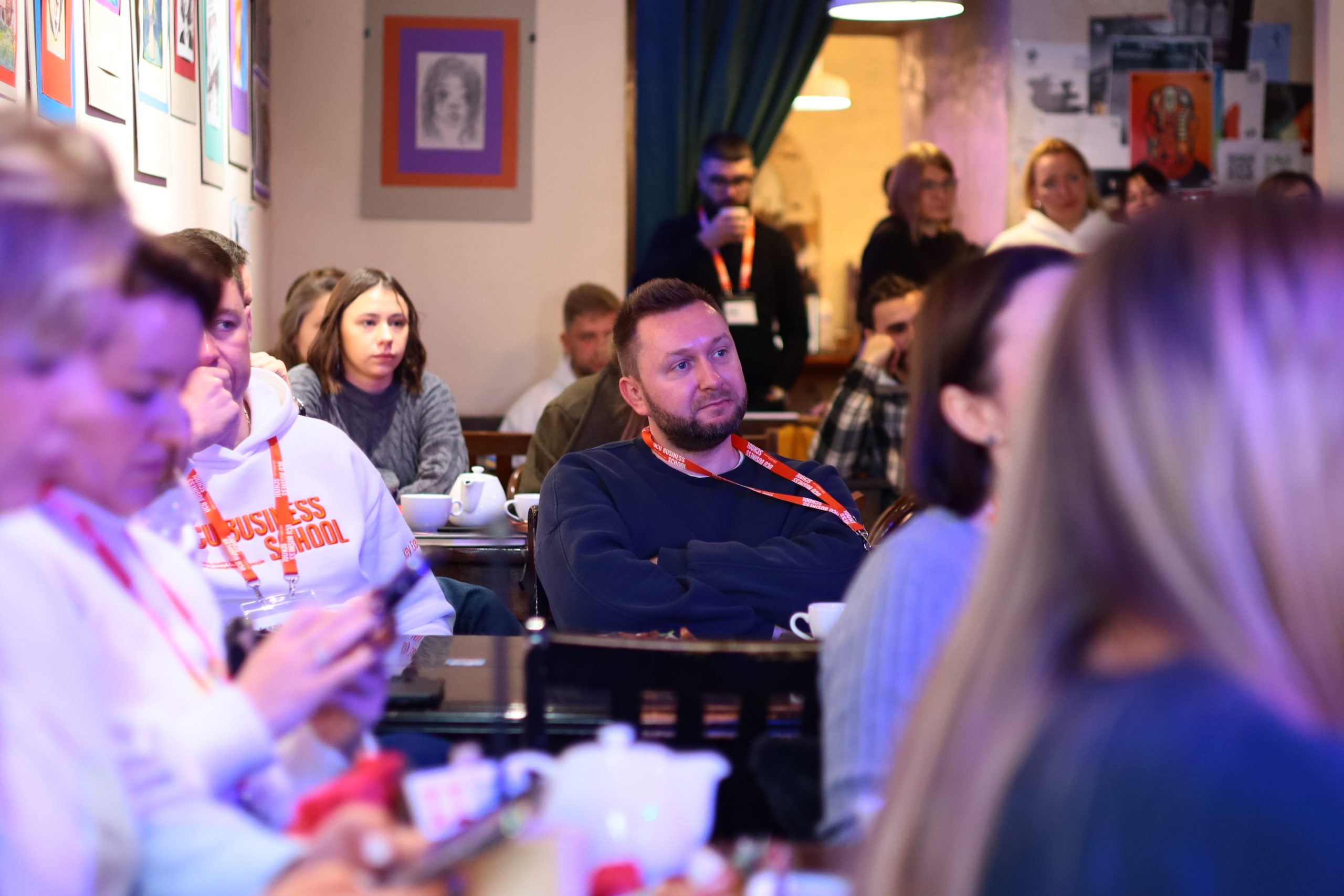
Summing up Volodko Kaufman’s reflections, it is fair to say that Dzyga shaped a new cultural space in Lviv and launched several landmark initiatives, including the city’s first jazz festival. It became the place where a new generation of artists emerged. Over more than two decades, Dzyga has proven that culture can exist even without state support — as long as there is faith and a community of people who care.
In 2018, the !FEST emotions holding became a co-owner of Dzyga. Yurko Nazaruk, one of the holding’s co-owners, spoke with students about this business decision and the plans for the art center. He recalled how he began working at the venue and emphasized that Dzyga was never a business in the classical sense. Its creators built a space where concerts, political debates, diplomatic meetings, and literary evenings coexisted.
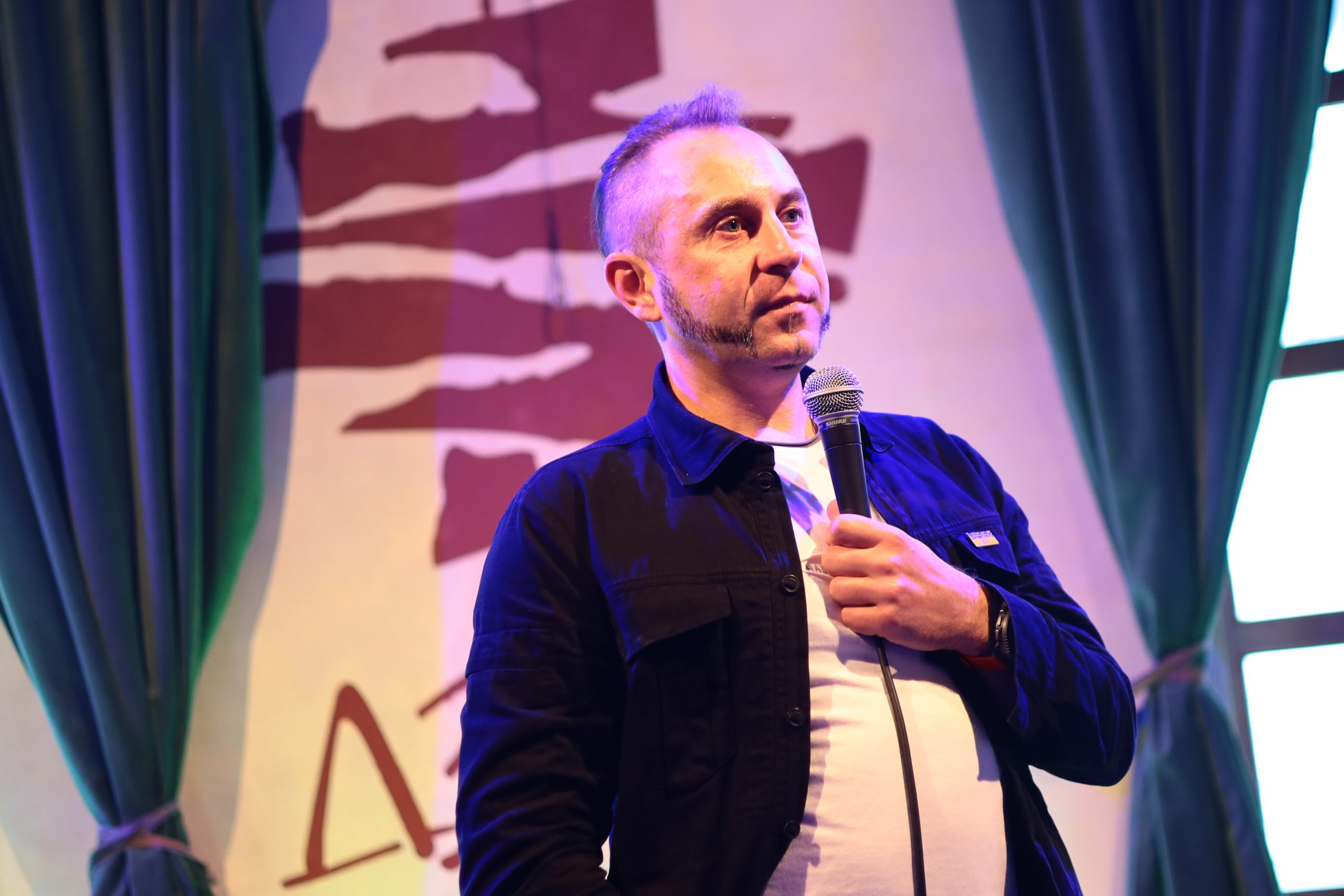
«During the day, political agreements were being discussed here, and in the evening, an exhibition would open —ball under one roof,» Nazaruk recalled.
He also shared insights into the relaunch of Dzyga after the death of Markiyan Ivashchyshyn, and how the remaining founders sought to preserve the institution’s core mission and idea.
Nazaruk spoke about the brand renewal and the establishment of new internal processes. As a result, today Dzyga operates as both a restaurant and a gallery.
«The core of these changes was to preserve the mission: to keep the gallery alive and to ensure that Dzyga remains a place where artists can come and hold their first exhibitions. We also plan to create a design market—similar to what you see at art galleries in New York—where a gallery-shop operates. It’s about a mark of quality.»
Throughout his talk, Yurko Nazaruk repeatedly emphasized that socially significant initiatives must still include a business component.
«When people who have money understand the importance of culture and investing in it — that’s wonderful. However, those who speak about social impact rarely do so at the very beginning of their journey. Those starting a business focus on not losing money, on making things work somehow —bbut not necessarily on changing the world.»
He added that Dzyga differs from many cultural initiatives in Ukraine: instead of seeking grants or donors, it creates its own sources of income without abandoning its core idea. This makes the case a vivid example for business education — an example of sustainable entrepreneurship that preserves its original mission and values.
After the discussion, UCU Business School students had the opportunity to speak directly with the founders, ask questions, and discuss the case with stakeholders, including Pavlo Hudimov, a well-known Ukrainian musician, art collector, and art manager. He shared his reflections:
«I believe Dzyga is a pioneer in Lviv. This live case — shaped through trial and error, achievements, and change — will be especially valuable for understanding how culture works for businesspeople. Most often, they begin by applying business criteria first. And I say: no, let’s not start there. Of course, every endeavor has a material component, but it also has a spiritual one — heritage, memory, and culture. I am confident that the Dzyga case will be interesting precisely because it shifts perspectives and changes how people view such phenomena.»
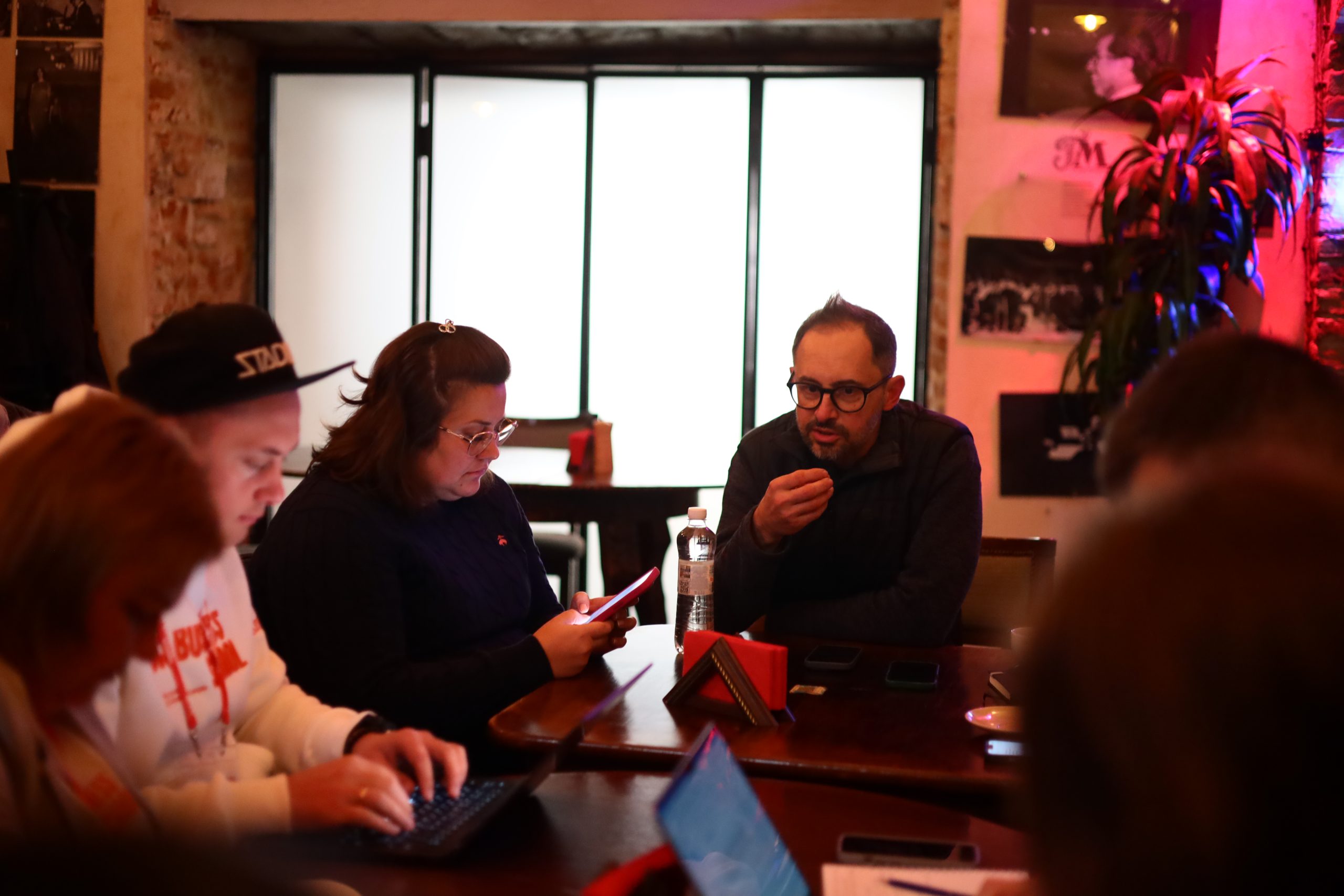
In focus groups, students collaborated on the current challenges facing Dzyga and explored ideas for addressing them, sharing reflections on their experiences.
Natalia Yarysh, Owner and CEO of Svarga, noted:
«Learning through live cases is always more engaging. You overlay the experiences of other creators onto your own story. There is space for different perspectives and deeper immersion. You can ask questions, talk directly with stakeholders, and analyze specific situations. This is incredibly valuable for running your own business.»
At the same time, Kateryna Honcharova, Country Director for Ukraine at the World Monuments Fund, emphasized:
«Working with such cases helps to understand risks, business challenges, and potential solutions. Moreover, the chosen format — group work and brainstorming — is the most effective when the goal is to achieve concrete outcomes or at least articulate a framework for implementing future ideas. In short, it works.»
The final stage of the learning experience involved presenting ideas, business solutions, and concepts developed by the participants.