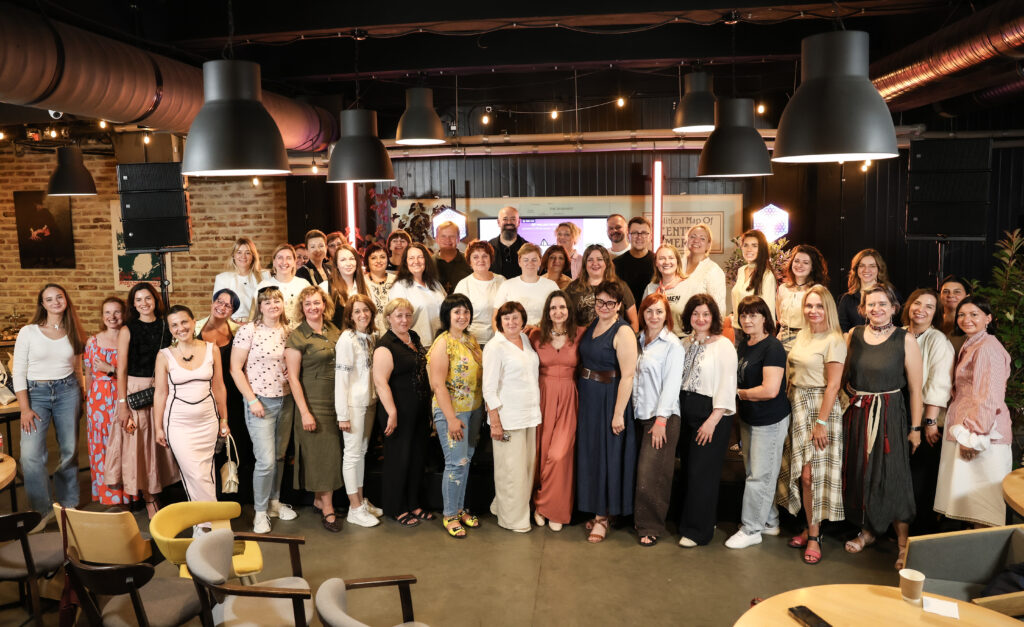







A two-day business program at BestsellerFest 2026 titled “The Architecture of Ukrainian Resilience: From Culture to Defense — How the State’s Agency Is Established,” organized for the first time by the UCU Business School and publisher Mariana Savka in Lviv. Leading entrepreneurs, military officials, scholars, and government officials participated in the festival.
 Participants in the discussions sought answers to existential challenges: from strengthening national and cognitive security and rethinking the historical experience of philanthropy to building resilient business institutions, developing defense technologies, and the role of books in shaping corporate culture. Here’s a look at the discussions from the second day.
Culture and Total Defence
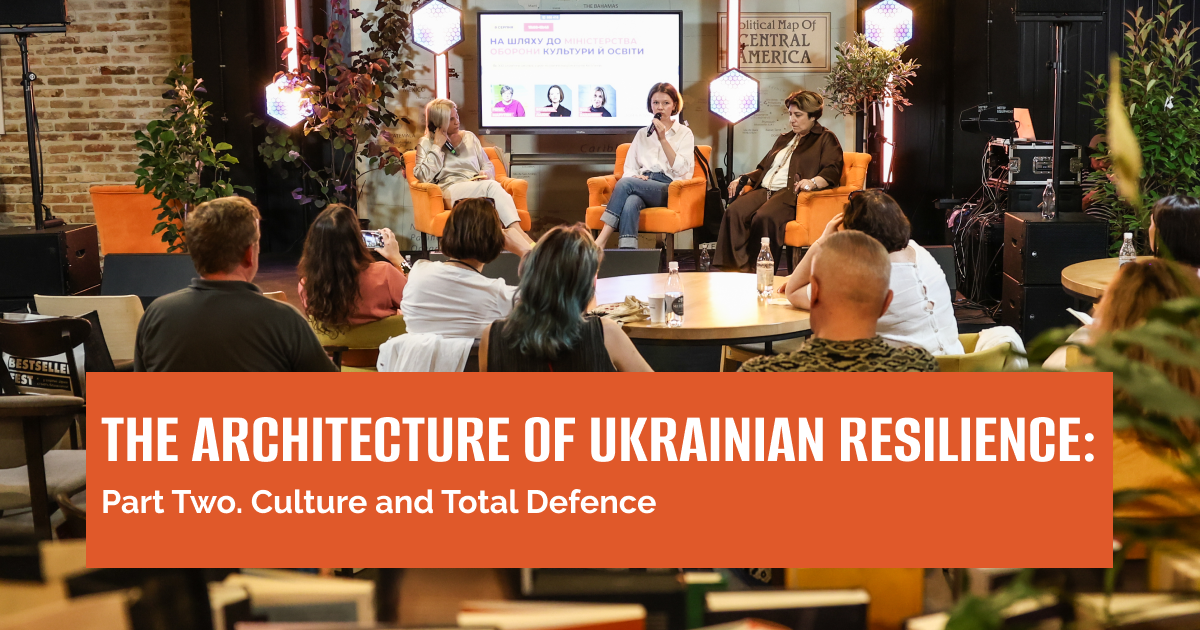
On the second day of the festival, the discussions moved to a strategic level, examining culture and education as elements of critical infrastructure for national security. Professor Rena Marutyan and First Deputy Minister of Culture Bohdana Laiuk discussed the status of culture and education as a critical infrastructure of the state. Moderator Zoya Kazanzhy steered the conversation toward how security challenges have changed in the 21st century.
Rena Marutyan outlined a coherent formula for resilience, according to which every state institution plays its own unique role in shaping citizens’ defensive mindset. She emphasized that physical security is merely a derivative of mental security:
“Our resilience and our identity are first forged in school classrooms, university lecture halls, auditoriums, museums, and theater stages. Education shapes a conscious citizen who is imbued with what we call identity. And then a person takes up arms and goes to defend the state.”
 Rena Marutyan also explained why, for modern Ukraine, a critically thinking person is far more valuable than a loyal one:
“Our war has shown this: how local civil defense units were organized, how ordinary people came together and went to defend their homes, how sergeants and lieutenants made their own decisions. A free person who has the ability to make conscious decisions is an asset to the state.”
Continuing the discussion, Bohdana Laiuk drew attention to how state policy should respond to cognitive threats. She emphasized that the full-scale invasion has finally forced the recognition of language and culture as components of national security at the strategic level. However, the most important task now is to fill these categories with concrete actions:
“I think it’s very important, beyond simply formalizing them, to consider what we’re actually doing to fill these categories. I realized just how important Ukrainian scholars were during the period when Ukraine lacked statehood. What would we have done if there had been no Harvard, if there had been no Omelian Pritsak, Yuriy Lutskyi, Yuriy Shevelov, and those dozens of others? And here we realize that specific projects, platforms, or efforts allow us to build up the architecture of security—in this case, the architecture of knowledge about Ukraine.”
 At the same time, Bohdana Laiuk cautioned against attempts to artificially “impose” an identity from above. She emphasized the dynamic nature of this phenomenon and the historical traditions of freedom:
“It was identity itself that drove people to join the Ukrainian Helsinki Union and resist the Soviet regime. This very identity guided people in the early 1990s, in 2014, and in 2022. We must treat these ‘patterns of freedom’ that exist in the Ukrainian tradition with the utmost sensitivity and respect.”
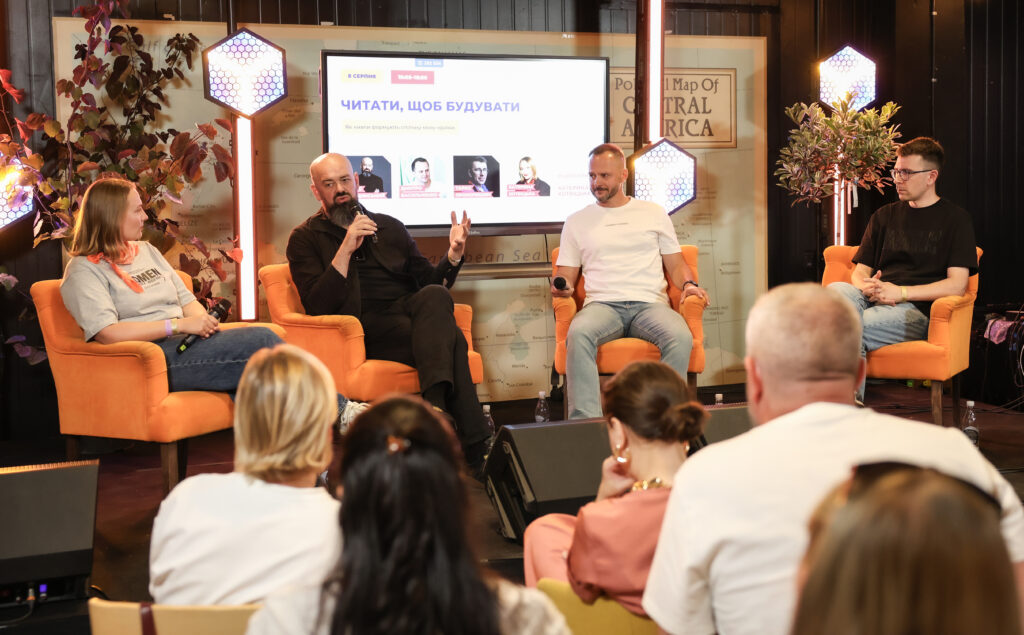
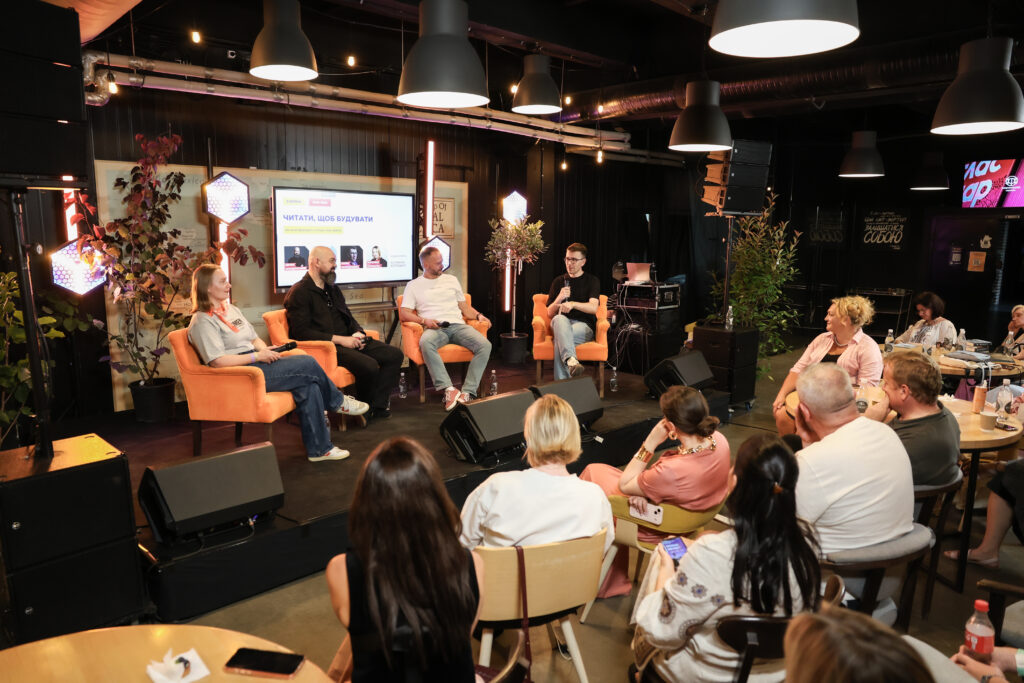
The closing panel, featuring Dmytro Vasylchenko, CEO of ProSteer Group and a graduate of the “Business Administration” program; Denys Bloshchynskyi, director of the “From Ukraine to Ukraine” Social Innovation Foundation; and Taras Prokopyshyn, co-founder of The Ukrainians, and was moderated by Kateryna Kotvitska, Content Director at MEGOGO BOOKS, shifted the discourse on the perception of reading within companies.
First and foremost, Dmytro Vasylchenko articulated the key idea that a book club is a strategic tool for fostering shared thinking and a common mindset within a company.
“After discussing Adrian Slywotzky’s work with our team, we saw how employees began to think in terms of asymmetric competition within real business processes. It’s a tool we use to lay a solid business foundation.”
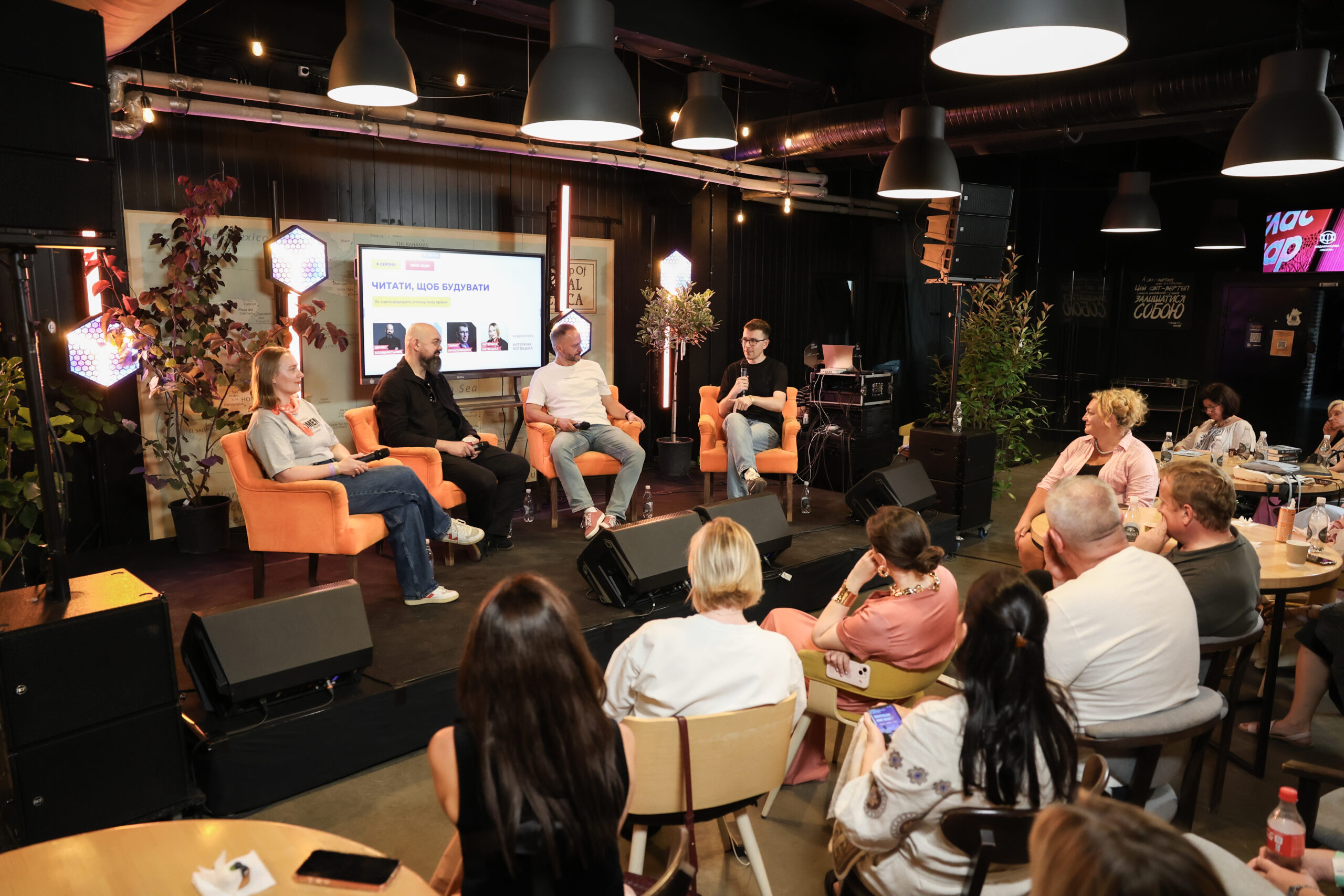 Taras Prokoposhyn, for his part, shared his experience running his media group’s large-scale club, as well as the launch of a new intimate project where business leaders, government officials, and Olympic champions come together to read and analyze important works. Taras believes that such platforms are critically important for the country, as they serve as catalysts for invisible social change.
“People want to share knowledge and seek out others who are like-minded, with shared values and a common vision. I believe that many of us, without even realizing it, are architects of change. And projects like these — whether large or small — are extremely important because they bring together people who, under different circumstances, would most likely never have met.”
 The BestsellerFest festival took place for the second time. It featured over 120 events, including new book launches, discussions of bestsellers, literary debates, public interviews, and readings.
The business program included an important charitable component. In addition to a call to join the large-scale “Eastern Barrier” fundraiser — aiming to raise 250 million hryvnias for the 12th Special Forces Brigade “Azov” of the National Guard of Ukraine—every guest automatically became a patron.
We urge the UCU Business School community to also join BestsellerFest’s major charitable goal — raising funds to purchase and donate books to libraries in de-occupied and affected communities across Ukraine.