







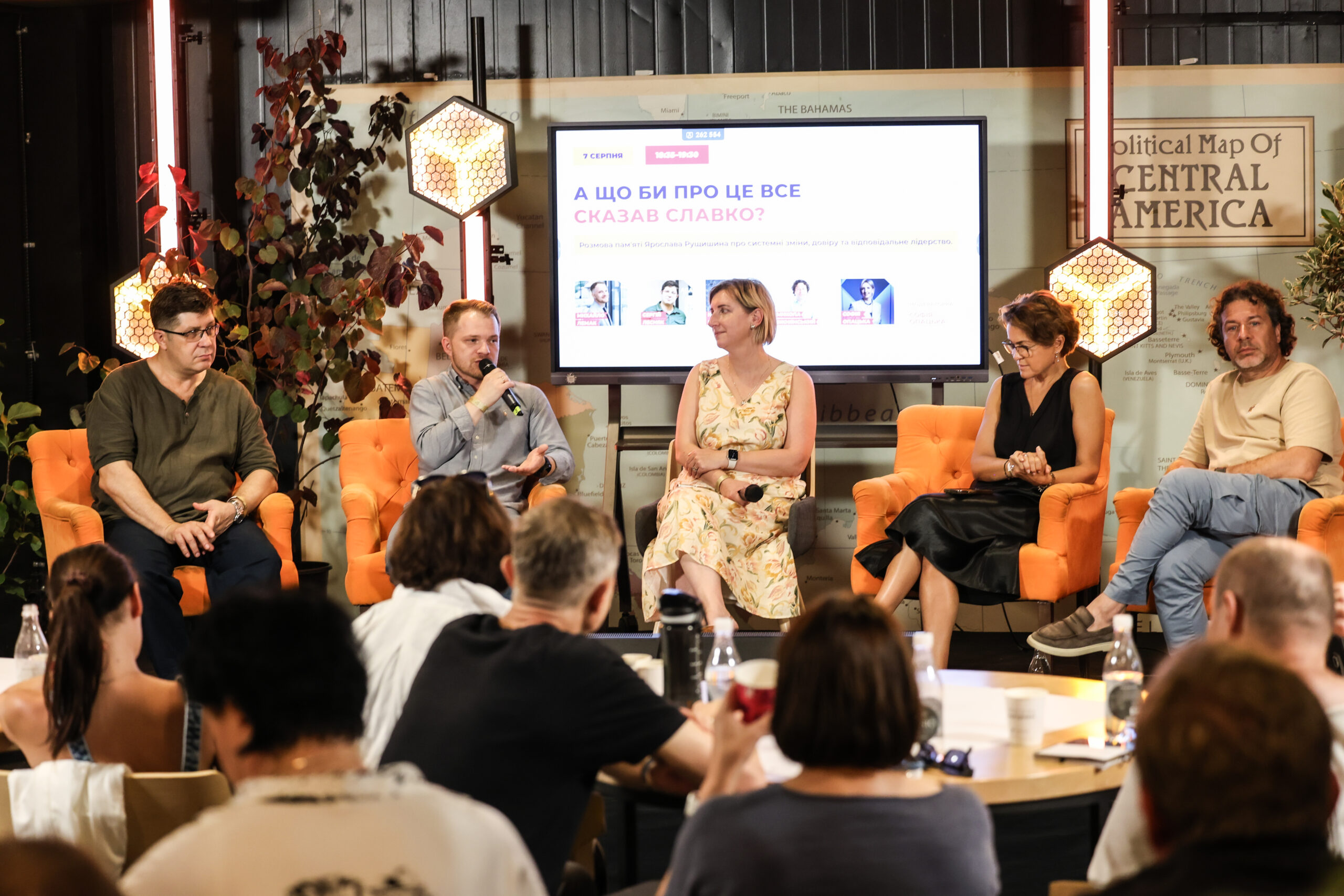
As part of the business program at BestsellerFest 2026, titled “The Architecture of Ukrainian Resilience: From Culture to Defense— How State Agency Is Established,” a panel discussion took place titled “What Would Slavko Say About All This?,” dedicated to the memory of Yaroslav Rushchyshyn, an entrepreneur, philanthropist, and co-founder of the UCU Business School. His close friends and colleagues gathered to reflect on the life lessons of this visionary.

This two-day business program was organized for the first time by the UCU Business School and publisher Mariana Savka in Lviv. It provides a space to rethink Ukrainian agency through the synergy of culture, business, and national security.
The Origins of an Institution: Choosing the Future
The discussion was opened by the panel moderator, Sofiya Opatska, founding dean of the UCU Business School and vice president for strategic development at the Ukrainian Catholic University. She established the value framework for the entire discussion.
“We use the word ‘institution’ so often, but when does an organization actually become an institution—whether in business, the nonprofit sector, or public administration? We want a business or organization to deliver value across the third, fifth, and seventh generations, not just when a founder carries the entire burden on their own. What do you consider to be an indicator of an institution’s sustainability?”
Continuing her reflections on this issue, Sofiya Opatska urged Ukrainian entrepreneurs to assess the autonomy and internal resilience of their teams, as these are precisely what determine the long-term trajectory of development:
“This is a very important question: if you were not in your organization, how long could it move forward on its own? And will it move in the right direction — even if that direction differs from what you planned—while maintaining shared values?”
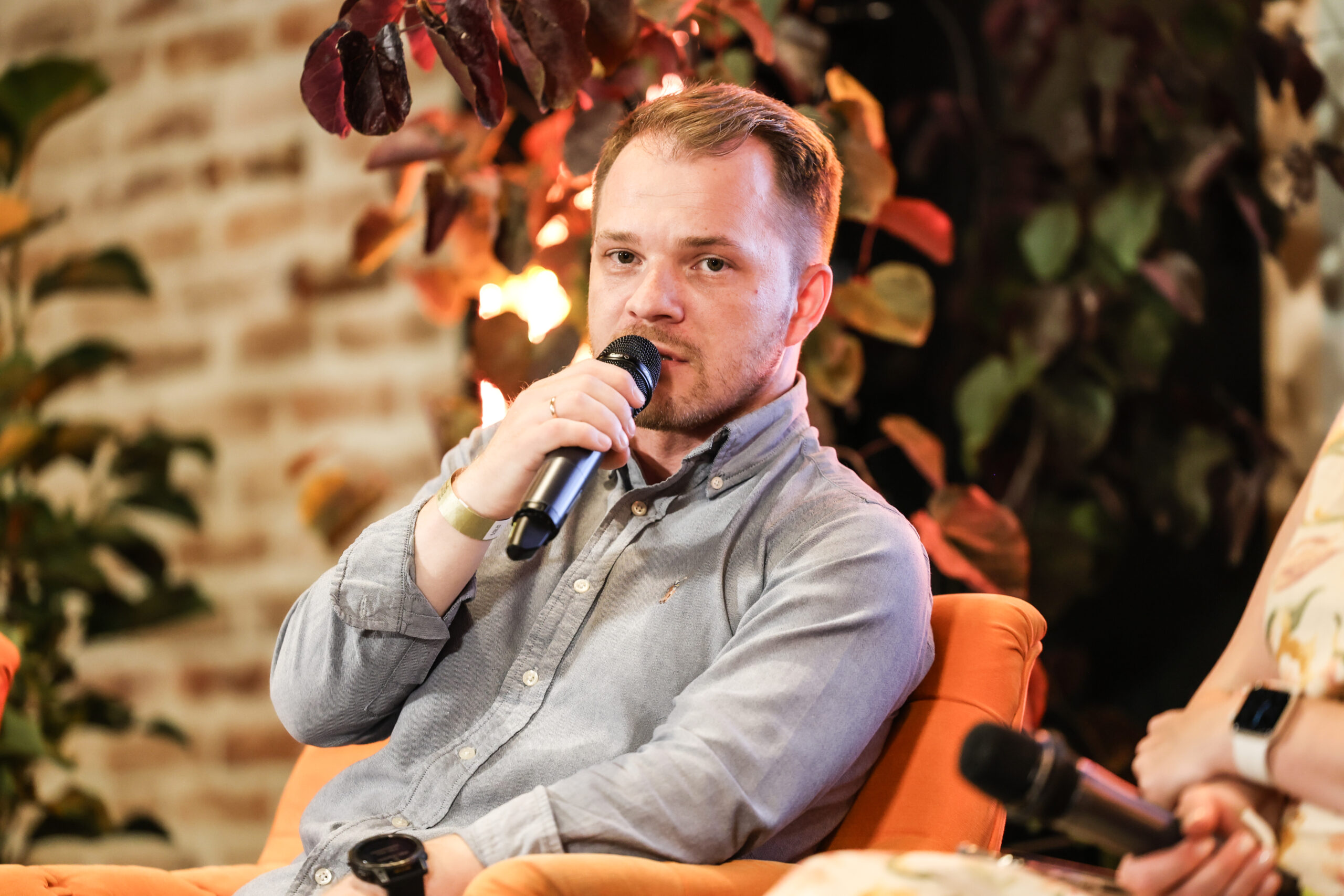
 This perspective on institutional stability was developed by Mykhailo Lemak, CEO of the Lviv IT Cluster, who once worked side by side with Yaroslav Rushchyshyn on the large-scale social project “Biennale of Trust.” Mykhailo is convinced that an institution emerges only when a community unites around a grand idea, agrees on common rules of the game, and transforms them into a viable system capable of moving forward autonomously.
“Slavko tried to inspire people with a grand idea, find like-minded people around him, create a transparent decision-making system, give it a push, and let it sail on its own, regardless of who would lead it next.”
Rushchyshyn’s managerial wisdom was also evident in his view of trust as a form of capital. Mykhailo Lemak recalled the initiative to create the “Biennale of Trust.”
“Trust is our superpower, but sometimes also our superweakness. We’re good at uniting against something, but we’re learning to unite for something. Trust pays off, and people who trust are happier. We’re wasting enormous resources and funds because of mistrust, since we create oversight bodies that oversee other bodies, which in turn oversee yet other bodies.”
 Investing in the Future
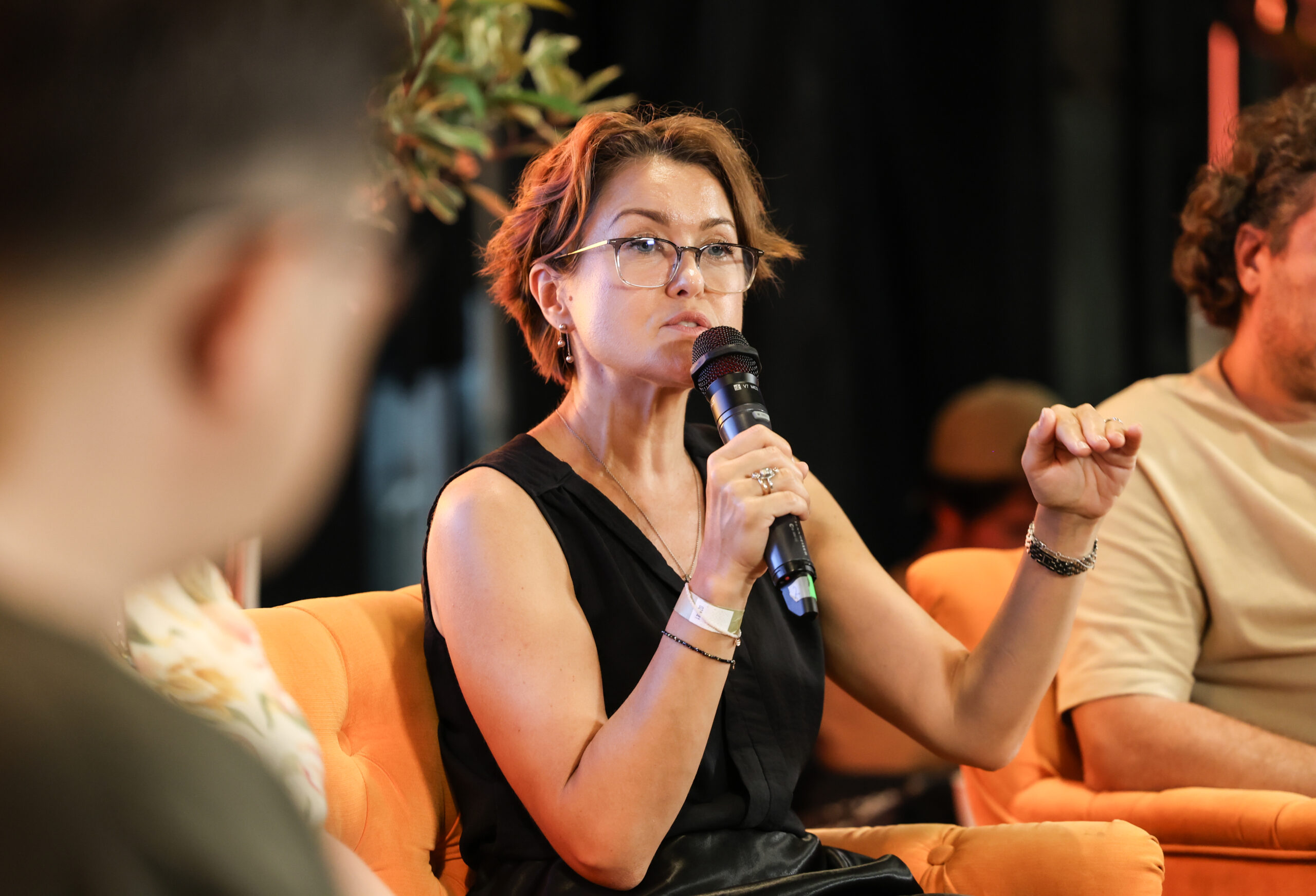
Reflections on responsible leadership—which requires action here and now—found a logical continuation in Natalia Popovych’s speech, founder of One Philosophy and director of the Ukrainian House in Denmark. She suggested viewing Yaroslav Rushchyshyn’s legacy through the lens of a mature social contract and business integrity toward one’s own country. In particular, Natalia recalled her very first and most defining memory of the Business School’s co-founder.
“Slavko knew how to extend trust and build long-term partnerships. For me, my very first and most inspiring memory of him was this act: he decided not to buy an expensive car but instead invested his own funds in founding and developing the UCU Business School. This was an example of a person who invested not in himself but in entire generations of entrepreneurs who would be educated on ethical principles.”
Natalia Popovych also emphasized the integrity that Rushchyshyn demanded of himself and his fellow entrepreneurs.
“True business responsibility means paying taxes to fund the Armed Forces, ensuring the dignity of employees, and only then — if there are additional funds remaining — engaging in philanthropy.”
 In closing, she drew on her experience working at the Ukrainian House in Copenhagen and emphasized the importance of culture on the international stage:
“As long as the world remains unaware of Ukrainian culture and our contribution to world heritage, we will be offered nothing but fairy tales. Our international partners defend only what they know well. If they don’t know us, they won’t defend us. Cultural diplomacy is a matter of our national security, and Slavko understood this perfectly, systematically investing in culture.”
Culture as the Foundation of the Economy
The discussion on civic responsibility, values, and business integrity found support in the remarks of Serhii Lesnyak, a professor at the UCU Business School and a historian of Eastern philosophy. He emphasized that any government, set of rules, or economic indicators are, in fact, merely derivatives of culture.
“War is the best and greatest equalizer, erasing the old and creating the new. Great nations are forged precisely in wars, and our institutions today are born not artificially, but in blood, strength, and a sense of community. However, every institution must be resilient and carry this DNA through the ages.”
 Serhiy Lesnyak saw in Yaroslav Rushchyshyn a true Lorenzo de’ Medici of Galicia — a man brimming with energy who drew talented people to him, thought in the spirit of the Renaissance, and methodically and comprehensively invested in culture.
According to Serhiy Lesnyak’s recollections, an important trait of Yaroslav Rushchyshyn’s intellect was his desire to get to the very heart of things, his impatience with superficiality, and his constant encouragement of his colleagues to engage in high-level reflection:
“Slavko always sought depth in things, saying, ‘This is shallow; that is deep.’ This required great inner concentration and hard work on the essence of things. He also possessed a unique capacity for metacognition—the ability to question the validity of his own assumptions and decisions—which is why he constantly challenged people to debate and gathered opponents around him so that the truth might emerge.”
Love to the Depths of Your Pocket
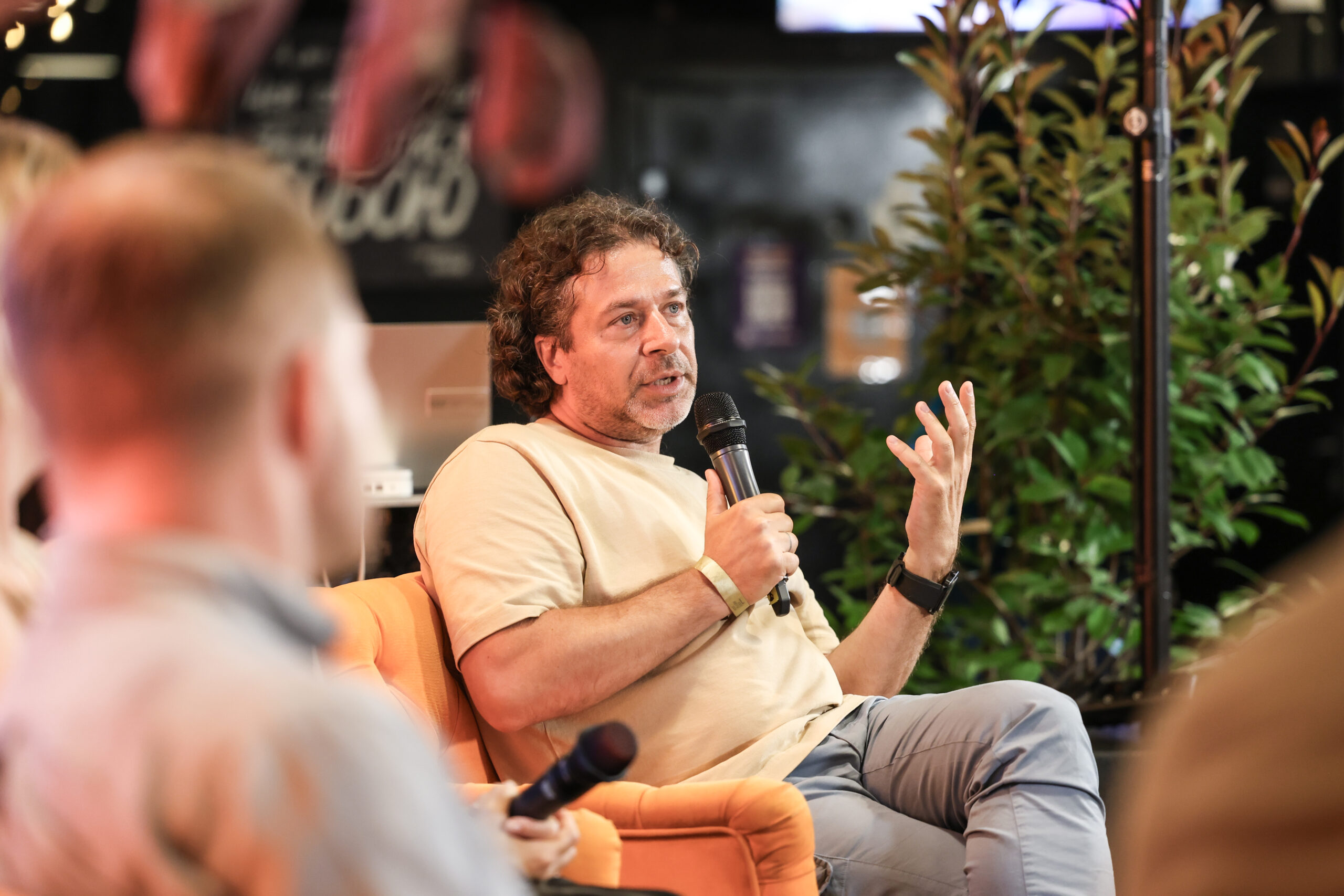
Mykola Viknyansky, owner of Termopal and founder of the Ukrainian Furniture Exporters Association, spoke about the Business School co-founder’s unique ability to build bridges between different regions of our country, overcoming historical alienation and stereotypes.
“Slavko and I constantly talked about how to unite Odesa and Galicia, how to stitch together these different pieces of our mosaic-like country. Today we are paying an extremely high price, but this unity is finally taking shape, and we feel at home in every corner of Ukraine. We must enshrine this value of unity in the Constitution.”
Viknyansky emphasized that the co-founder of the Business School knew how to inspire people by drawing on society’s best practices and gently guiding them in a constructive direction. Concluding his speech, he recalled one of Yaroslav’s favorite sayings, which he had borrowed from a public figure and patron of the arts from the past:
“Yaroslav always repeated the maxim of our distinguished fellow countryman from the Odesa region, the patron Yevhen Chykalenko: ‘One must love Ukraine not only from the depths of one’s soul, but also from the depths of one’s pocket.’ This was his guiding principle and life’s compass, which we must put into practice every day.”
The conversation about Yaroslav Rushchyshyn showed that his vision of responsible leadership and institutional resilience lives on in the actions of his alumni, friends, and colleagues. Every step in the development of the UCU Business School, every launch of new educational programs for young people, and every contribution by entrepreneurs to national security—these are the building blocks of agency.
Read also: Trust as Action: How the “Breakfast of Trust” in Memory of Yaroslav Rushchyshyn Unfolded
As a tribute to Yaroslav Rushchyshyn’s legacy, the UCU Business School has established a permanent “Trust Fund.” The School has committed to investing $500,000 in research, educational programs, and initiatives dedicated to the theme of trust.
 The BestsellerFest festival took place for the second time. It featured over 120 events, including new book presentations, discussions of bestsellers, literary debates, public interviews, and readings.
The business program included an important charitable component. In addition to a call to join the large-scale “Eastern Barrier” fundraiser — aimed at raising 250 million hryvnias for the 12th Special Forces Brigade “Azov” of the National Guard of Ukraine —every guest automatically became a patron.
We urge the UCU Business School community to also join BestsellerFest’s major charitable cause — raising funds to purchase and donate books to libraries in de-occupied and affected communities across Ukraine.