






The UCU Business School hosted final presentations of student teams’ work as part of a socially oriented internship program, demonstrating how the knowledge they gained creates real value for important Ukrainian initiatives. Throughout the academic year, master’s students in the “Marketing Management” program worked on specific requests and developed marketing and management solutions for three socially significant projects: the “Shum Art Gallery,” the “Frame” case-study workshop, and the “Sofiiskyi Skhyl” community space.
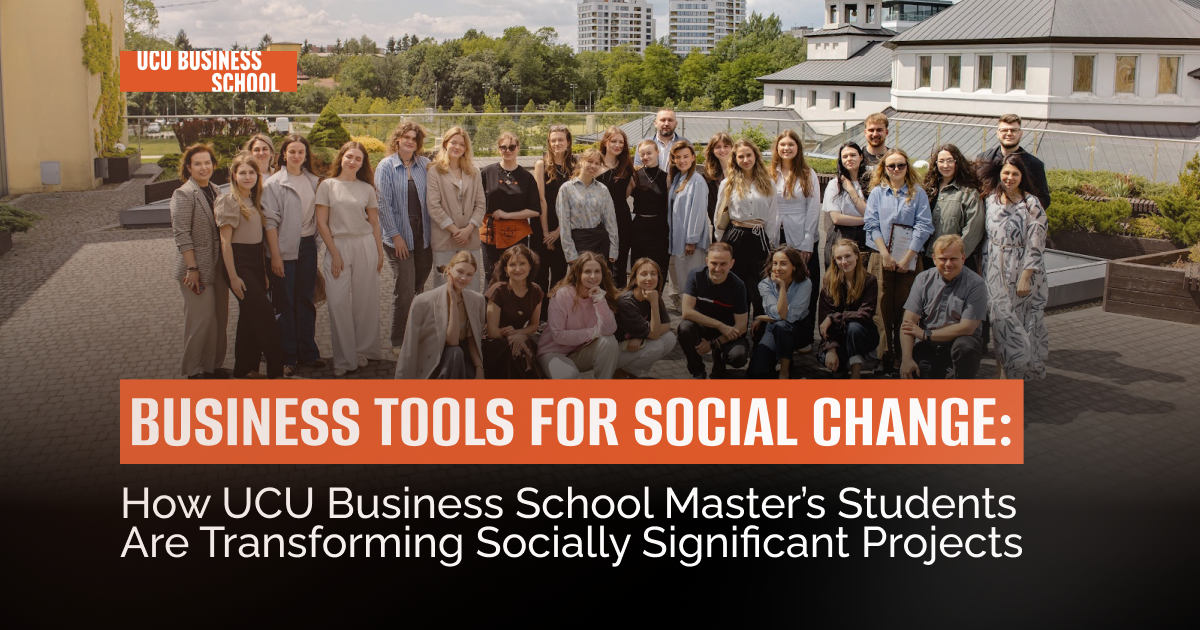 The students demonstrated their ability to apply the knowledge gained during their studies to real-world projects, work in teams, and their willingness and capacity to bring about positive social change in the community and society.
“Shum” Gallery: Art as an Accessible Fresh Start
Work on the “Shum Art Gallery” project helped identify the main barriers to attendance: potential visitors often feel intimidated by the “elitism” of art spaces. During their research, the students discovered that people are afraid of appearing uninformed, and this psychological discomfort is significantly stronger than the cost of admission or geographical distance. Based on this insight, the team proposed a new positioning—the gallery as a place for city dwellers to take a brief cultural break.
In particular, the “express intellect” format became a key element of the strategy, offering a 15- to 20-minute visit accompanied by a curator who explains complex concepts in simple language. This allows art to be integrated into people’s daily routines, making it as accessible as grabbing a cup of coffee.
Yuliya Nykolyn, a client representative, confirmed the value of an outside perspective.
“We’re grateful for this outside perspective, as we’re used to focusing primarily on an audience of experienced art connoisseurs. You objectively highlighted our weaknesses and helped us find our niche.”
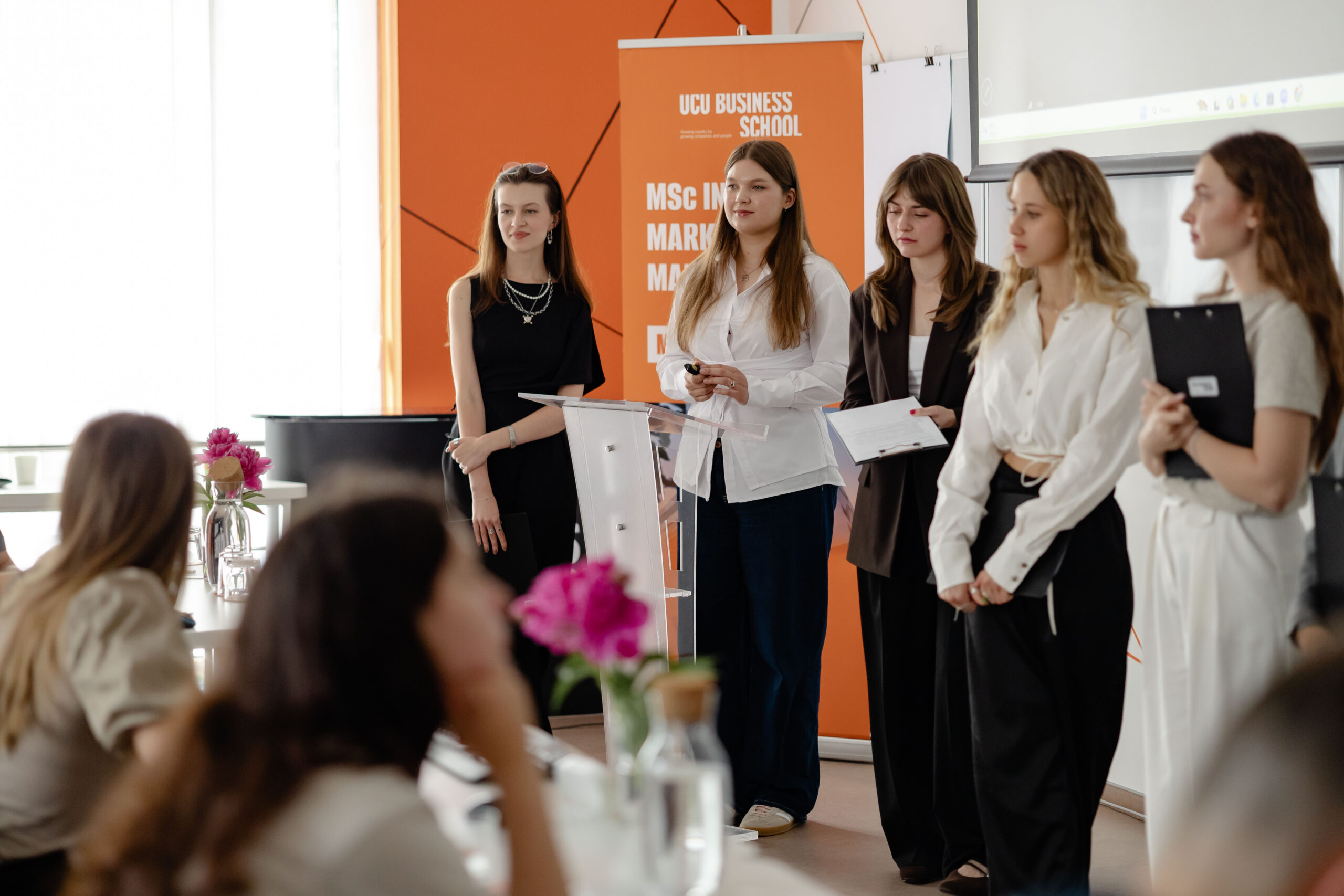 The analysis and research conducted allowed the team to formulate specific proposals for the gallery’s positioning and practical recommendations for effective communication.
Frame Workshop: Overcoming the Invisibility of Evacuation
The challenge identified for Frame Workshop, which converts civilian vehicles into evacuation vehicles for the front lines, was the so-called “mental gap.” The students’ research showed that people have a good understanding of the moment of injury and the hospitalization stage, but the journey between them—evacuation—remains invisible to society. The main idea behind the strategy was the slogan “Making the Invisible Visible,” in which Frame becomes the leading voice in this category, with the primary goal of raising awareness not only of the organization but also of the topic of evacuation itself.
As part of their work on the project, the students demonstrated their mastery of research methods and their proficiency with modern tools in their field. The team delved deeply into the topic and maintained active communication with the clients. After conducting qualitative and quantitative research, they developed specific strategic solutions for the “Frame” workshop, identified priority actions, and outlined the steps for their implementation.
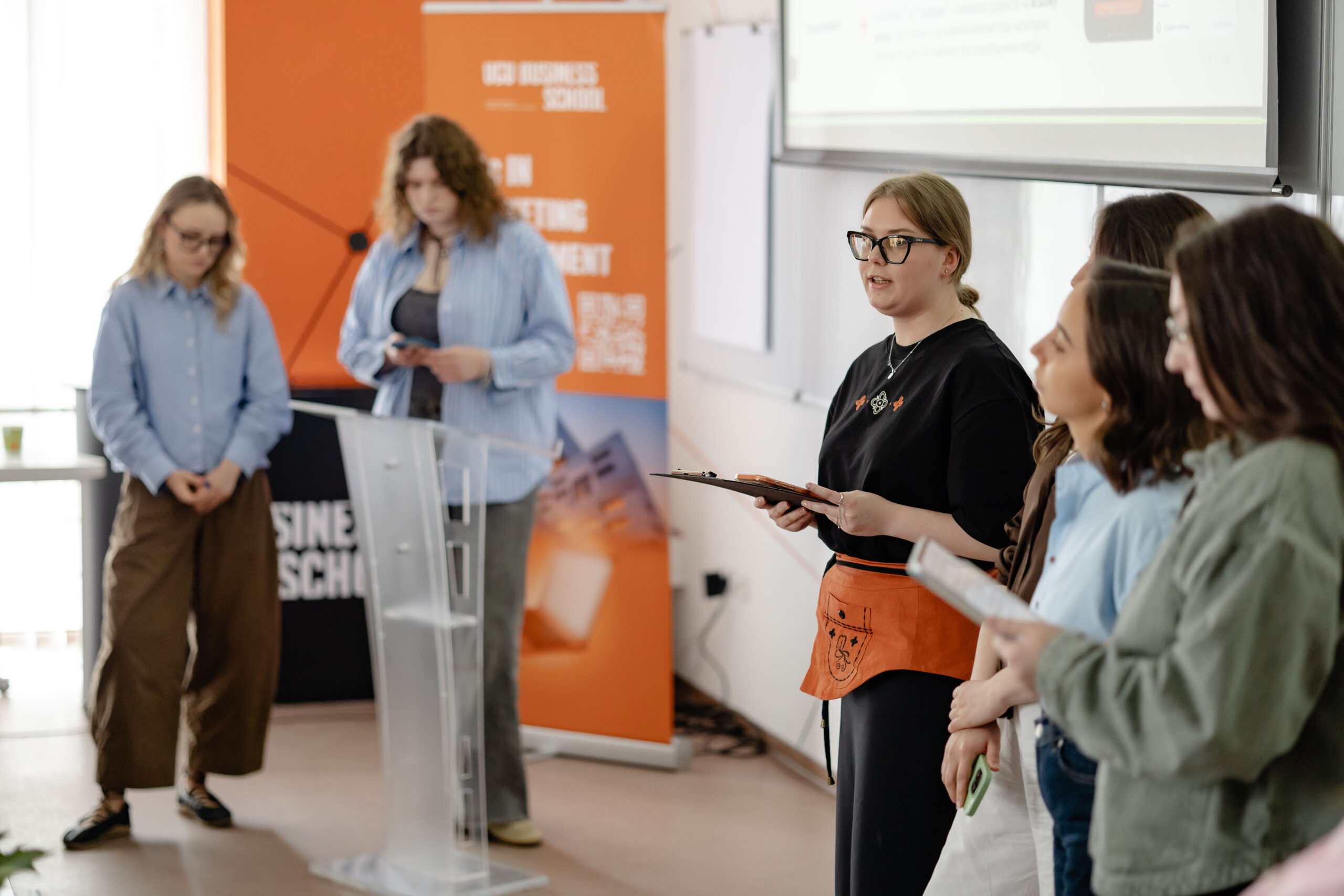 The team not only developed a communication model but also provided consulting support during the preparation of a fundraising campaign to raise 3 million hryvnias and helped implement specific personalization mechanisms for the campaign. For example, instead of abstract requests for help, they proposed naming each case worker and promoting the campaign by breaking it down into smaller goals.
Yevheniia Mocharnyk, a representative of the workshop, shared the success:
“We decided to structure the final stage of the fundraiser as follows: for every donation to the cause, we would inscribe the donor’s name on the case itself. Thanks to this approach and the new messaging, we raised one million hryvnias in just over two months.”
The Frame case study has become a striking example of fostering ethical awareness, responsibility, and a willingness among students to support initiatives that are vital during wartime and to drive societal change.
Sofiiskyi Skhyl: Building an Ecosystem of Trust
The “Sofiiskyi Skhyl” public space on the grounds of St. Sophia Cathedral in Vynnyky combines three dimensions: spiritual, cultural-intellectual, and social. It is a place where people encounter themselves, others, and God. During the project, the master’s team identified several key challenges and concluded that the space needed to be positioned more broadly as an ecosystem for the whole family, since visitors perceived it in a fragmented way—either solely as a coffee shop, an educational hub, or a religious community. They proposed systematizing and structuring communication and focusing on leveraging the potential of the existing audience.
The brand’s core promise became non-judgmental acceptance and the creation of a safe environment for the whole family to thrive. The team developed a detailed “message framework” that structures communication for different segments—from young couples to busy families—offering each group its own level of engagement, ranging from a casual coffee shop guest to an active community partner. This allowed the clients to view their project as a system that scales through trust and word of mouth.
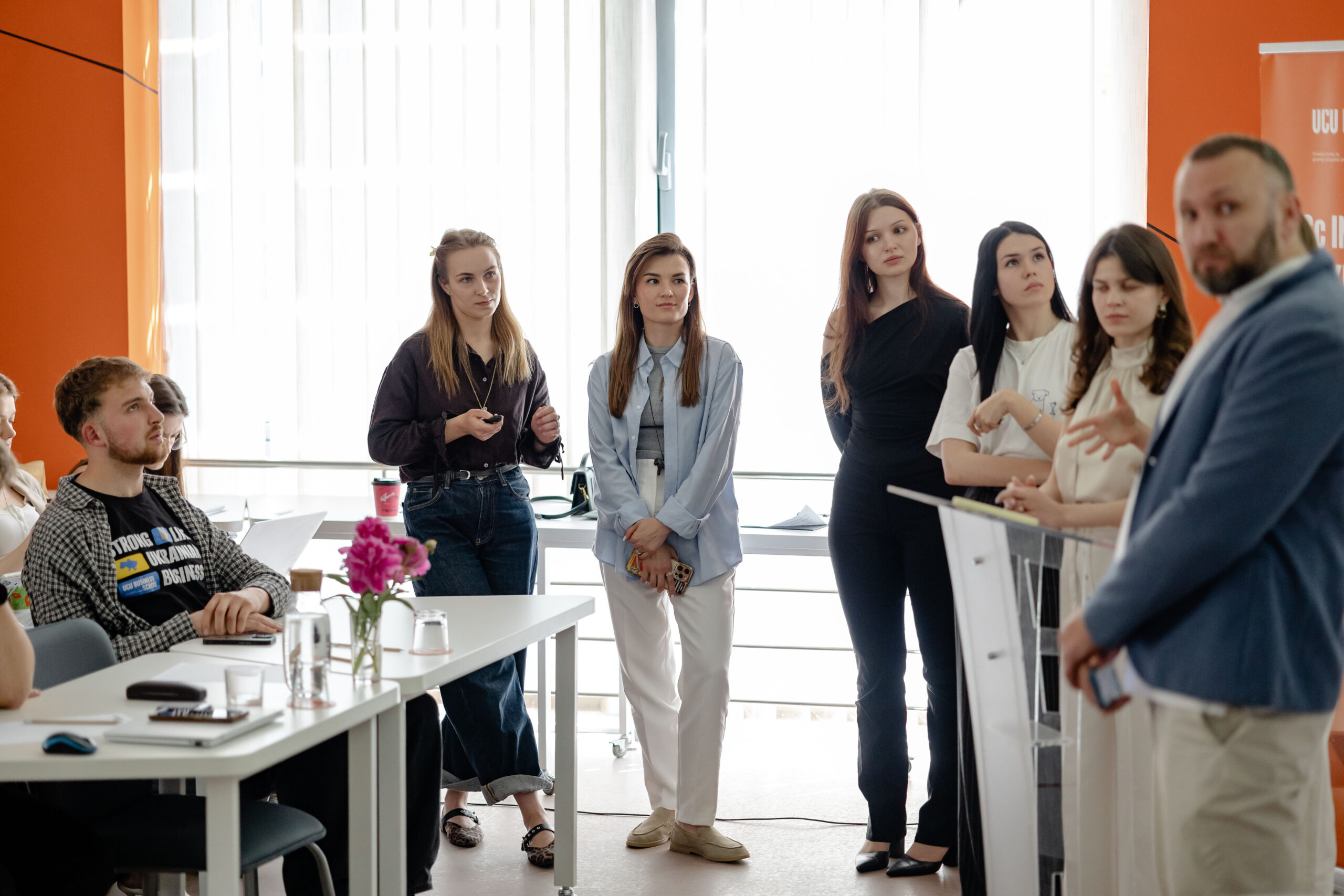 The students succeeded in articulating at a professional level what had previously existed only as an intuitive sense. Project founder Roman Pendyuk noted the professionalism of the students’ work, saying:
“You were able to accurately articulate and expertly demonstrate what we had been envisioning in our minds for years. The result exceeded our expectations, because you helped us take a step back, grasp the scope of the project, and see the right path for further development.”
Working on this project served as an example not only of supporting the development of a socially significant initiative but also of how our understanding of a problem and the focus of our collaboration can transform when a deeper understanding of the client—gained through high-quality research—allows us to crystallize our perception of the space and identify future paths for development.
Practical Application of Knowledge and Social Impact
Khrystyna Rutar, head of the service-learning program at UCU, revealed the deeper meaning of such collaboration between master’s students and representatives of socially significant projects, emphasizing that socially oriented learning is at the core of the “Marketing Management” educational program at the UCU Business School. According to her, the work of the three student teams clearly demonstrates three methodological components of an effective approach: alignment of goals, a cycle of experiential learning and reflection, and effectiveness and impact.
“Instead of solving simulated problems, students worked on real requests from organizations. At the same time, marketing tools were used to achieve a specific social impact: from optimizing evacuation communications to capitalizing on sociocultural spaces. This is where the methodological sophistication of the approach lies—in combining academic goals with an analysis of the social context. This approach prepares a new generation of managers capable of anticipating the long-term societal consequences of their decisions,” noted Khrystyna Rutar.
 The Synergy of Education and Social Impact
The presentations concluded that the practice of socially oriented learning at the UCU Business School is important for both parties. Students gain experience working with complex social contexts and limited resources, while clients receive strategic tools for scaling their impact. As the organizers summarized, this is not just about completing assignments, but also about addressing socially significant issues and building ecosystems of trust that are already changing Ukraine for the better today. For prospective students, this is a real opportunity to see how professional expertise becomes a force capable of making the invisible visible and creating meaning where it is most needed.