






Today, universities face challenges that are no less complex than those confronting global corporations — from maintaining financial sustainability amid uncertainty to managing brand and reputation. In December 2025, UCU Business School launched a Leadership Program for the UCU management team, creating a space to align the university’s strategic goals through 2030. The six-month program was designed to foster co-creation and drive systemic change across the institution.
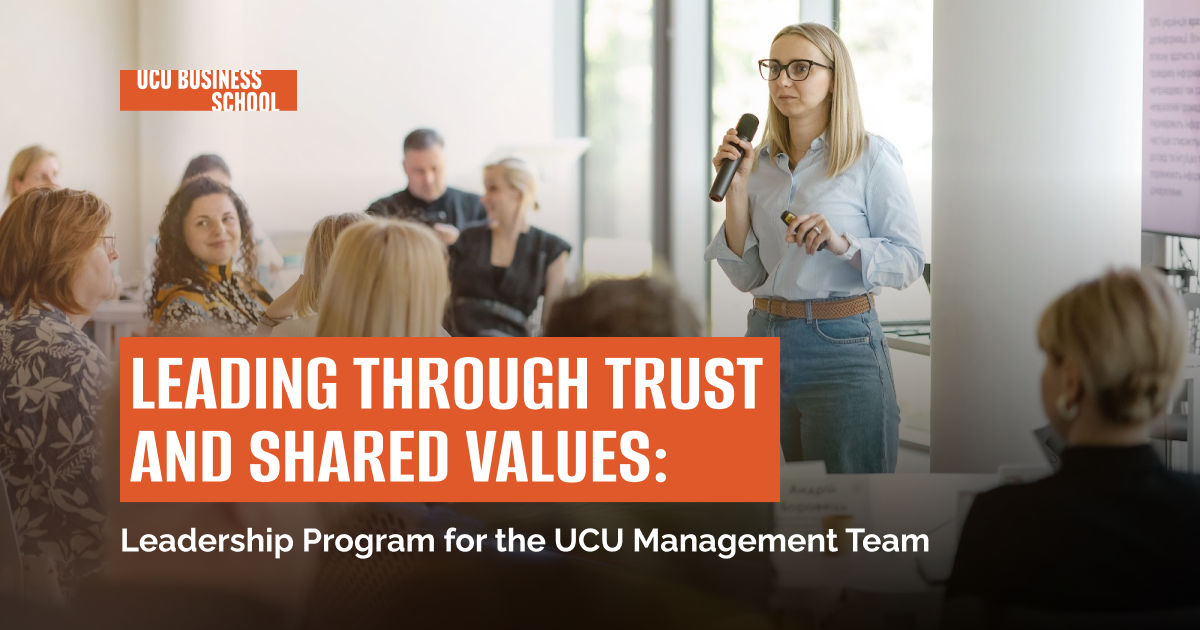 The program, developed by UCU Business School in response to a request from the university, aimed to expand senior managers’ understanding of contemporary management practices and create a space for honest conversations about the challenges they face.
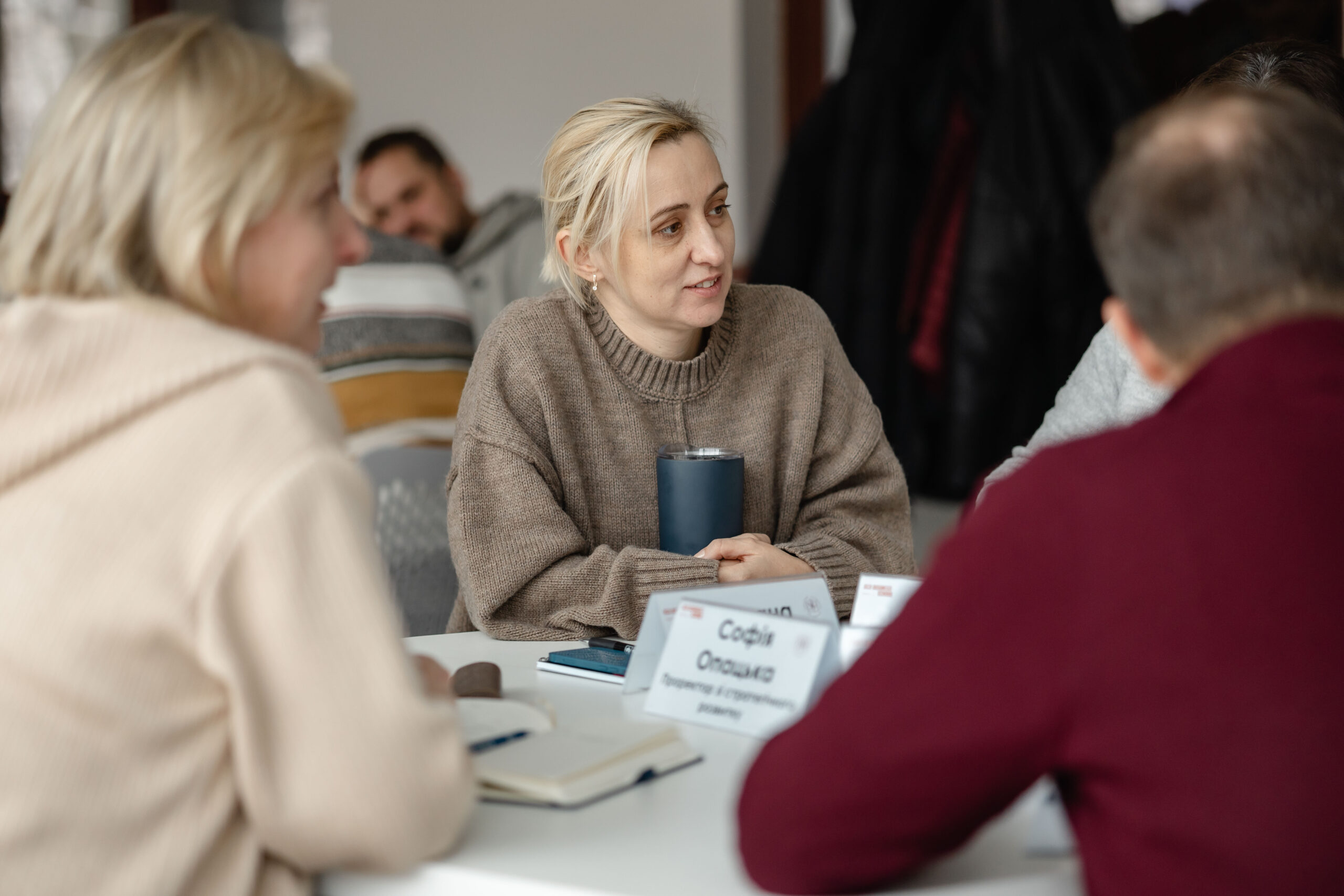
“University leaders also need to learn because, in most cases, deans, heads of departments, and unit leaders are appointed from among the best lecturers, the strongest researchers, and the most proactive project managers,” says Sofia Opatska, Founding Dean of UCU Business School and Vice Rector for Strategic Development at UCU. “Together, we had an opportunity to rethink our shared experience, identify problems, and look for new solutions.”
 With this goal in mind, more than 30 members of UCU’s senior management team stepped away from their usual roles for six months to become participants in the Leadership Program for the Management Team, developed by the Corporate Programs Department of UCU Business School.
From Team Trust to Systemic Design
Working with real-world business cases is an essential part of any executive education program. That is why the program began with an off-site case study at Kormotech, a leading Ukrainian pet food company. The participants visited the company’s production facilities and met with its senior management team. They explored how organizational design can support successful business growth and scaling.
This experience allowed UCU managers to step outside the academic environment and see how a broad strategic vision can be translated into everyday processes and management decisions.
Later, together with Iryna Tymoshenko, an expert in strategic planning and organizational development and a lecturer at UCU Business School, the participants explored how teams develop and how trust is built. This helped them align their individual visions and lay the groundwork for further collaboration.
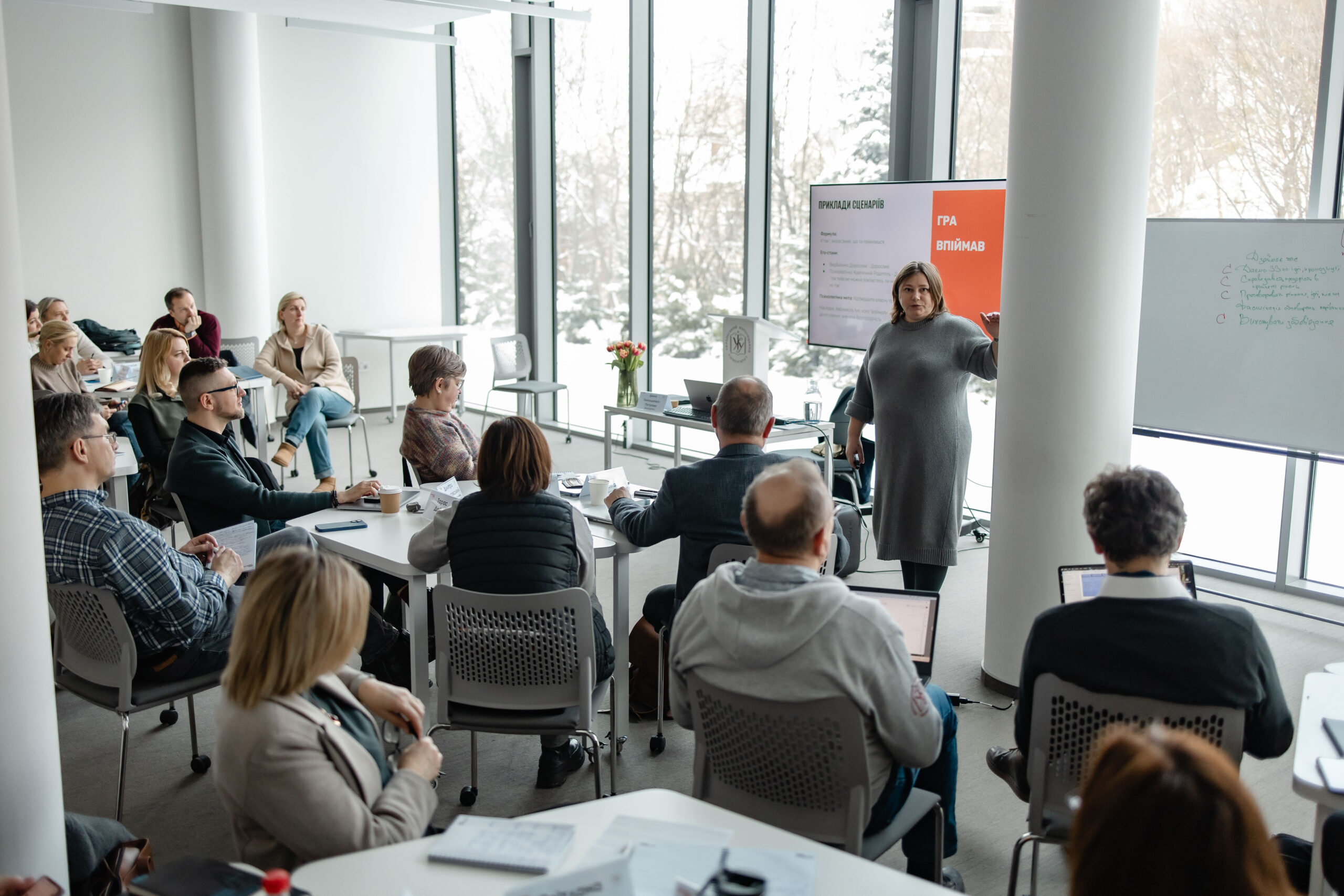 In February 2026, the program turned to the university’s internal structure and the role of organizational design. The managers explored how formal structures and HR systems can hinder innovation when they are not aligned with an organization’s vision.
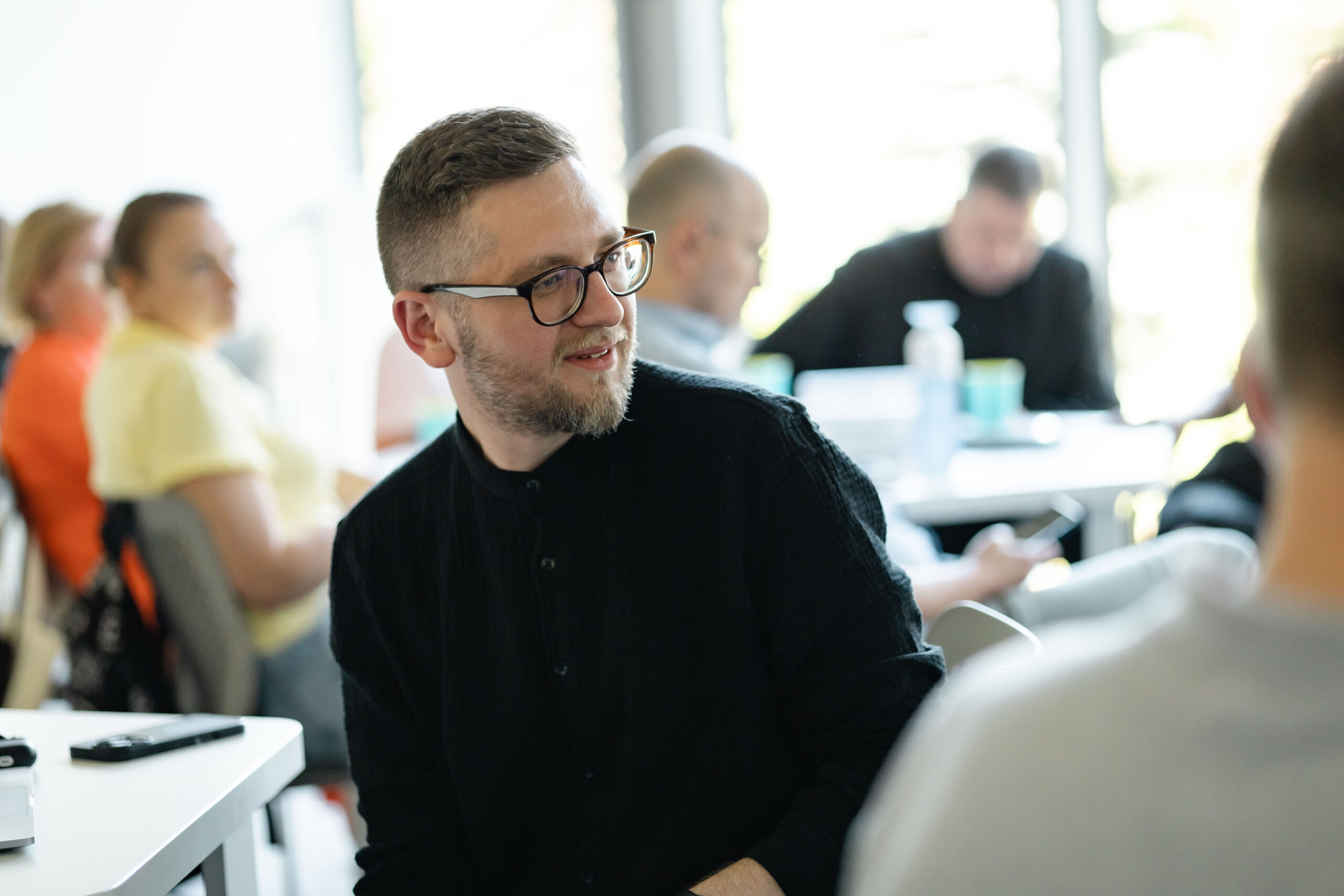
“The value of this kind of learning is that you do it not on your own, but together with the people you work with every day. It gives you an opportunity to see your colleagues from a different perspective as you work together on questions and exercises. It creates a sense of mutual support, which is essential for working well as a team,” says Dmytro Sherengovsky, Vice Rector for External Relations and Social Mission at UCU.
 Financial Sustainability and Fundraising: The University Model in Action
The participants developed their financial skills with Yurii Zaiarnyi, a financial expert with experience at global companies and a lecturer at UCU Business School.
They explored how operational decisions, resources, and the university’s overall financial sustainability are connected. An important part of this work was moving beyond seeing the budget as a separate function and recognizing that financial performance is a shared responsibility.
“This is a space where we can openly discuss problems and think about concrete steps for the future. We need to understand where our strengths lie and where our weaknesses are — and which areas need more attention and time. This approach helps the entire organization move forward in a more coordinated way,” says Mariana Kozenko, Chief Accountant at UCU.
The program then turned to fundraising, an important part of UCU’s model as a private university. Experts from CCS Fundraising visited UCU to work with its leaders — their first visit to Ukraine since the beginning of the full-scale invasion. Together, the participants explored global trends in higher education philanthropy and the role of leadership in attracting resources.
This gave the team an opportunity to look beyond the local context and identify new ways to support Strategy 2030, which aims to raise $100 million for the university’s development.
Strategic Communications and the New Reality
Strategic communications and reputation management are important for both businesses and educational institutions. In today’s fast-changing information environment, the participants explored how to make the university’s mission clear and meaningful to different audiences.
They concluded that in an age of short-form content and constant information flow, communication needs to be not only active but also consistent and strategic. Reputation is built on trust, and trust grows through consistent actions and the way those actions are communicated and understood.
The program helped university leaders step back from their day-to-day work and see reputation as a strategic asset built on trust, shared values, and the contribution of every member of the university community.
Svitlana Khyliuk, Dean of the Faculty of Law, shares her reflections:
“It is very important that our lecturers give us focused insights into how global trends are changing and what these changes mean for our university. This helps us better understand our goals and look at everyday management challenges from a different perspective. We have an opportunity to choose the best path toward the strategic goals set out in the university’s vision and mission. Being together and hearing about our colleagues’ experiences is also an opportunity for each of us to grow and develop.”
 The Ternopil Case Study and Program Outcomes
The final stage of the program was an off-site learning module in Ternopil. The participants put their knowledge into practice through case studies and visits to Schréder, a lighting technology company, and the Ternopil Regional Military Administration. These visits gave them an opportunity to see how management works in other sectors. Both organizations are currently headed by graduates of UCU Business School’s Master’s Program in Business Administration.
The program also led to the development of management solutions aimed at removing internal barriers to the university’s strategic development. Working in groups helped the team align their perspectives and address a critical question: How do leaders themselves need to change their approach for Strategy 2030 to succeed?
An important part of the module was reflecting on the team’s strengths. In the constant flow of day-to-day tasks, managers often have little time to look back at initiatives that have already succeeded. Taking a step back and reflecting on the team’s journey became an important source of motivation for the next stage of development.
Yevheniia Kralenkova, Head of the Corporate Programs Department at UCU Business School, emphasizes:
“We are used to looking for external signs of success and constantly raising the bar. But real leadership capacity grows through reflection. It is important to step away from day-to-day operations and take time to recognize how far we have come.”
The experience of UCU shows that investing in the development of people who make strategic and operational decisions is not simply an expense. It is an investment in the university’s long-term resilience.
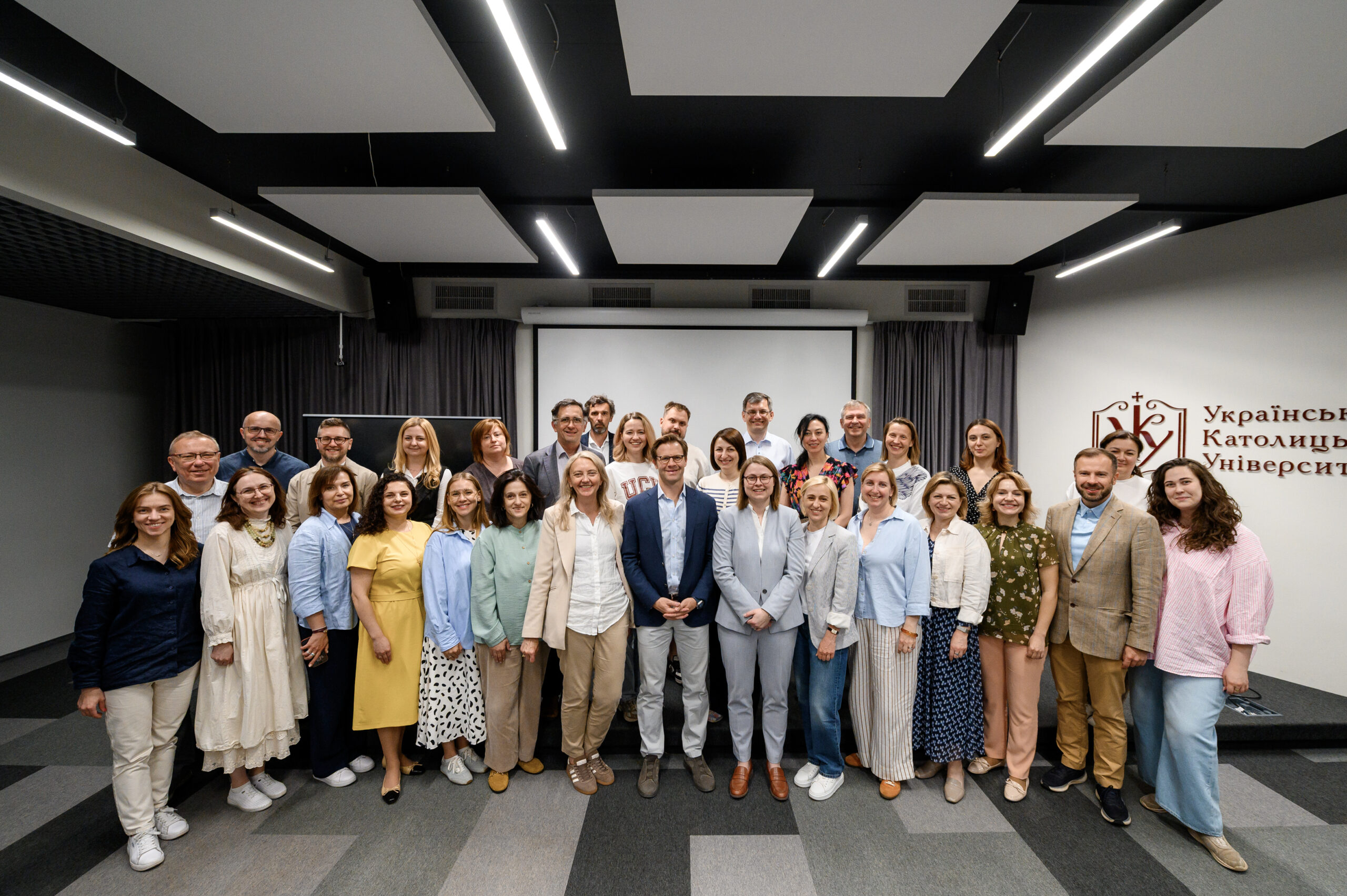 The program was particularly valuable because it brought in perspectives from business and other sectors. This allowed university managers to step outside the “academic bubble” and discover new ideas at the intersection of different fields.
The program also demonstrated the strength of UCU’s internal ecosystem, with UCU Business School acting as a strategic partner in the university’s development. This collaboration helps the institution remain flexible, share knowledge, and prepare its leaders for future challenges.
UCU Business School is ready to support organizations that want to see the bigger picture of their growth and turn their strategic goals into action.
Learn more about UCU Business School’s Corporate Programs.