







The fourth season of “The Long Game” project has come to a close, and its main outcome is not just the numbers but also the thousands of entrepreneurs who have gained greater confidence in their businesses. 5,538 participants took part in the program, and 50% had already put their knowledge into practice before the course ended. Here are some highlights from the season.
 From Idea to Action: How Training Impacts Business
The key indicator of the training’s impact is confidence. Participants assessed their own confidence in running a business before and after participating. For 74%, it increased (by an average of +1.8 points), and 50% of participants have already implemented specific changes in their work: from updating their financial models to making their first sales or registering their businesses.
Most participants agreed on the project’s benefits. 90% agreed or strongly agreed that the project provided useful tools and insights; 82% said it motivated them to take action; and 84% said it helped them understand the need for deeper business education. The latter is particularly valuable: the project not only educates but also fosters a desire for further development.
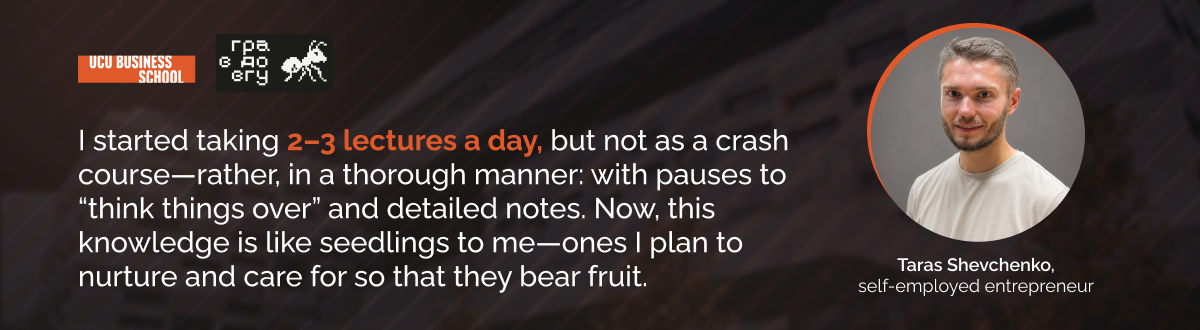
Habriella Bon, owner of a dental practice, shares:
“When I first participated in ‘The Long Game,’ I joined more out of curiosity, but during the training I realized just how practical and easy to apply the course materials are. What I like most is that this project is accessible to anyone who wants to grow and provides effective tools for systematic business growth, regardless of the business’s size…
“The training helped me take a fresh look at growing my own business. I already regularly use tools for marketing, financial planning, and business modeling. This helps me make more informed decisions.”
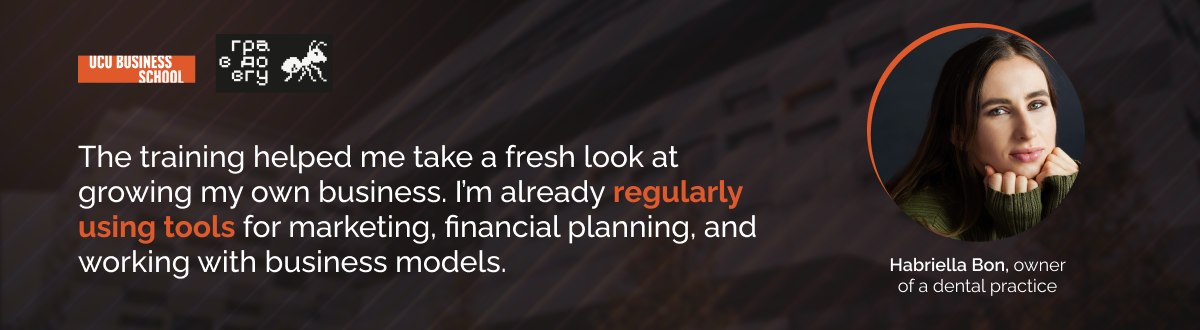 For Taras Shevchenko, a private entrepreneur, participating in the fourth season was a real test of his self-discipline. After all, squeezing education into a schedule that already included family, work, and evening workouts seemed almost impossible. However, Taras found his own approach, turning the course into a tool for psychological renewal:
“For me, “The Long Game” is a project that transports you from everyday reality into another dimension. Some say that rest is a change of activities, so for me, shifting the focus of my thoughts became a kind of vacation. At first, I moved slowly—I even took an ‘academic break’ after the first few lectures—but as the project neared completion, I got really hooked on the rankings. I started going through 2–3 lectures a day, but not as a crash course—rather, thoroughly: with pauses to “think things over” and detailed notes. Now this knowledge is like seedlings to me—ones I plan to nurture and care for so they’ll bear fruit.”
 The Path to Confidence
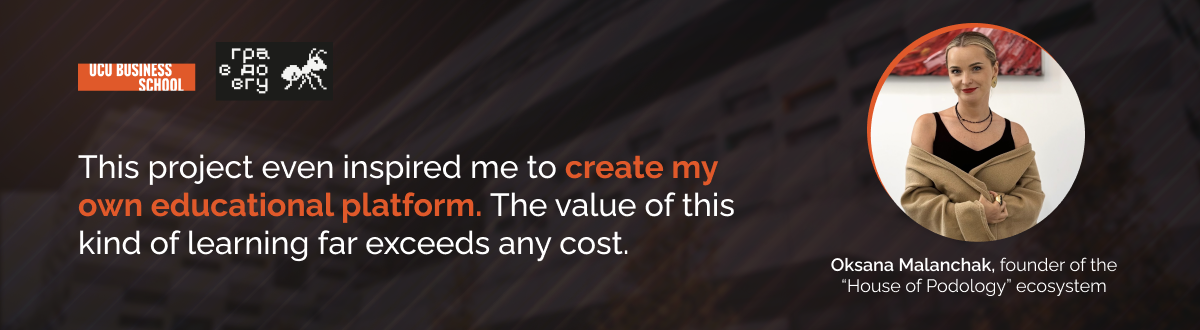
Oksana Malanchak, founder of the “House of Podology” ecosystem, notes the transition from uncertainty in Season 1 to the rapid implementation of tools in Season 4:
“The first season of ‘The Long Game’ gave me a crucial sense of support and the confidence that everything would work out. While back then I had just realized that I knew enough to scale up, the fourth season became a period of rapid change for me. I listened to a lecture — and immediately got to work: right now, we’re already implementing a cybersecurity audit and preparing our own line of cosmetics for export. This project even inspired me to create my own educational platform. The value of this kind of learning far exceeds any cost.”
 Feedback on the Project’s Instructors
Participants particularly highlighted the instructors’ lectures.
Andriy Rozhdestvenskyy (Leadership). The season opened with a lecture on leadership in business and the military. Andriy Rozhdestvenskyy focused on the virtues of civilian and military leaders. Among the audience, 19.3% were military personnel, veterans, and internally displaced persons. Participants noted that the lecture “inspired” them to pursue self-improvement and prompted them to take a more serious look at themselves as leaders.
Financial Stability and Digital Transformation: A key part of the program was the lectures by Iryna Kupetska on financial statement analysis and by Ihor Didko on pricing strategies. Participants showed keen interest in financial reporting and requested additional metrics for analysis in future seasons, while entrepreneurs planned to immediately apply Ihor Didko’s advice. The session on digital transformation led by Olena Kuzmichova set a high bar for those seeking to transition from manual management to process automation.
Global Market: One of the most interesting elements was the case interviews. In particular, the conversation with Igor Blistiv about Kormotech’s export strategies and their game-changing plant. This case study, closely tied to the Business School’s Master’s in Marketing Management, showed participants a real-world path for a Ukrainian brand to enter global markets.
Lilia Kuzik (Marketing). Marketing was the most frequently mentioned topic this season. Lilia herself is convinced that expertise is measured by the ability to make the complex understandable. The feedback confirms this:
“I would never have thought that so much valuable information could be conveyed in 13 minutes. If someone truly understands a subject, they can explain it even to a child.”
Olga Taday (Business Model). She helped those who had previously been running their businesses “blindly.”
“Business planning and business models helped me structure my knowledge, because before, I was just winging it,” shares one of the participants.
Galina Trytiak (Personal Finance). This lecture became one of the most popular. Participants noted its step-by-step approach and practicality, especially regarding topics like depreciation and dividends.
Sofia Papirnyk (Team Management). She hit a “pain point” for many business owners. Participants admitted that issues of organizational structure and culture had been troubling them for a long time, and now they’re ready to allocate resources to address them.
Lyudmila Kryzhanovska (Grants). She made it feel like getting a grant is actually possible.
“Clear, structured information and understandable terms”—that’s how the participants described this module.
Not Just Training, but a Mission
This season was also unique because of its participants. Among the participants are 420 internally displaced persons, 176 military personnel, and 132 veterans.
One of the veteran participants, who is also enrolled in the Veteran Venture Program, noted:
“It’s interesting to look at similar topics from different perspectives, especially in the context of digital products. The module on finance and scaling gave me the opportunity to evaluate my development strategy in a new light.”
Participants from the military also highlighted that the lecture on business grants added value specifically for their group, offering clear guidance for future startups.
About the Project
“The Long Game” is a free educational platform for entrepreneurs, created as a launchpad for the development of micro, small, and medium-sized businesses. Everything is structured like a game: short video lectures lasting 15–20 minutes and quick quizzes allow users to accumulate ranking points. The top 100 in the rankings receive an invitation to an in-person business boot camp at the “Promprylad” Innovation Center in Ivano-Frankivsk, where they compete for grants to develop their businesses.
The project is being implemented thanks to the synergy of its partners: “The Long Game” NGO, the “Promprylad” Charitable Foundation, the UCU Business School, and the Netpeak marketing agency.
Learn more about the project on “The Long Game” website. Video lectures and case interviews are already publicly available.